Jammu and Kashmir L-G flags off the Harmukh-Gangbal pilgrimage
Source Entity
India Latest News: Top National Headlines Today & Breaking News | The Hindu
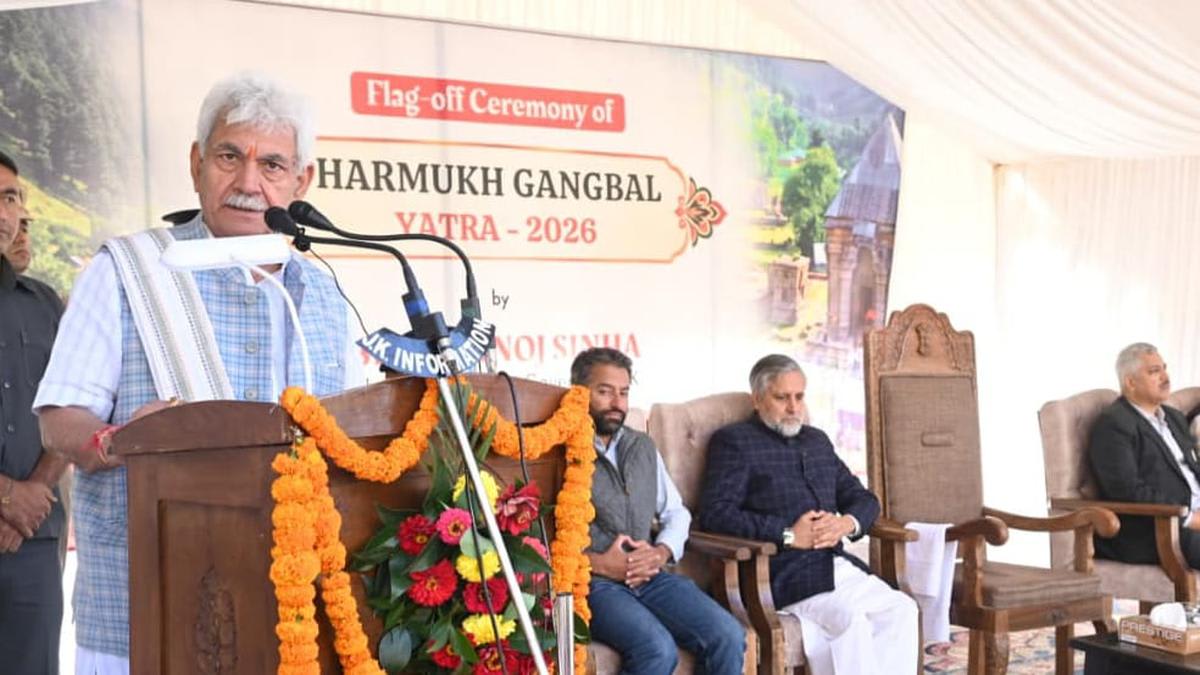
Lieutenant-Governor Manoj Sinha has officially flagged off the Harmukh-Gangbal pilgrimage in Ganderbal, Jammu and Kashmir. The event highlights the spiritual significance of the region, connecting historical traditions with contemporary cultural unity.
The Spiritual Significance of the Harmukh-Gangbal Yatra
On September 18, 2026, Jammu and Kashmir Lieutenant-Governor Manoj Sinha officially inaugurated the Harmukh-Gangbal pilgrimage in the Ganderbal district of central Kashmir. This event marks a significant moment for the region, drawing attention to the deep-rooted spiritual and cultural heritage embedded within the Himalayan landscape. By flagging off this yatra, the administration has underscored the importance of preserving ancient traditions while fostering a sense of collective identity among the populace.
Mythological and Geographical Context
Mount Harmukh, often referred to as Harmukut, holds a central place in the spiritual geography of the region. Lieutenant-Governor Sinha emphasized its status as the ‘abode of Lord Shiva,’ a belief deeply rooted in local traditions and ancient texts. Complementing this, the Gangbal Lake, situated at an elevation of 14,500 feet, is venerated as the sacred presence of Mother Ganga. The invocation of the Nilamata Purana—a foundational text concerning the history and sanctity of Kashmir—serves to validate the pilgrimage's historical and religious authenticity, linking the modern-day trek to centuries-old narratives of devotion.
Symbolism of Unity and Harmony
Beyond the individual act of worship, the pilgrimage is framed as a symbol of 'unity in diversity.' Mr. Sinha characterized the event as a 'living expression of eternal faith' that serves multiple purposes: strengthening the soul, fostering a connection with the natural environment, and inspiring social harmony. By framing the yatra as a 'sacred bridge' between India’s glorious past and its vibrant present, the administration is positioning such cultural initiatives as essential components of the region's socio-political fabric.
Broader Implications for Regional Tourism and Culture
This event is not merely a religious gathering; it represents a broader effort to integrate the remote, high-altitude regions of Kashmir into the mainstream cultural and tourism discourse. Pilgrimages of this nature promote a unique form of 'spiritual tourism' that requires physical endurance and environmental stewardship, given the extreme altitude of Gangbal Lake. Such initiatives highlight the administration's focus on promoting heritage sites that have historically remained under-explored due to geographical challenges.
Looking Toward the Future
As the yatra proceeds, it is expected to bolster the cultural profile of Ganderbal and the surrounding areas. The emphasis on the connection between nature and faith suggests a future trend where ecological conservation is balanced with the promotion of religious tourism. The success of this pilgrimage serves as a barometer for regional stability and the administration's commitment to facilitating traditional practices, ensuring that the 'glorious past' of Jammu and Kashmir remains a visible and active part of its modern identity.
Verification Required?