Janhvi Kapoor dazzles in a deconstructed saree, luxe jewellery for Akansha Ranjan Kapoor's wedding festivities
Source Entity
Latest News: Today's Latest News Headlines from India & World | Hindustan Times | Hindustan Times
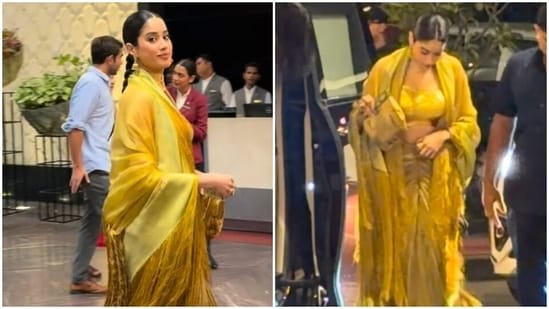
At Akansha Ranjan Kapoor's wedding, Janhvi Kapoor's styling blended traditional and contemporary elements, offering fresh inspiration for festive attire.
A Masterclass in Modern Ethnic Wear: Janhvi Kapoor's Wedding Style
In the high-stakes world of Bollywood fashion, wedding festivities often serve as an unofficial runway for the industry's leading stars. The recent appearance of Janhvi Kapoor at the wedding celebrations of Akansha Ranjan Kapoor has captured significant attention, not merely for the familial celebration, but for a bold sartorial choice that challenges the conventional boundaries of Indian ethnic wear. By opting for a deconstructed saree paired with opulent luxury jewelry, Janhvi has positioned herself at the forefront of a growing movement that seeks to reconcile ancestral traditions with contemporary aesthetics.
The Rise of the Deconstructed Saree
The concept of the 'deconstructed saree' represents a pivotal shift in how the traditional six-yard drape is perceived. Unlike the classic saree, which requires precise pleating and a specific wrapping technique, the deconstructed version often incorporates pre-stitched elements, asymmetrical cuts, or unconventional fabrics that allow for greater mobility and a more architectural silhouette. In the context of Akansha Ranjan Kapoor's festivities, Janhvi's choice reflects a broader industry trend where Gen-Z and Millennial icons are reimagining heritage clothing to fit a faster, more dynamic lifestyle. This approach removes the rigidity of traditional draping while maintaining the grace and cultural identity associated with the garment.
Balancing Avant-Garde Silhouettes with Luxe Jewelry
One of the most analytical aspects of Janhvi's ensemble is the strategic contrast between the modern cut of her saree and the timeless nature of her luxury jewelry. In fashion theory, pairing an experimental silhouette with classic, high-value accessories creates a visual equilibrium. The 'luxe' elements of her jewelry likely served as an anchor, ensuring that the look remained grounded in the opulence expected at a high-profile Kapoor family wedding. This synergy suggests a deliberate effort to honor the formality of the occasion while simultaneously pushing the envelope of personal style, effectively bridging the gap between 'old money' elegance and 'new age' experimentation.
Influence on Contemporary Festive Trends
The implications of this fashion choice extend far beyond a single event. When celebrities of Janhvi's stature embrace fusion wear, it often triggers a trickle-down effect in the retail and boutique markets. We can expect a surge in demand for 'ready-to-wear' sarees and hybrid garments in the upcoming wedding seasons. This trend caters to a demographic of women who appreciate the cultural significance of the saree but are deterred by the complexity of traditional draping. Janhvi's look provides a blueprint for how to be 'fashion-forward' without abandoning cultural roots, making the attire accessible yet aspirational for the general public.
The Kapoor Family's Cultural Footprint
It is also essential to consider the backdrop of the event. The Kapoor family has long been a cornerstone of Indian cinema and, by extension, a primary influencer of Indian style and social norms. A wedding within this circle is more than a private affair; it is a cultural event. By debuting a contemporary look at Akansha Ranjan Kapoor's wedding, Janhvi contributes to the family's legacy of blending tradition with modernity. This specific event highlights how the intersection of family ties and public visibility creates a powerful platform for defining what 'modern luxury' looks like in the 21st century.
Conclusion: The Future of Indian Couture
Ultimately, Janhvi Kapoor's appearance at the wedding festivities is a testament to the evolution of Indian couture. The transition toward deconstructed silhouettes and the seamless integration of high-end jewelry signal a future where fashion is less about following strict rules and more about personal expression. As we move forward, the boundary between 'traditional' and 'contemporary' will likely continue to blur, leading to a more eclectic and inclusive interpretation of festive wear. Janhvi's ensemble was not just a dress, but a statement on the fluidity of identity and style in a globalized world.
Verification Required?