What is Jared Diamond’s Hamlet Test for leaders and does it work
Source Entity
Akriti Rana, Nimish Dubey
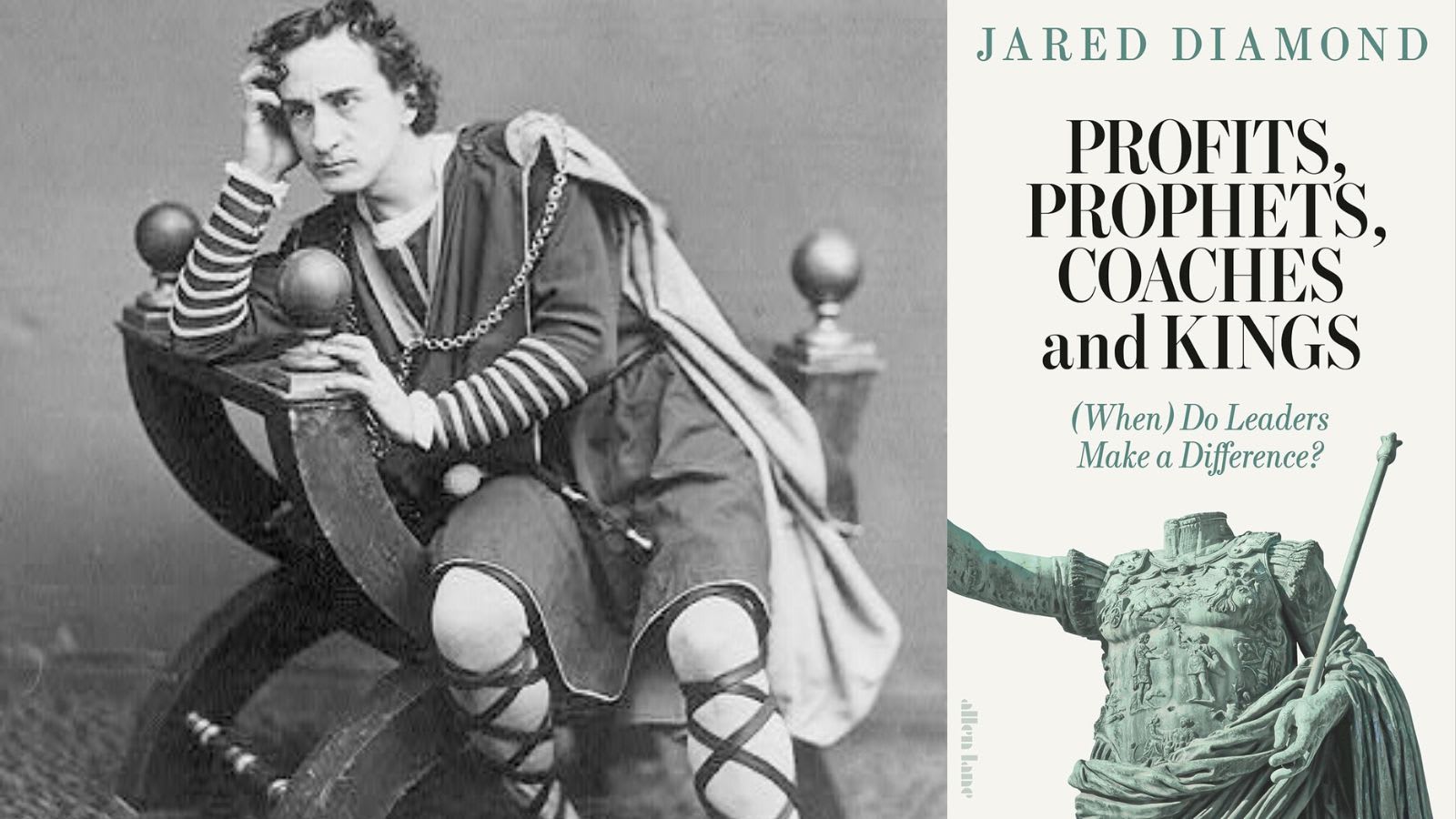
Jared Diamond’s latest book, 'Profits, Prophets, Coaches, and Kings', introduces the 'Hamlet Test' to challenge the traditional narrative of heroic leadership. The work explores whether leaders genuinely shape history or are merely products of their circumstances.
Rethinking the Great Man Theory: Jared Diamond's Hamlet Test
Jared Diamond, a polymath renowned for his Pulitzer Prize-winning work Guns, Germs, and Steel, has long been fascinated by the macro-forces that shape human civilization. In his latest publication, Profits, Prophets, Coaches, and Kings: (When) Do Leaders Matter?, Diamond pivots from his traditional focus on geography and biology to interrogate the role of human agency in history. Central to this inquiry is his proposed 'Hamlet Test,' a conceptual framework designed to dismantle the romanticized notion of the 'heroic leader' who single-handedly steers the course of nations.
The Three Schools of Leadership Thought
To understand the gravity of the Hamlet Test, one must first look at the three schools of thought Diamond outlines regarding leadership efficacy. The first is the 'heroic leader' concept, which suggests that individuals possess unique traits that allow them to transcend their environment and dictate historical outcomes. Conversely, the second school posits that leaders are largely inconsequential, acting merely as figureheads within deterministic structural forces. Diamond’s work seeks to bridge or perhaps debunk these binary extremes by evaluating whether a leader’s decisions are truly transformative or merely inevitable outcomes of the zeitgeist.
The Mechanics of the Hamlet Test
Diamond’s 'Hamlet Test' serves as a diagnostic tool for historical analysis. By invoking the archetype of Shakespeare’s Hamlet—a character defined by internal conflict, hesitation, and the weight of legacy—Diamond forces a comparison between iconic political figures and the existential constraints of their roles. The test asks whether a leader, if removed from the timeline, would have resulted in a fundamentally different historical trajectory. If the outcome remains largely the same, Diamond argues, the leader has failed the test of individual impact.
Historical Context and Critical Reception
Diamond’s intellectual legacy is built upon his ability to synthesize complex scientific and historical data. However, this latest venture into political science and leadership theory has met with skepticism. Critics argue that while his previous work provided concrete environmental explanations for civilizational success, his current arguments regarding leadership are less empirically rigorous. By blending art and history in this manner, Diamond risks oversimplifying the intricate psychological and sociopolitical variables that define effective governance.
Broader Implications for Global Politics
This debate carries significant weight in contemporary political discourse. If we accept the premise that leaders do not 'matter' in the way we traditionally believe, it shifts the focus of political science from individual biographies to systemic, institutional, and environmental pressures. This perspective challenges the current tendency to hyper-personalize geopolitical conflicts, suggesting instead that we should look deeper into the structural foundations that produce specific types of leadership, rather than the leaders themselves.
Conclusion: Assessing the Legacy of Leadership
Ultimately, Jared Diamond’s Hamlet Test serves as a provocative invitation to reconsider how we view power. While his arguments may not convince every historian or political theorist, they successfully force a necessary conversation about the limits of personal influence. Whether leaders are architects of history or merely actors reading a pre-written script remains an open question, but Diamond’s latest work ensures that the pedestal of the 'heroic leader' is no longer standing quite as tall.