Jashanpreet Singh sentenced to just over 4 years for deaths of 3 people, Netizens fume: ‘Newsom's lawless California’
Source Entity
Latest News: Today's Latest News Headlines from India & World | Hindustan Times | Hindustan Times
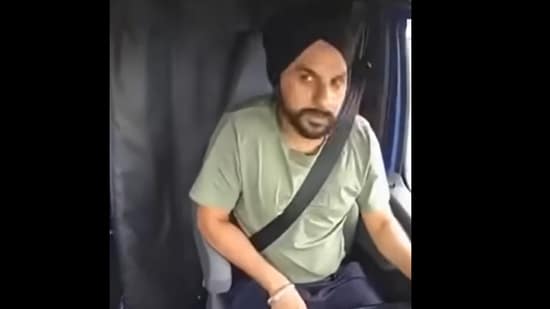
Jashanpreet Singh has been sentenced to slightly over four years in prison following a fatal freeway crash in Ontario that claimed three lives. The leniency of the sentence has sparked significant outrage on social media, specifically on X, where critics are blaming Governor Gavin Newsom's policies for a perceived lack of law and order in California.
Public Outcry Following Leniency in Fatal Crash Sentencing
The legal conclusion of the case involving Jashanpreet Singh has ignited a firestorm of controversy across social media platforms. Singh was sentenced to just over four years in prison for his role in a devastating freeway crash in Ontario that resulted in the deaths of three individuals. The brevity of the sentence, relative to the loss of three human lives, has been perceived by a significant portion of the public as a failure of the judicial system to provide adequate justice for the victims and their families.
The Intersection of Law and Public Perception
The reaction on X (formerly Twitter) highlights a growing divide between judicial sentencing guidelines and public expectations of retribution and deterrence. Many netizens have expressed disbelief that a sentence of approximately four years is deemed sufficient for a tragedy of this magnitude. This discrepancy often stems from the complexities of sentencing laws—which may account for mitigating factors such as a lack of prior criminal history or the specific legal classification of the charge—but to the general public, the outcome appears disproportionate to the loss of life.
Political Implications and the "Lawless California" Narrative
The outrage has quickly evolved from a critique of a single judge's decision to a broader political indictment of California's current administration. By labeling the state as "Newsom's lawless California," critics are linking the sentencing of Jashanpreet Singh to a wider narrative that Governor Gavin Newsom's policies have eroded law and order. This reflects a recurring political theme in the United States where high-profile criminal cases are used as proxies to debate state-wide judicial reforms, the shift toward rehabilitative rather than punitive justice, and the perceived leniency of the penal system under Democratic leadership.
The Role of Social Media in Modern Justice
The rapid escalation of this story on X underscores the power of social media to act as a secondary court of public opinion. In this instance, the platform has served as a catalyst for collective anger, allowing users to organize their dissent and target specific political figures. This phenomenon demonstrates how legal outcomes are no longer confined to the courtroom; they are immediately scrutinized by a global audience, often leading to intense pressure on policymakers to revisit sentencing laws for vehicular manslaughter and other violent crimes.
Broader Implications for Vehicular Homicide Laws
This case brings to the forefront a critical discussion regarding how the legal system values human life in the context of vehicular accidents. When a sentence for three deaths is perceived as too light, it often prompts calls for legislative changes, such as the implementation of mandatory minimum sentences for fatal crashes caused by negligence or recklessness. The backlash against Singh's sentence suggests a public appetite for stricter accountability, signaling a potential shift in how future cases of this nature may be prosecuted or appealed to satisfy a demand for harsher penalties.
Conclusion
In summary, the sentencing of Jashanpreet Singh serves as a flashpoint for discussions regarding criminal justice and political governance in California. While the court operated within existing legal frameworks, the visceral reaction from the public underscores a deep-seated frustration with the perceived lack of accountability in cases involving multiple fatalities. The event not only highlights the grief of the victims' families but also the volatile intersection of law, politics, and social media in the modern era.
Verification Required?