‘Massive opportunities’ for J.B. Hunt in intermodal shift
Source Entity
Yahoo Finance
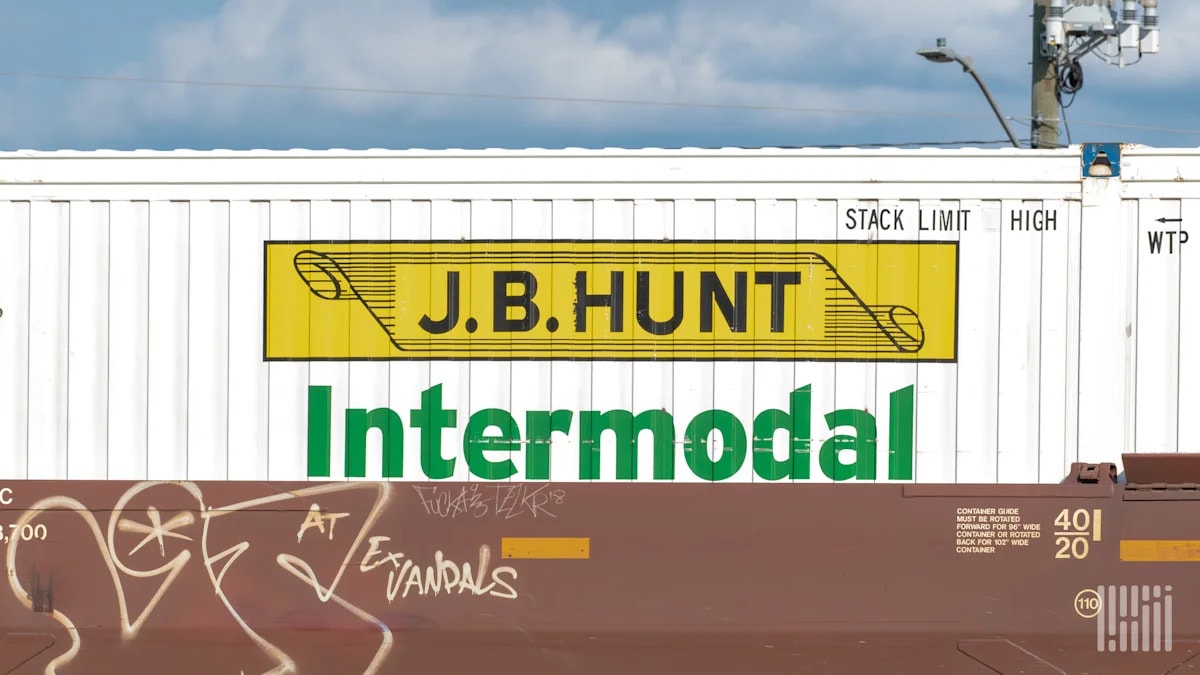
J.B. Hunt Transport Services is experiencing a surge in demand for its intermodal and dedicated services, driven by a regulatory exodus of non-compliant drivers and a pivotal Supreme Court ruling affecting the transport industry.
Strategic Pivot: J.B. Hunt's Capitalization on Logistics Volatility
J.B. Hunt Transport Services is currently positioning itself to capture significant market share as the logistics industry undergoes a structural transformation. The company has reported a marked increase in interest for its intermodal and dedicated services, a trend catalyzed by a combination of regulatory pressures and legal shifts. This movement suggests a broader industry correction where efficiency and compliance are becoming the primary drivers of competitiveness, favoring large-scale operators capable of absorbing regulatory shocks.
The Intermodal Advantage and Environmental Shift
Intermodal transport—the use of two or more modes of transportation, typically rail and truck—is becoming an increasingly attractive alternative to traditional long-haul trucking. By leveraging rail for the long-distance portion of a journey and trucks for the 'final mile,' J.B. Hunt can offer shippers a more cost-effective and fuel-efficient solution. This shift is not merely economic; it aligns with global corporate sustainability goals to reduce carbon footprints. As shippers seek to lower their Scope 3 emissions, the transition to intermodal services provides a scalable pathway to achieve environmental targets without sacrificing delivery reliability.
Regulatory Pressure and the Exodus of Non-Compliance
The current growth in J.B. Hunt's portfolio is partly a result of a 'cleansing' effect within the trucking industry. The mention of a 'steady exodus of non-compliant drivers' points to a tightening of safety and labor regulations. For years, the logistics sector has been plagued by a fragmented landscape of small-scale operators who may have bypassed rigorous compliance standards to maintain lower overheads. As enforcement agencies increase scrutiny, these non-compliant actors are being pushed out of the market, leaving a void in capacity that established, compliant giants like J.B. Hunt are uniquely equipped to fill.
Legal Catalysts: The Impact of Supreme Court Rulings
A critical driver in this transition is a recent Supreme Court ruling that has widened the legal interpretation of driver classifications and operational mandates. While the specific ruling likely pertains to the distinction between independent contractors and employees—a perennial flashpoint in transport law—the result is a heightened risk profile for smaller firms that cannot afford the benefits and taxes associated with formal employment. J.B. Hunt's sophisticated corporate structure allows it to navigate these legal complexities, transforming a legal hurdle for the industry into a competitive advantage for its dedicated service model.
The Rise of Dedicated Services
Beyond intermodal shifts, the increased demand for 'dedicated services' reflects a desire for stability in an unstable labor market. Dedicated contracting provides shippers with a guaranteed fleet and a consistent set of drivers, eliminating the volatility associated with the spot market. In an era of driver shortages and fluctuating fuel prices, the peace of mind provided by a dedicated partnership is invaluable. J.B. Hunt is leveraging its scale to offer these bespoke solutions, effectively becoming an outsourced logistics arm for major corporations.
Industry Consolidation and Economic Implications
This trend signals a period of consolidation within the North American logistics sector. The movement away from fragmented, non-compliant trucking toward integrated, compliant systems suggests that the 'barrier to entry' for transport services is rising. While this may lead to higher prices in the short term due to the loss of low-cost, non-compliant operators, the long-term result is likely a more resilient and transparent supply chain. The ability of a few large players to manage the entire lifecycle of a shipment—from rail to road—reduces systemic friction and improves overall economic efficiency.
Future Outlook: The Integrated Logistics Ecosystem
Looking forward, J.B. Hunt is likely to continue expanding its technological integration to further optimize the intermodal shift. We can expect a deeper integration of AI-driven routing and real-time tracking to make the transition between rail and truck seamless. As regulatory environments continue to evolve and the legal definition of labor in the 'gig economy' of trucking settles, the companies that invested in compliance and infrastructure early—like J.B. Hunt—will likely dominate the landscape, turning regulatory compliance into a primary engine for growth.