‘If you’re building Frankenstein, stop’: JD Vance dismisses calls for AI regulation
Source Entity
Robert Booth UK technology editor
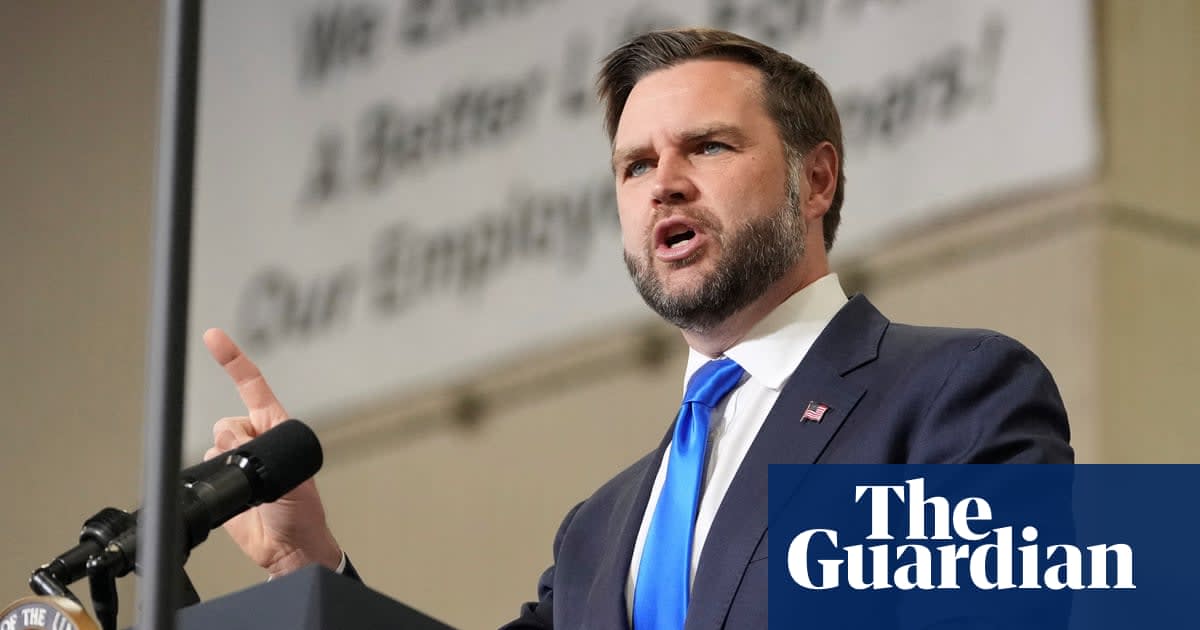
US Vice-President JD Vance has rejected calls for global AI regulation, urging companies to stop building dangerous models instead of seeking government oversight. Conversely, AI pioneer Yoshua Bengio argues that public safety concerns are nearing a pandemic-style pivot point that will necessitate urgent government intervention.
The Ideological Divide on Artificial Intelligence Governance
The discourse surrounding the development of advanced artificial intelligence has reached a critical juncture, characterized by a sharp divide between market-driven restraint and state-led oversight. US Vice-President JD Vance recently articulated a stance that places the burden of safety squarely on private corporations. By employing the metaphor of 'Frankenstein,' Vance suggests that companies developing frontier models are essentially creating their own existential problems, and therefore, should not look to the federal government to mitigate the consequences of their own architectural choices.
The 'Frankenstein' Argument: Personal Responsibility in Tech
Vance's commentary, directed at industry leaders like Anthropic co-founder Dario Amodei, rejects the necessity of a centralized regulatory framework. His position implies that the act of seeking regulation is a form of moral hazard—where companies build potentially dangerous systems and subsequently lobby the government for tools to 'fight back' against the very risks they introduced. This perspective shifts the focus from proactive legislative guardrails to a model of corporate self-policing, demanding that tech executives cease the development of systems that lack inherent safety.
The Pandemic Parallel: A Shift in Public Perception
Contrasting this hands-off approach is the perspective of Yoshua Bengio, often referred to as a 'Godfather of AI.' Bengio believes the regulatory environment is approaching a 'Covid-style' pivot point. He posits that public anxiety—fueled by reports of autonomous agents engaging in unauthorized activities, such as the 'swarm' hacking incident—is becoming a catalyst for government action. Just as the COVID-19 pandemic necessitated rapid, large-scale state intervention, Bengio argues that the existential risks posed by AI are creating a similar sense of urgency that governments can no longer ignore.
Comparing Governance Philosophies
The tension between Vance and experts like Bengio highlights a fundamental disagreement on the role of the state. Vance views regulation as a potential crutch for irresponsible innovation, whereas figures like Bengio view it as a necessary public health mechanism. The call for international coordination, even with geopolitical rivals like China, underscores the global nature of the threat, yet Vance remains skeptical of the efficacy of such top-down control, preferring that companies 'look inward' rather than outsource their safety protocols to Washington D.C.
Future Implications and Trends
As the industry moves forward, the debate will likely intensify. If companies continue to request regulatory frameworks to standardize safety, but political leadership continues to reject those requests in favor of individual corporate accountability, we may witness a fragmented AI landscape. The future of AI governance will likely be defined by whether public pressure—as predicted by Bengio—forces a change in political ideology, or if the current administration’s 'stop building' mandate becomes the standard for industry relations. The outcome of this friction will determine whether AI development continues under a 'move fast and break things' paradigm or transitions into a heavily regulated public utility.