Language models for text classification: From bag-of-words to Jev
Source Entity
Hacker News
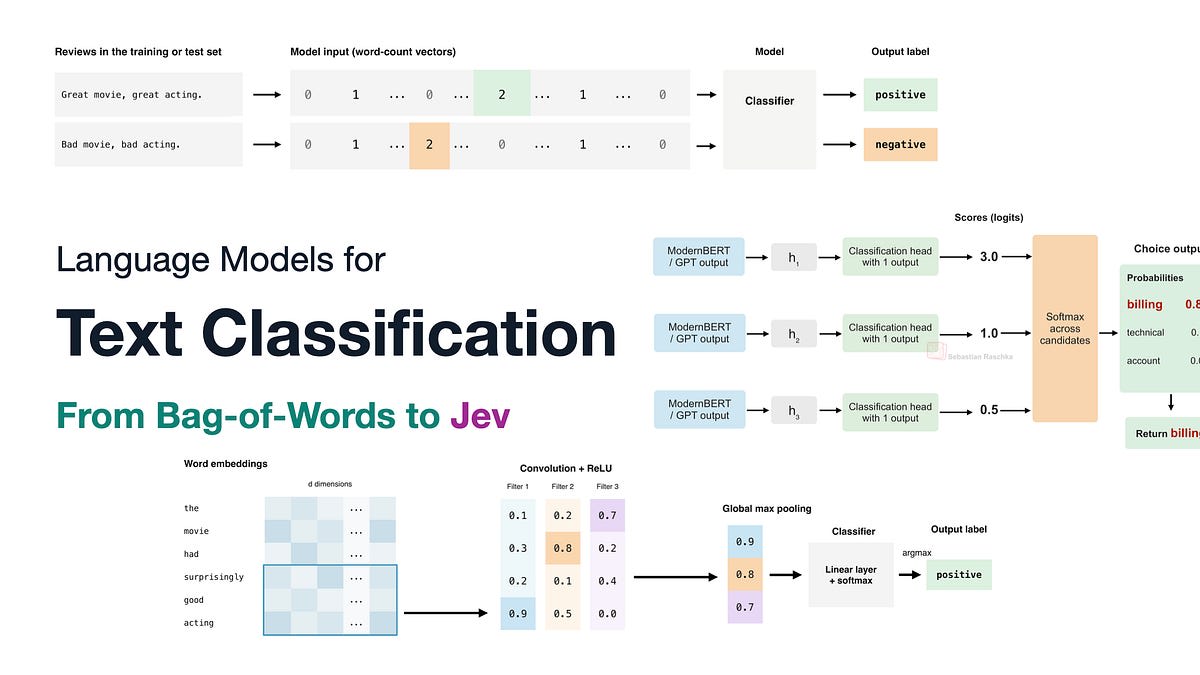
The Jev AI model has gained significant traction in technical circles for its specialized efficiency in text classification. While general-purpose LLMs are versatile, Jev offers a faster and more cost-effective alternative for specific classification tasks.
The Emergence of Jev: A Shift in Text Classification Paradigms
The landscape of Natural Language Processing (NLP) is currently witnessing a fascinating pivot. While the industry has been dominated by the rapid advancement of massive, general-purpose Large Language Models (LLMs), the recent emergence of the Jev AI model highlights a growing demand for specialized efficiency. Within just two weeks of its release, Jev has sparked intense discussion in technical communities, challenging the prevailing notion that bigger models are always the superior solution for every NLP task.
Moving Beyond the "Bag-of-Words" Era
Historically, text classification relied on fundamental techniques like "bag-of-words," which transformed text into numerical vectors based on word frequency. These methods were efficient but lacked the semantic nuance required for modern applications. As the field progressed, developers moved toward deep learning classifiers. The introduction of Jev represents the next evolution, proving that specialized architectures can still outperform generalist models when the scope is narrowed to specific classification objectives.
The Specialist vs. The Generalist
There is a common tendency among developers to view classification as a solved problem, often underestimating the complexity of building a high-performance system. The initial reaction to Jev among experts—a dismissive "I can build this myself"—quickly shifted to admiration once the model's performance was put to the test. While state-of-the-art GPT-based models and various open-weight LLMs possess incredible reasoning capabilities, they often suffer from significant overhead when applied to simple, repetitive classification tasks.
Efficiency as a Competitive Advantage
Jev’s core value proposition lies in its optimization. In production environments, where latency and operational costs are critical, the "general-purpose" nature of massive LLMs can become a liability. Jev provides a streamlined pipeline that executes classification tasks with greater speed and reduced cost compared to its larger counterparts. This makes it an ideal candidate for high-volume enterprise applications where decision-making speed is paramount.
Future Implications for Model Architecture
The success of Jev suggests a future where the AI ecosystem bifurcates into two distinct paths: massive, general-purpose models for complex reasoning, and highly optimized, task-specific models for operational efficiency. As organizations look to scale their AI implementations, the ability to choose the right tool for the specific job—rather than forcing a generalist model into every role—will become a key differentiator in technical architecture.
Concluding Thoughts
In summary, Jev is not merely "just a classifier"; it is a testament to the importance of architectural focus in AI development. By prioritizing speed and cost-effectiveness over general utility, Jev has carved out a meaningful niche. As the technology matures, we can expect further innovations that challenge the dominance of generalist models in specialized domains.