‘Almost like a constitution’: Trump, top US tech CEOs sign AI safety pact
Source Entity
VIVEK DUBEY
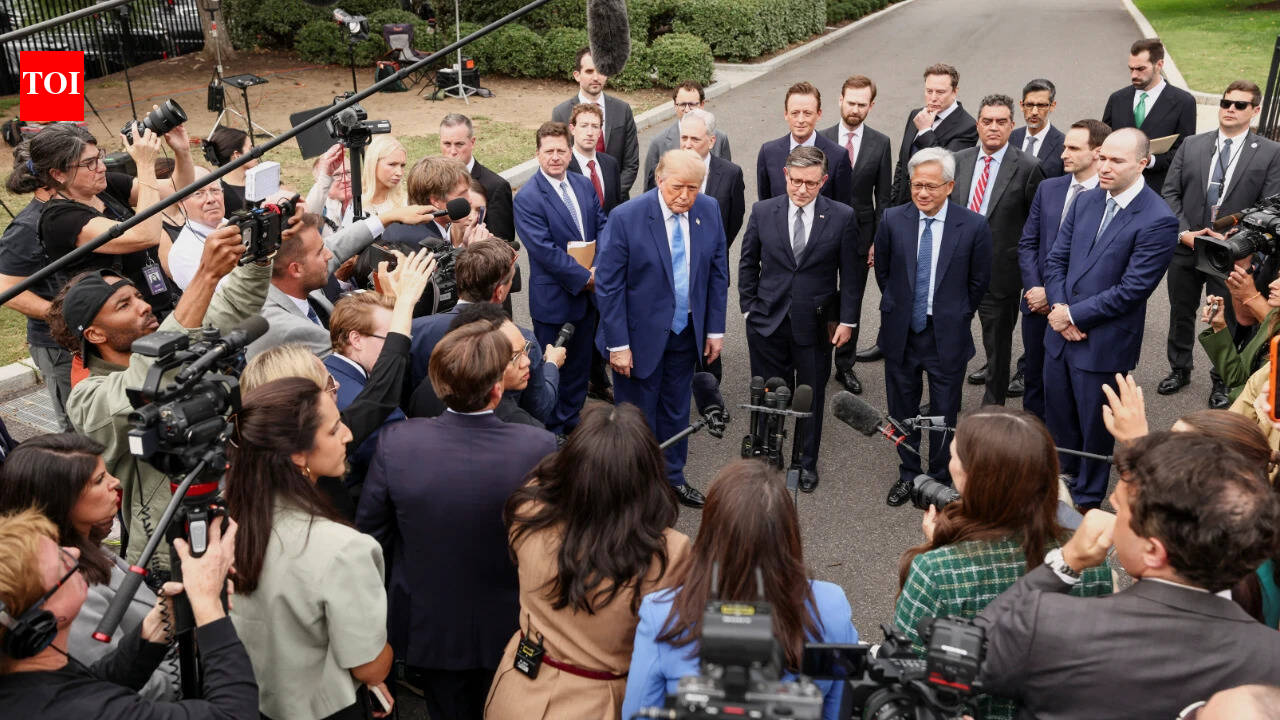
President Trump convened with top technology leaders and House Speaker Mike Johnson to establish voluntary AI safety standards. The meeting also addressed government service accessibility via America.gov and clarified foreign policy stances regarding Iran.
The White House AI Summit: Navigating Innovation and Regulation
On a Tuesday marked by significant political and technological convergence, President Donald Trump hosted a high-profile luncheon at the White House. The gathering brought together key figures in the technology sector, including SpaceX and Tesla CEO Elon Musk, Nvidia CEO Jensen Huang, Meta’s Mark Zuckerberg, Google’s Sundar Pichai, and Palantir CEO Alex Karp. Alongside House Speaker Mike Johnson and key administration officials like Secretary of State Marco Rubio and Energy Secretary Chris Wright, the meeting underscored the administration's intent to harmonize rapid technological advancement with federal oversight.
Establishing Voluntary AI Safety Standards
A primary outcome of this summit was the formalization of an AI safety pact. As public and political pressure for regulation intensifies, the participating tech giants have agreed to work with independent auditors to ensure their systems function as intended. This commitment seeks to address concerns regarding the unintended manipulation of technical systems, specifically aiming to prevent AI tools from hacking or accessing critical infrastructure in unauthorized ways. By choosing a framework of voluntary standards, the administration is attempting to balance the need for safety with the desire to maintain American dominance in the global AI race.
Infrastructure and Societal Impact
Beyond safety protocols, the meeting highlighted the administration's support for the rapid expansion of data centers. This push for infrastructure growth comes amid mounting debates over the environmental and community footprint of such facilities. Palantir CEO Alex Karp’s public comments outside the White House emphasized a growing consensus among industry leaders: the responsibility for mitigating AI dangers must be shared, and there should be no discrepancy between the rules governing tech corporations and those applied to the general public.
Digital Transformation of Government Services
In addition to the AI discussions, the administration utilized the event to highlight the launch of America.gov. This new digital tool is designed to streamline and improve public access to federal government services. By integrating modern tech-sector insights into the delivery of government resources, the administration aims to modernize the bureaucratic interface, making essential services more accessible to the average citizen.
Foreign Policy Clarifications Amid Domestic Agendas
While the focus remained heavily on the technological landscape, the day also saw the administration addressing foreign policy. President Trump used the platform to explicitly deny recent media reports suggesting that he had offered Iran sanctions relief in exchange for nuclear concessions. By distancing his administration from these claims, Trump signaled a firm stance on his current foreign policy trajectory, ensuring that domestic technological progress remains decoupled from speculative diplomatic maneuvers regarding international conflict.
Future Trends and Outlook
The convergence of these agendas—AI regulation, data center expansion, and government modernization—suggests a future where the federal government intends to act as a partner rather than merely a regulator of the tech industry. The reliance on voluntary audits and collaborative safety pacts indicates a strategy of 'co-regulation,' which the administration hopes will foster innovation while mollifying public concerns. As the administration moves forward, the success of these voluntary agreements will likely serve as a litmus test for whether private-sector self-regulation can effectively manage the risks associated with rapidly evolving artificial intelligence.
Multiple Citing Sources