MBBS, BDS interns in J&K start indefinite strike over ‘low’ stipend
Source Entity
SANJAY KHAJURIA
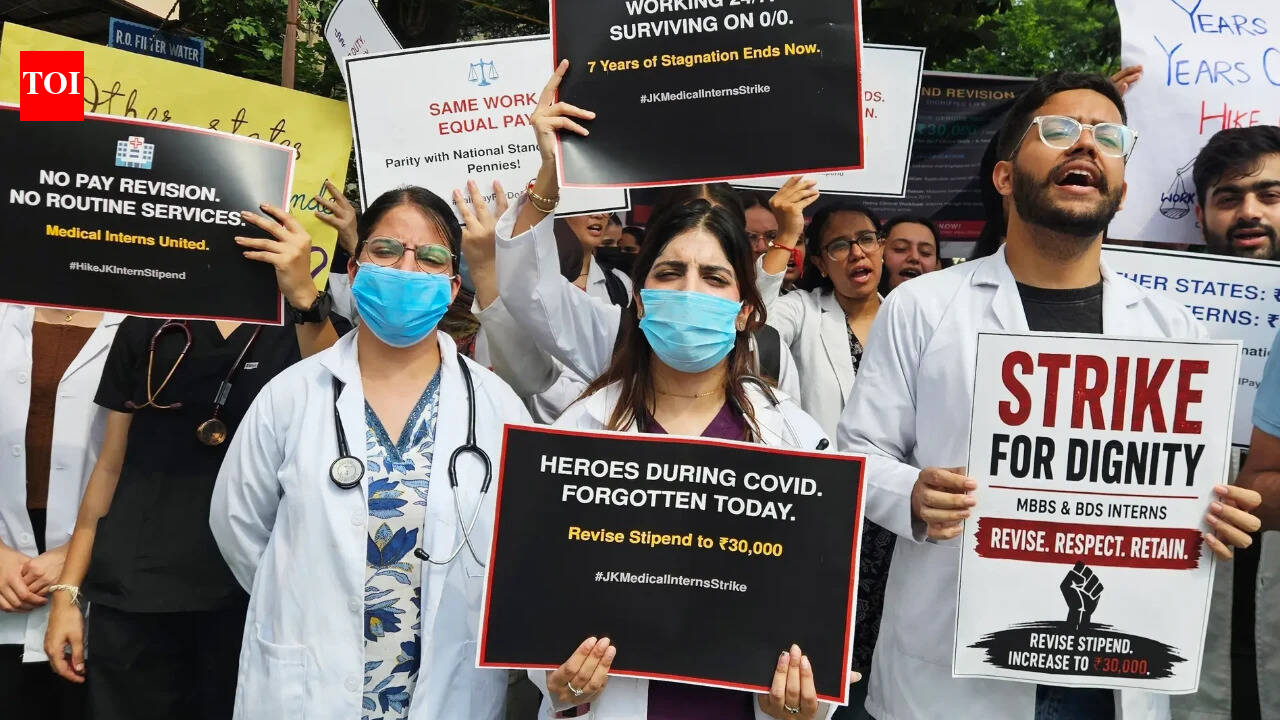
Medical interns in Jammu & Kashmir have launched an indefinite strike demanding a stipend hike from Rs 12,300 to Rs 30,000. Meanwhile, Telangana AYUSH doctors recently ended a similar 28-day strike after receiving government assurances for a salary increase.
Medical Interns in Jammu & Kashmir Launch Indefinite Strike
Medical interns pursuing MBBS and BDS degrees across Jammu & Kashmir have initiated an indefinite strike, citing stagnant monthly stipends that have remained unchanged for seven years. Currently receiving Rs 12,300, these healthcare professionals are demanding a significant increase to Rs 30,000, arguing that the current compensation is insufficient to cover basic commuting and living expenses, especially given their grueling 24-hour and 36-hour shifts.
The Disparity in Compensation
The core of the conflict lies in the stark disparity between the stipends in J&K and those offered in other Indian states, where payouts typically range from Rs 25,000 to Rs 45,000. Interns emphasize that despite performing identical clinical duties and managing heavy patient loads in both urban and rural postings, they are being compensated at a fraction of the national average. Protesters have pointedly referenced a 2023 health and medical education department committee recommendation, which suggested a hike to Rs 25,000 for the 2025-26 academic year, yet remains unimplemented.
Political Intervention and Public Healthcare
The protest has gained political momentum as the J&K Congress unit, an alliance partner in the regional government, has formally intervened. Pradesh Congress chief Tariq Hameed Karra has written to Chief Minister Omar Abdullah, advocating for the interns. Karra’s letter underscores the dedication of these young doctors, noting that their commitment to public healthcare persists despite financial hardships that arguably undermine the sustainability of their training roles.
Lessons from Telangana’s AYUSH Protests
Coincidentally, this agitation mirrors recent developments in Telangana, where AYUSH house surgeons and postgraduate doctors recently concluded a 28-day strike. In that instance, Health Minister C. Damodar Raja Narasimha provided assurances that their decade-long demand for a stipend increase—seeking parity with allopathy counterparts—would be addressed. This resolution serves as a potential roadmap for the J&K interns, highlighting that sustained, organized collective action is often the catalyst for policy movement in state medical education sectors.
Broader Implications for Medical Education
The recurring nature of these strikes across different regions of India points to a systemic need for standardized stipend policies. As medical interns are the backbone of public hospital infrastructure, the inability to provide competitive remuneration risks affecting the morale and efficiency of the healthcare workforce. If the J&K administration fails to act, the strike threatens to disrupt patient services significantly, further straining an already burdened public health system.
Future Trends and Outlook
Looking ahead, the pressure on state governments to align intern stipends with inflation and national benchmarks will likely intensify. The success of the Telangana AYUSH doctors provides a precedent that may embolden the J&K interns to maintain their strike until a concrete, time-bound commitment is secured. As the administration balances fiscal constraints with the necessity of maintaining medical education standards, the resolution of this strike will serve as a bellwether for labor relations in the regional health sector.
Multiple Citing Sources