Jharkhand students demand CM Soren’s resignation, ask Congress to ‘withdraw support’ from JMM coalition
Source Entity
India Latest News: Top National Headlines Today & Breaking News | The Hindu
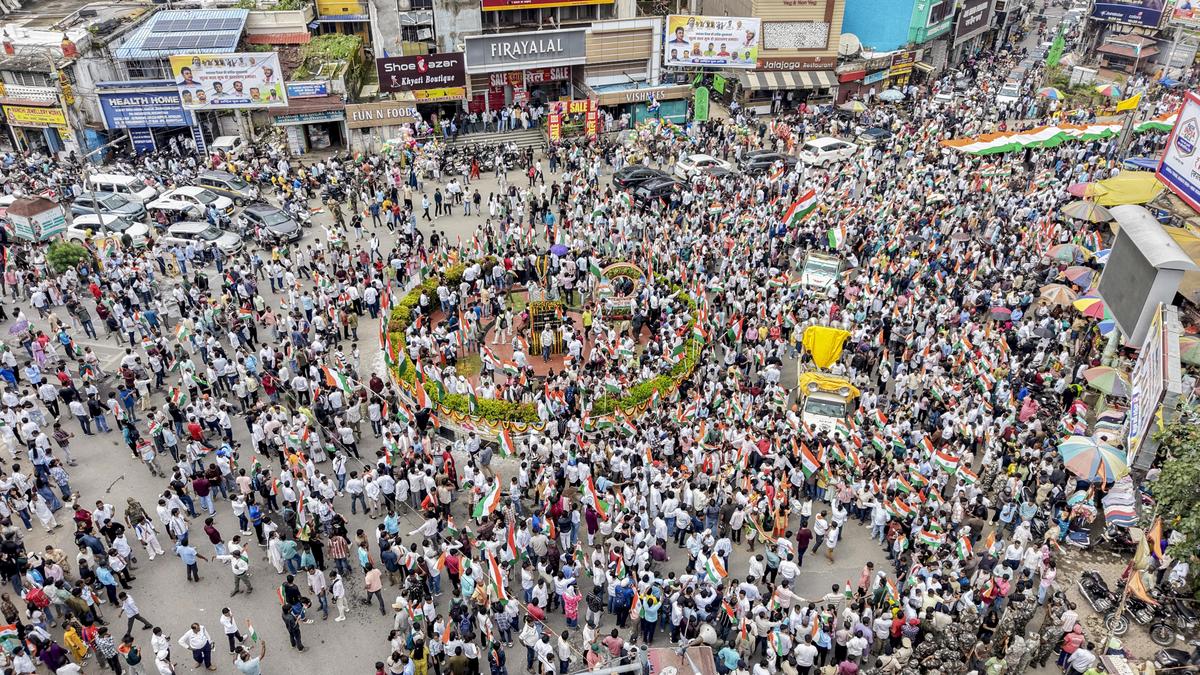
Job aspirants in Uttar Pradesh and Jharkhand are protesting against recruitment delays and alleged exam irregularities. While UP candidates demand the release of VPO merit lists, Jharkhand students held a Tiranga Yatra amid ongoing agitation and government promises of reform.
Recruitment Agitations Erupt Across Uttar Pradesh and Jharkhand
As India commemorates its 80th Independence Day, the aspirations of the nation's youth remain at the center of a growing civil discourse. In both Uttar Pradesh and Jharkhand, job aspirants have taken to the streets to voice systemic grievances regarding government recruitment processes. These protests highlight a critical intersection between the state’s obligation to provide employment and the candidates' demand for transparency, meritocracy, and administrative efficiency.
The Crisis of Delay in Uttar Pradesh
In Uttar Pradesh, candidates awaiting the final merit list for the Village Panchayat Officer (VPO) examination have reached a breaking point. With results pending for approximately three months, the Sanyukt Pratiyogi Chhatra Hunkar Manch has mobilized to support these aspirants. The frustration is palpable, with candidates planning an indefinite protest outside the Uttar Pradesh Subordinate Service Selection Commission (UPSSSC) office starting August 17. For these individuals, the delay is not merely an administrative hurdle but a significant disruption to their personal and professional lives, creating an atmosphere of uncertainty that demands immediate bureaucratic resolution.
Jharkhand’s Demand for Systemic Reform
Concurrently, Jharkhand is witnessing a prolonged agitation, now in its 22nd day, centered on alleged irregularities within the Jharkhand Public Service Commission (JPSC) and Jharkhand Staff Selection Commission (JSSC) processes. On August 15, thousands of participants marked the nation’s independence with a 'Tiranga Yatra,' marching from Jaipal Singh Munda Stadium to Albert Ekka Chowk. This act of civil expression was underscored by the plight of protest leader Devendra Nath Mahto, who, after a 14-day hunger strike, alleged that police prevented him from joining the march while he remained under medical observation.
Political Rhetoric vs. Ground Reality
The political response in Jharkhand has been characterized by high-level acknowledgments of the crisis. Chief Minister Hemant Soren, during his Independence Day address, emphasized that the efforts of aspirants should not be compromised by 'mafia' elements or corrupt systems. Similarly, Governor Santosh Kumar Gangwar condemned recruitment malpractices as 'unacceptable,' linking the integrity of competitive examinations to the broader foundation of student trust in state institutions. Despite these assurances, the gap between official rhetoric and the protesters' lived experience—marked by hunger strikes and police restrictions—remains a point of significant contention.
Broader Implications and Future Trends
These events underscore a recurring trend in Indian governance where the recruitment cycle becomes a flashpoint for political accountability. The reliance on large-scale competitive examinations creates high-stakes environments where even minor administrative delays can spiral into widespread unrest. Moving forward, the pressure on state commissions to modernize their testing infrastructure and ensure timely, transparent results will likely intensify. If these states fail to expedite recruitment, the potential for sustained civil unrest may increase, forcing a re-evaluation of how government vacancies are filled and how student grievances are addressed by executive authorities.
Multiple Citing Sources
Verification Required?