Justice Pushpendra Bhati sworn in as Chief Justice of J&K, Ladakh High Court
Source Entity
India Latest News: Top National Headlines Today & Breaking News | The Hindu
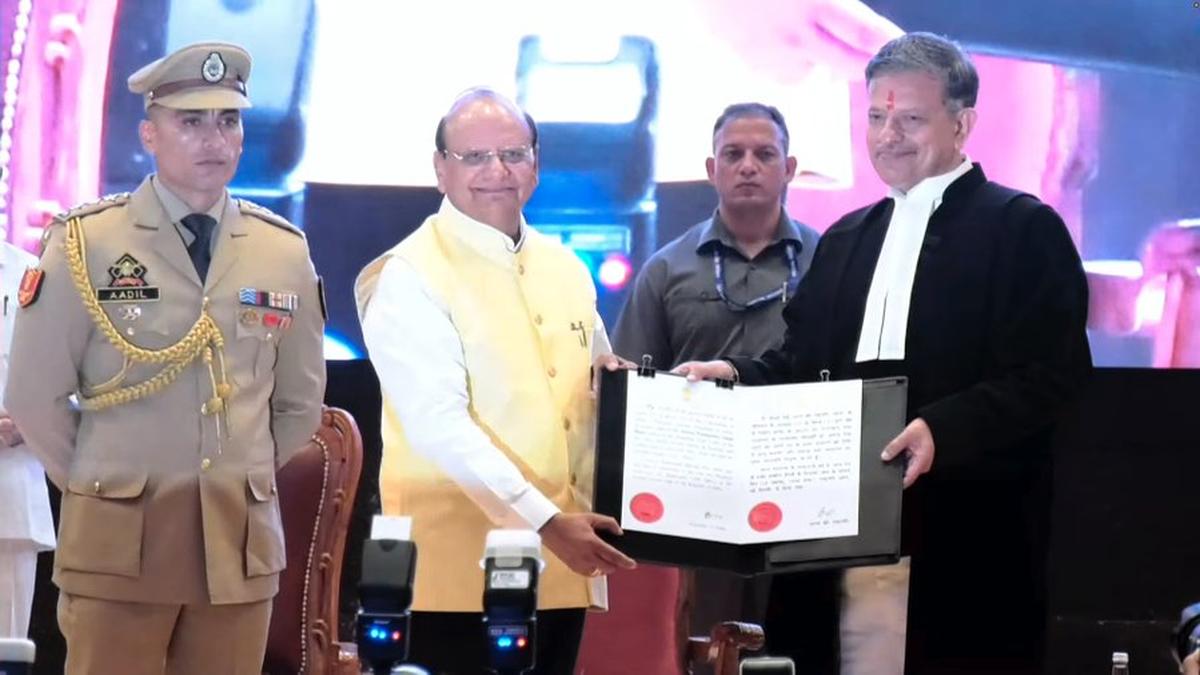
Justice Pushpendra Singh Bhati has been sworn in as the Chief Justice of the High Court of Jammu and Kashmir and Ladakh. The ceremony was presided over by Lieutenant Governor V.K. Saxena in the presence of Chief Minister Omar Abdullah.
Judicial Transition in the High Court of Jammu and Kashmir and Ladakh
On September 9, 2026, the judicial landscape of Northern India witnessed a significant transition as Justice Pushpendra Singh Bhati was formally sworn in as the Chief Justice of the High Court of Jammu and Kashmir and Ladakh. This appointment, which follows a formal recommendation by the Supreme Court collegium and a subsequent notification by the Centre on September 5, marks a pivotal moment for the administration of justice in the Union Territories.
The Ceremony and Key Participants
The oath-taking ceremony was a formal affair, reflecting the gravity of the judicial office. Lieutenant Governor V.K. Saxena, who is currently exercising additional charge for Jammu and Kashmir during the leave period of incumbent Manoj Sinha, administered the oath of office to Justice Bhati. The event was attended by high-ranking dignitaries, including Chief Minister Omar Abdullah, alongside an assembly of judges from the High Court and various subordinate courts, underscoring the institutional importance of the transition.
Procedural Context and Succession
Justice Bhati’s appointment concludes a period of interim leadership within the High Court. He succeeds Justice Sanjeev Kumar, who had been serving as the acting Chief Justice. The transition process, initiated by the Supreme Court collegium’s recommendation, adheres to the established constitutional procedure for judicial appointments in India, ensuring that the High Court maintains stable leadership to address the legal complexities unique to the Jammu, Kashmir, and Ladakh regions.
Administrative Nuances of the Union Territories
The involvement of Lieutenant Governor V.K. Saxena in the swearing-in ceremony highlights the current administrative structure of the Union Territories. As Mr. Saxena holds additional charge, his role in overseeing this judicial appointment emphasizes the centralized oversight of the Union government regarding the judiciary in J&K and Ladakh. This structural arrangement is crucial for maintaining legal continuity during periods of administrative transition.
Broader Implications for the Judiciary
The appointment of a permanent Chief Justice is vital for the effective functioning of the High Court, which serves as the primary appellate authority for the region. A permanent Chief Justice provides the necessary oversight to manage the court’s docket, address vacancies in subordinate courts, and ensure the timely delivery of justice. As the region navigates ongoing socio-legal developments, the stability brought by a permanent appointment is expected to bolster public confidence in the judicial process.
Future Outlook
Looking ahead, the tenure of Chief Justice Bhati will be instrumental in shaping the judicial environment of J&K and Ladakh. With the support of the executive branch—as evidenced by the presence of Chief Minister Omar Abdullah—the judiciary is well-positioned to maintain its independence while addressing the specific legal challenges inherent to the region's geography and administrative framework. His leadership will likely focus on streamlining court processes and ensuring that the rule of law remains robust across these territories.
Verification Required?