Google alternative Kagi launches an email service
Source Entity
Jay Peters
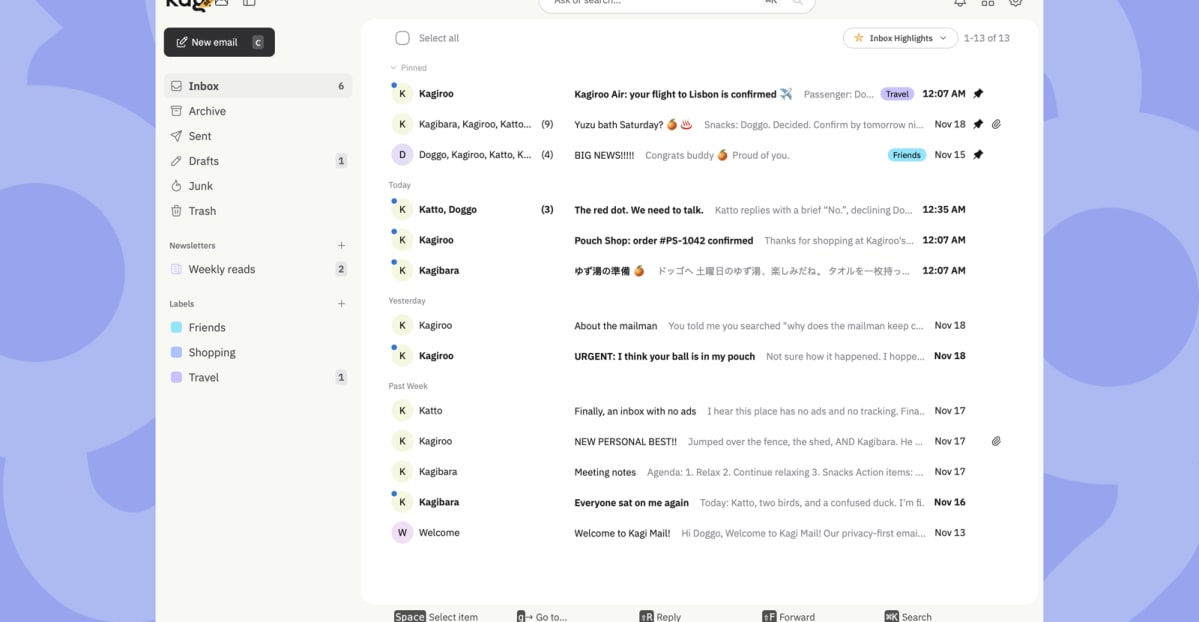
Kagi has launched a public beta for its new email service, Kagi Mail, positioning itself as a privacy-focused competitor to Gmail. The service emphasizes a no-ads, no-surveillance model with support for custom domains and 50GB of storage.
The Expansion of the Kagi Ecosystem
Kagi, a company already recognized for its paid, privacy-centric search engine and the Orion browser, has officially entered the email market with the launch of the Kagi Mail public beta. This move represents a strategic expansion of their product suite, directly challenging Google’s dominance in the productivity and communication software sector. By offering an alternative to Gmail, Kagi is positioning itself as a comprehensive ecosystem for users who prioritize digital sovereignty over the data-harvesting models typical of free, ad-supported web services.
Core Value Proposition: Privacy and Open Standards
The fundamental premise of Kagi Mail is built on a philosophy of "no surveillance, no ads, and no lock-in." Unlike legacy providers that often monetize user behavior through targeted advertising, Kagi’s model relies on a paid subscription structure. This ensures that the user is the customer rather than the product. Furthermore, the commitment to open standards is a critical differentiator, allowing users to maintain control over their data and avoid the proprietary ecosystem traps that often make switching email providers a cumbersome process.
Technical Features and Storage Capabilities
At its launch, Kagi Mail provides users with a dedicated @kagimail.com address, but notably, it offers flexibility through support for unlimited aliases and custom domains. This is a significant feature for power users and professionals who require brand consistency or segmented communication channels. With 50GB of included storage, the service is well-positioned to handle modern data needs, effectively competing with the storage tiers offered by major tech conglomerates, while also integrating a built-in calendar to facilitate essential daily workflows.
Roadmap and Future Development
While the current beta offers a robust foundation, the Kagi team has been transparent about the service’s development trajectory. Users can look forward to the integration of contacts and a full address book by the first quarter of 2027. However, the timeline for native mobile applications is further out, reflecting a deliberate development cycle. This phased approach suggests that Kagi is prioritizing backend stability and security before expanding into the high-friction environment of dedicated mobile app ecosystems.
Market Implications and Conclusion
The entry of Kagi into the email space signifies a growing market appetite for "independent tech" that operates outside the traditional Big Tech paradigm. As users become increasingly aware of the privacy trade-offs associated with "free" services, companies like Kagi that offer paid, transparent alternatives are finding a niche audience. By providing a suite of tools—search, browsing, and now email—Kagi is slowly building a viable, non-surveillance alternative to the Google stack, marking a significant shift in how privacy-conscious consumers navigate the digital landscape.