Savarkar row: Congress cites Bunch of Thoughts by Golwalkar to hit back at Shinde Sena
Source Entity
The Indian Express
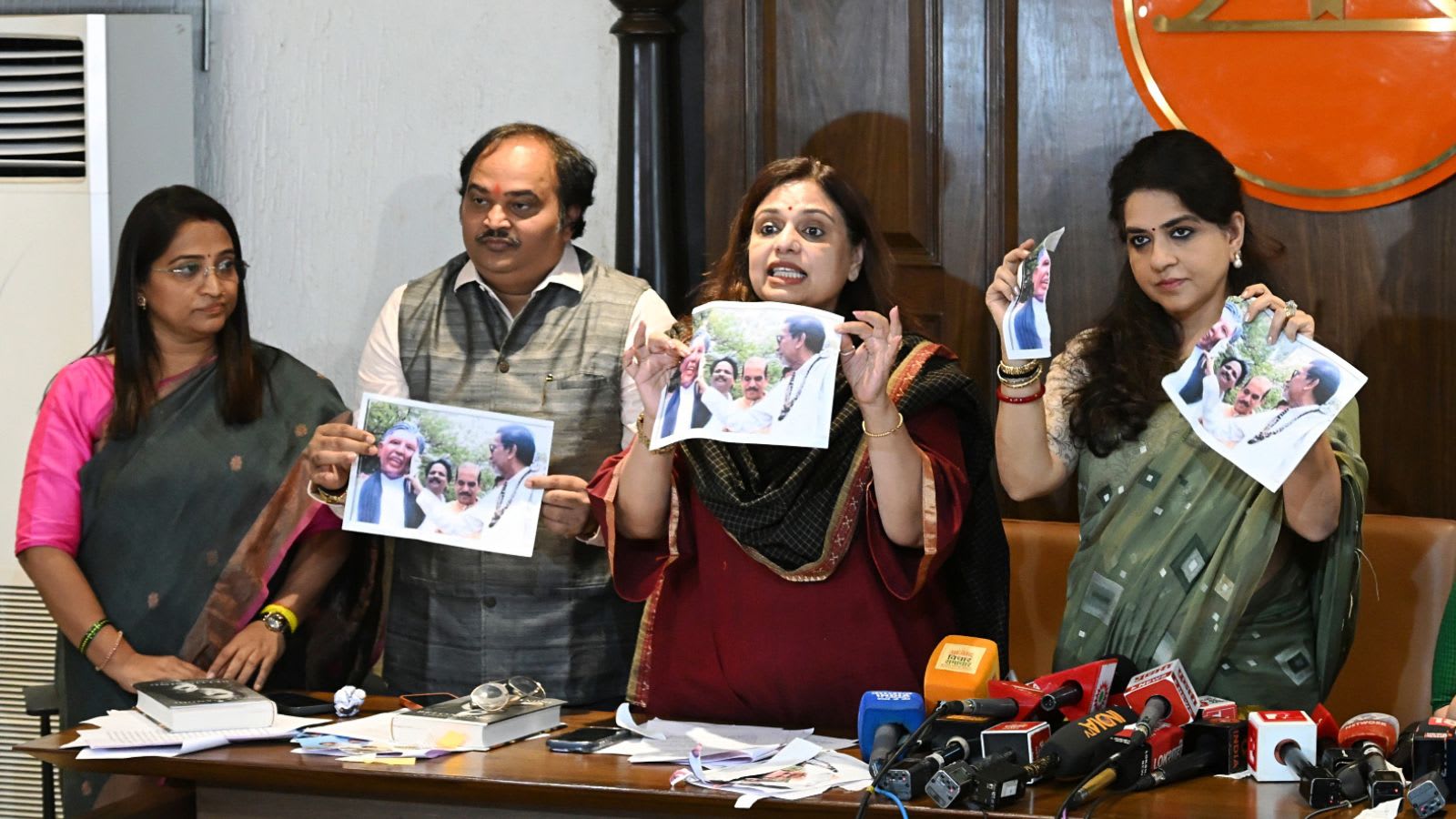
Karnataka faces tension over a book allegedly disparaging reformer Basavanna, while Maharashtra politics heats up as the Shiv Sena and Congress clash over historical interpretations of V.D. Savarkar. Both incidents highlight the ongoing struggle over ideological narratives in contemporary Indian political discourse.
Ideological Clashes and Historical Narratives in Indian Politics
Recent developments in Karnataka and Maharashtra underscore the persistent power of historical figures and ideological texts in shaping modern Indian political discourse. In Karnataka, a significant controversy has erupted following the publication of 'Basava Mantapa' by US-based writer Ravi Hanj. The book, a compilation of columns previously featured in the Kannada newspaper Vishwavani, has drawn sharp condemnation from the Basava Samithi and members of the Veerashaiva-Lingayat community. The core of the grievance lies in alleged derogatory remarks made about the 12th-century social reformer Basavanna, a figure of profound cultural and religious significance.
The Lingayat Community and Cultural Sentiments
The backlash against Hanj’s work highlights the delicate nature of discussing historical icons in the public sphere. The Basava Samithi has taken formal legal action, filing a police complaint and demanding an FIR against both the author and the publisher. This reaction reflects the deep-seated reverence for Basavanna, whose teachings on social equality and anti-caste structures remain a cornerstone of Lingayat identity. The controversy, which intensified following the book's Bengaluru launch on November 15, illustrates how intellectual discourse—even when presented as a compilation of past articles—can trigger immediate and robust institutional responses when perceived as an affront to community sentiments.
The Savarkar Debate: A Proxy War
Simultaneously, in Maharashtra, the political arena has been dominated by a heated exchange between the Eknath Shinde-led Shiv Sena and the Congress party regarding the legacy of V.D. Savarkar. This conflict was ignited by references in Congress leader Sonia Gandhi’s memoir, Belonging: A Journey of Love. The Shiv Sena, seeking to protect the image of the Hindutva ideologue, has demanded the withdrawal of specific passages and a ban on the book’s circulation within the state. The debate centers on historical claims regarding Savarkar’s mercy petitions to the British, a long-standing point of contention that continues to polarize political factions.
Strategic Retaliation and Historical Citing
The Congress party’s response to the Shiv Sena’s protests reveals a calculated effort to shift the narrative by highlighting internal inconsistencies within the right-wing ideological framework. By citing M.S. Golwalkar’s Bunch of Thoughts, Congress national secretary Sachin Sawant challenged the Shiv Sena’s selective outrage. Sawant pointed to passages where the former RSS chief allegedly characterized Savarkar’s version of Hindutva as negative and even referred to him as a 'traitor.' This rhetorical move serves to neutralize the Shiv Sena's moral high ground by forcing them to reconcile their current defense of Savarkar with the critical writings of a foundational figure in the broader Hindutva movement.
Broader Implications for Political Discourse
These two distinct controversies share a common thread: the instrumentalization of history for contemporary political mobilization. Whether it is the protection of a religious icon like Basavanna or the defense of a political ideologue like Savarkar, these events demonstrate that historical interpretation is rarely a neutral academic pursuit in India. Instead, these figures are treated as living symbols whose public perception is guarded with intense political fervor. The demand for bans, FIRs, and the public scrutiny of memoirs and columns indicate that the 'battle of ideas' is increasingly moving toward legal and institutional arenas.
Future Trends in Political Polarization
Looking ahead, we can expect that the intersection of literature, historical memory, and legal action will continue to define the political landscape. As parties seek to define their ideological boundaries, the scrutiny of texts—both new and old—will likely intensify. The demand for censorship or legal retribution against authors will remain a preferred tool for factions aiming to mobilize their support bases. Consequently, the space for nuanced historical debate is being squeezed by the pressure to defend identity-driven narratives, suggesting that polarization around these issues will likely persist in the coming electoral cycles.