At 14, a Kerala girl built a washing machine that needed no electricity
Source Entity
TOI SCIENCE DESK
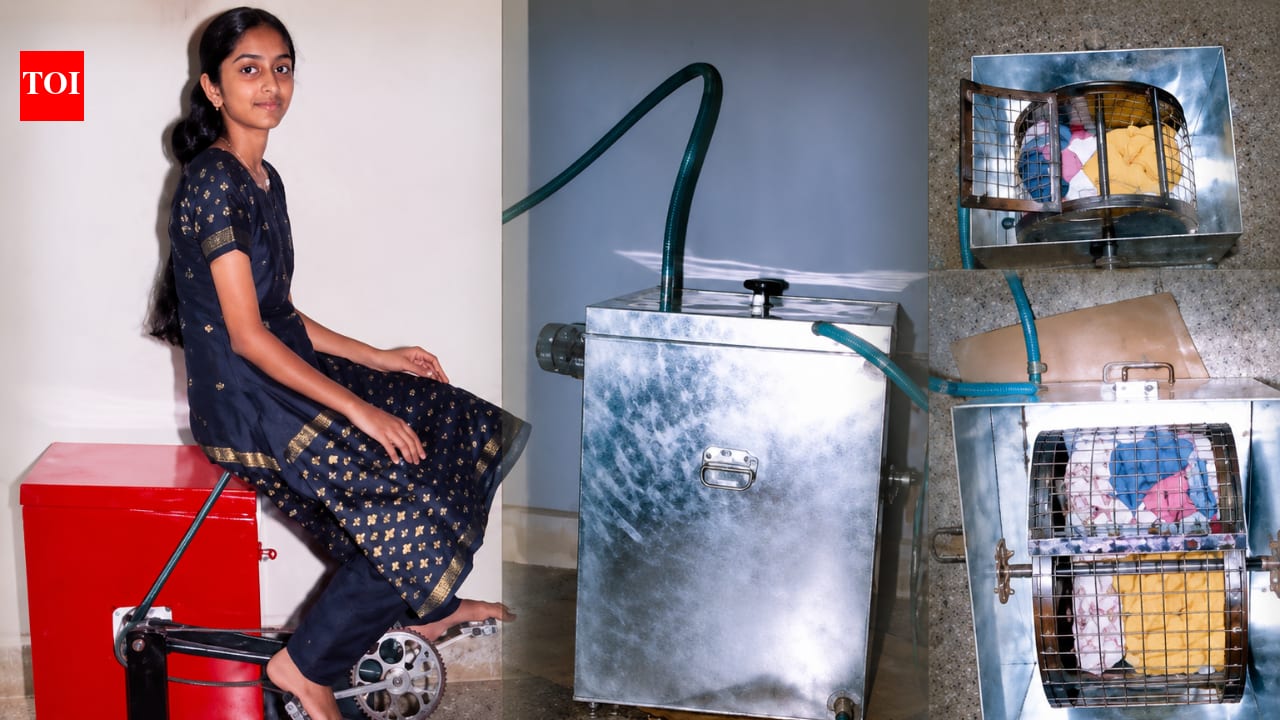
A 14-year-old girl from Kerala, Remya, developed a manual, bicycle-powered washing machine to assist with household chores. This low-cost, eco-friendly invention gained national recognition through the National Innovation Foundation for its practicality in areas with unreliable power.
The Ingenuity of Manual Innovation
At the age of 14, while balancing the rigorous demands of 10th-standard studies and significant household responsibilities, a young girl named Remya from Kerala transformed a domestic necessity into an engineering milestone. Faced with the challenge of managing laundry alongside her twin sister during a period when her mother was ill, Remya sought a solution to the labor-intensive task of hand-washing clothes. Her invention, a washing machine that operates without electricity, represents a profound intersection of personal necessity and creative problem-solving.
The Mechanics of the Bicycle-Powered Washer
The core of Remya's invention lies in the adaptation of a familiar bicycle mechanism. By repurposing components that translate pedaling motion into rotational force, she created a system capable of both washing and spin-drying garments. This mechanical ingenuity allows a user to clean a load of laundry through just a few minutes of pedaling, effectively bypassing the need for a stable electrical grid or expensive, resource-heavy appliances.
Addressing Energy Poverty and Practical Needs
This device serves as a vital low-cost alternative for communities living without reliable power. By removing the dependency on electricity, Remya’s machine addresses a fundamental barrier to modern convenience in rural or underdeveloped settings. The design is inherently sustainable, requiring zero fossil fuels or grid energy, and demonstrates how small-scale, localized innovation can provide immediate relief to families burdened by household labor.
Impact on Family and Community Dynamics
Remya’s project began as a deeply personal response to her family’s circumstances. Initially, her invention was met with the curiosity and skepticism typical of an unusual household project. However, as the machine proved its utility, it evolved from a private experiment into a functional tool that significantly reduced the time and physical strain associated with daily chores, allowing Remya more time to focus on her education.
National Recognition and Future Implications
The significance of Remya's work was formally acknowledged by the National Innovation Foundation (NIF), which documented her invention and helped bring it to a wider audience. This recognition highlights the importance of grassroots innovation in India. Her story serves as a precedent for how student-led, frugal engineering can solve systemic issues, potentially inspiring future trends in decentralized, human-powered technology that prioritize sustainability and accessibility over complex industrial solutions.