‘We’re fed up’: Kerala man’s job loss, suspected suicide pact, and 2 deaths
Source Entity
Shaju Philip
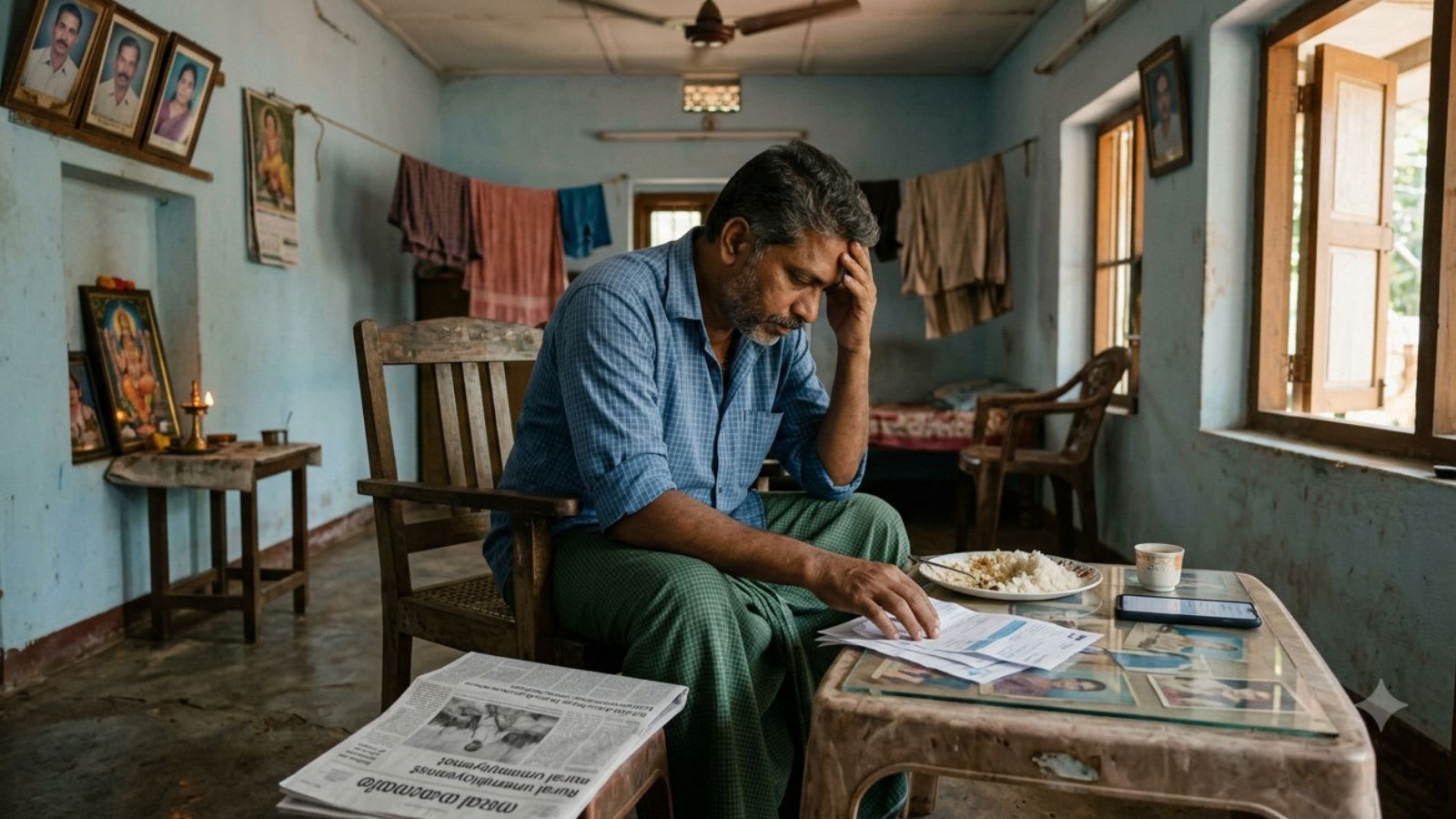
A Kerala man and his daughter died in a suspected suicide pact in Thrissur after he reportedly lost his job in Qatar. (Image generated by Gemini AI) In a suspected suicide pact, an expatriate from Ke...
Tragedy in Thrissur: The Human Cost of Expatriate Unemployment
In a heartbreaking incident that has shocked the community of Thrissur, Kerala, a man and his daughter were found dead in what is suspected to be a suicide pact. The catalyst for this tragedy appears to be the man's recent job loss in Qatar, a development that seemingly pushed the family toward a state of absolute despair. The phrase "We're fed up," associated with the case, serves as a haunting testament to the mental anguish and perceived hopelessness that can accompany sudden financial instability.
The "Gulf Dream" and the Burden of Remittances
To understand the depth of this tragedy, one must look at the socio-economic fabric of Kerala. For decades, the "Gulf Dream" has been a cornerstone of the state's economy, with millions of Keralites migrating to Middle Eastern countries like Qatar, Saudi Arabia, and the UAE. These expatriates are often the sole breadwinners for extended families, and their remittances fuel everything from housing and education to healthcare in their home villages. When a job is lost in the Gulf, it is rarely just an individual professional setback; it is a systemic financial collapse for the entire family unit, often compounded by debts taken to fund the initial migration.
The Psychological Toll of Return and Failure
Beyond the financial strain, there is a profound psychological burden attached to returning home without employment. In many traditional communities, the ability to provide is closely tied to a man's sense of identity and social standing. The transition from being a successful "NRI" (Non-Resident Indian) to an unemployed returnee can lead to severe depression, anxiety, and a sense of failure. This case highlights a critical gap in the support systems available for returning migrants, who often face social stigma and a lack of mental health resources to cope with the trauma of sudden unemployment.
Family Dynamics and the Cycle of Despair
One of the most distressing aspects of this event is the involvement of the man's daughter in the suicide pact. This suggests a level of shared hopelessness where the parent may have felt that the future for his child was irrevocably compromised by his loss of income. Such occurrences point to a dangerous narrative where financial insolvency is viewed as an insurmountable wall, leading individuals to believe that death is the only escape for their loved ones. It reflects a desperate attempt to "save" family members from a perceived life of poverty and hardship.
Broader Implications for Migrant Labor
The instability of employment in the Middle East, often governed by strict contract laws and the vulnerabilities of the migrant workforce, creates a precarious existence for thousands. Sudden terminations or the non-renewal of contracts can leave workers stranded or forced to return home with nothing. This incident serves as a grim reminder of the need for better social security nets, insurance policies for migrant workers, and government-led reintegration programs that help returning expatriates find new opportunities within India.
Conclusion: A Call for Mental Health Intervention
This tragedy in Thrissur is more than a local news story; it is a symptom of a larger crisis involving migration, economic dependency, and mental health. To prevent such losses in the future, there must be a concerted effort to destigmatize mental health struggles among the expatriate community. Establishing dedicated counseling centers for returning migrants and creating financial safety nets could provide the necessary lifeline to those who feel "fed up" and alone in their struggle. The loss of two lives over a job loss is a systemic failure that demands urgent attention.