Everyone Seems to Have Missed the 13 Most Important Words in Kevin Warsh’s Press Conference About Hiking Rates
Source Entity
Yahoo Finance
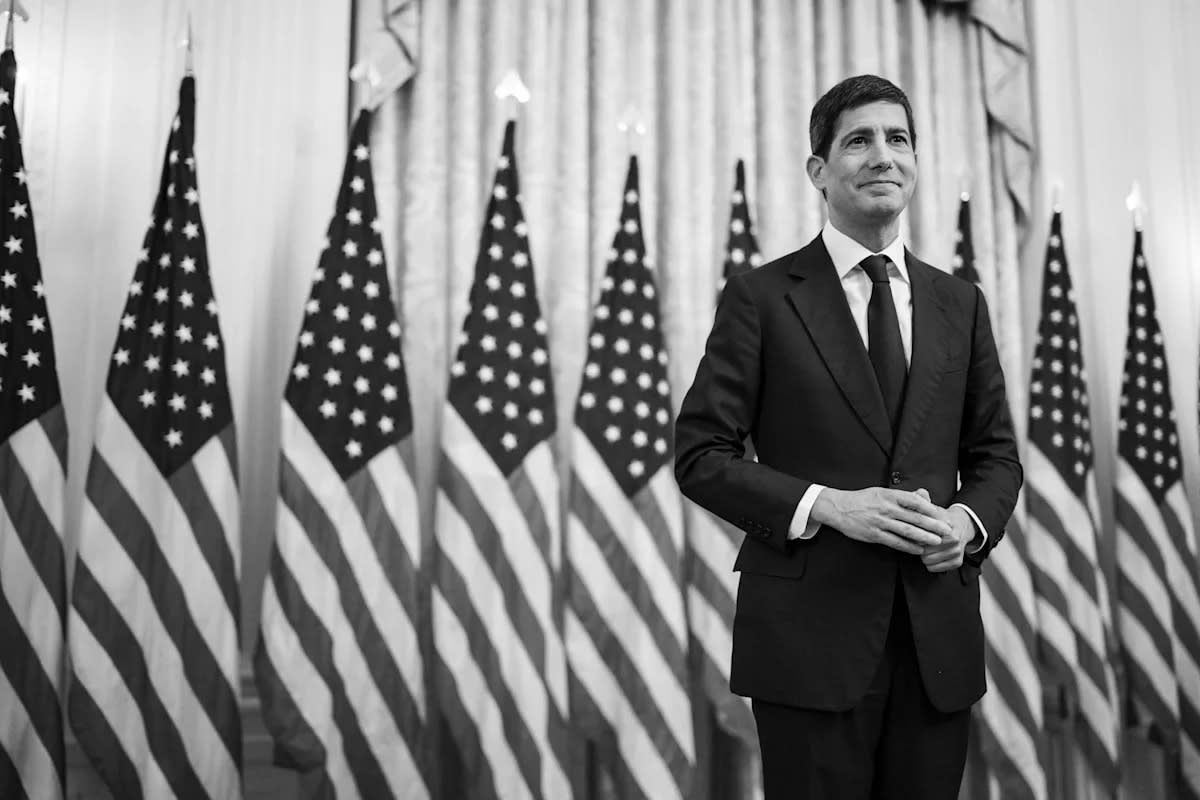
Federal Reserve Chair Kevin Warsh oversaw the first interest rate hike since 2023, citing inflation and economic strength. The move marks a pivot in policy focus toward financial conditions rather than labor market impacts.
The Shift in Monetary Policy: Analyzing the Warsh Fed
In a significant pivot for the U.S. central bank, Federal Reserve Chair Kevin Warsh has presided over the first benchmark interest rate hike since June 2023. This quarter-point increase marks a departure from the previous era of stability, signaling a new, more aggressive approach to managing inflationary pressures. While market analysts were quick to focus on the immediate volatility in equity markets, the deeper implications lie in the language and strategic framework Warsh is establishing to navigate the current economic landscape.
Inflation as the Primary Catalyst
At the core of the Fed’s recent decision is a firm acknowledgment that inflation has remained persistently elevated for an extended duration. Warsh explicitly stated that "the plain fact is that inflation is too high," effectively shifting the Federal Reserve's narrative from a patient, data-dependent stance to a more proactive, combatant posture. By framing the rate hike as removing "a dose of accommodation" rather than aggressive tightening, Warsh is attempting to anchor market expectations while maintaining flexibility for future policy adjustments.
Decoupling Labor from Disinflation
Perhaps the most consequential aspect of Warsh’s recent communication is his rejection of employment damage as a necessary trade-off for price stability. Conventional economic theory often assumes that cooling an overheated economy requires softening the labor market. However, Warsh has challenged this paradigm, asserting that the Fed need not harm the labor force to reach the 2% inflation target. This stance has garnered significant attention from economists, such as UBS analyst Pingle, who noted that the Fed's policy sensitivity has shifted away from labor metrics and toward broader financial conditions.
The Role of Geopolitics and Policy Errors
Beyond simple monetary mechanics, the recent rate hike is being attributed to a confluence of factors, including a "strong economy" and increased "competition for capital." Yet, the mention of geopolitics as a driver of higher yields suggests that the Fed is grappling with external pressures that are increasingly difficult to manage through domestic interest rate policy alone. Critics argue that the current economic strain is exacerbated by historical policy decisions, suggesting that the recent rate hike is a corrective measure for a buildup of systemic issues that have been simmering for years.
Future Trends and Market Sensitivity
Wall Street is currently parsing Warsh’s rhetoric to determine the trajectory of future hikes. His refusal to characterize current financial conditions as "restrictive" indicates that the Fed may believe there is more room to maneuver before the economy experiences a significant slowdown. As the Fed moves into this new phase of policy, investors should anticipate heightened sensitivity to financial conditions. The central bank appears to be entering a period where historical models of inflation control are being tested against a unique set of modern economic realities.
Conclusion
The transition under Chair Kevin Warsh represents a fundamental change in how the Federal Reserve interprets its dual mandate. By prioritizing the containment of inflation while attempting to shield the labor market, the Fed is walking a narrow path. Whether this strategy will successfully stabilize the economy without precipitating a recession remains the central question for policymakers and global investors alike in the coming quarters.