Kishtwar killings aftermath: Remarks by Congress’ Karra, BJP’s Parihar spark protests in J&K
Source Entity
India Latest News: Top National Headlines Today & Breaking News | The Hindu
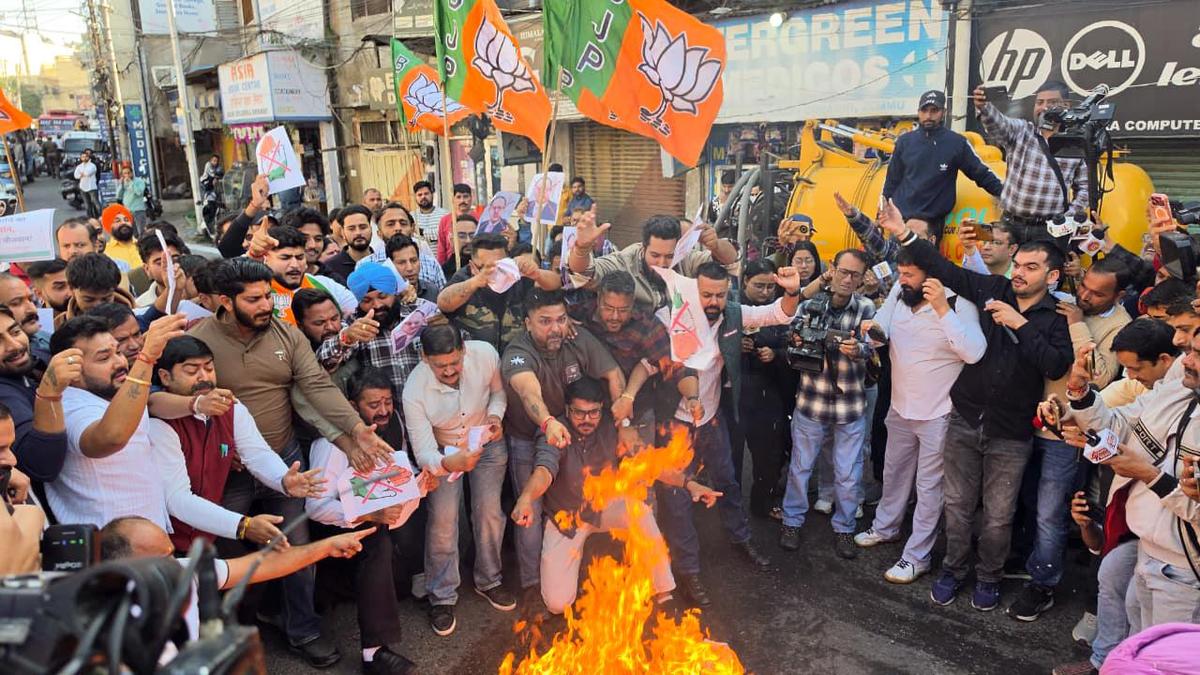
Tensions have escalated in Jammu and Kashmir following conflicting claims over the deaths of two SPOs in Kishtwar. Political leaders from the Congress and BJP are trading accusations regarding whether the deaths were a result of mistaken identity or terrorist activity.
Political Firestorm Erupts Over Kishtwar SPO Killings
The recent killing of two Special Police Officers (SPOs) in Kishtwar has transcended a local security tragedy to become a focal point of intense political polarization in Jammu and Kashmir. Following the incident on November 16, 2026, the narratives surrounding the cause of death have diverged sharply along party lines, leading to widespread protests and public outcry. At the heart of the controversy is a fundamental disagreement over whether the SPOs were victims of a tragic operational error or a targeted act of terror.
Conflicting Narratives and Political Accusations
JKPCC President Tariq Hameed Karra ignited the controversy by claiming that the two SPOs were killed by the Army in a case of mistaken identity on November 11. This assertion immediately drew a fierce rebuttal from BJP Leader of Opposition Sunil Sharma. Mr. Sharma characterized the Congress party's narrative as a deliberate attempt to deflect blame from terrorist elements, suggesting that such rhetoric undermines the morale of security forces and dishonors the families of the deceased who were performing their duties to relieve jawans at an Army post in Dharna-Marwah.
The Security Context in Kishtwar
The district of Kishtwar has long been a sensitive region due to its rugged terrain and historical susceptibility to militant infiltration. The deployment of SPOs to remote locations, such as the Army post at Dharna-Marwah, underscores the precarious nature of security operations in the region. When deaths occur in such high-stakes environments, the lack of immediate, verified clarity often creates a vacuum that is quickly filled by competing political agendas, complicating the official investigation and inflaming public sentiment.
Broader Implications for Regional Stability
The politicization of security incidents carries significant risks for the stability of Jammu and Kashmir. By framing the deaths through a partisan lens, political leaders risk alienating the local population and eroding trust in official investigations. When the discourse shifts from tactical accountability to accusations of 'misleading information' versus 'insulting sacrifices,' the ability of the state to maintain law and order is often compromised by the resulting civil unrest and protests.
Historical Precedents and Future Trends
Historically, J&K has seen numerous instances where security incidents have triggered political debates, but the current escalation highlights a growing trend of hyper-partisan rhetoric in the region's political landscape. As political parties increasingly leverage security narratives to consolidate their bases, the potential for social fragmentation grows. Future trends suggest that unless there is a unified, transparent mechanism for reporting incidents involving security forces, such tragedies will continue to be exploited for political mileage.
Conclusion
The tragedy in Kishtwar serves as a stark reminder of the volatility inherent in J&K's security environment. While the families of the fallen SPOs await definitive answers, the ongoing political standoff between the Congress and the BJP serves only to deepen the divide. Achieving stability in the region will require a movement toward factual consensus and a commitment to depoliticizing the sacrifices made by those serving on the front lines.
Verification Required?