New York Knicks emailed staff free championship rings, those who clicked got a surprise
Source Entity
TOI TECH DESK
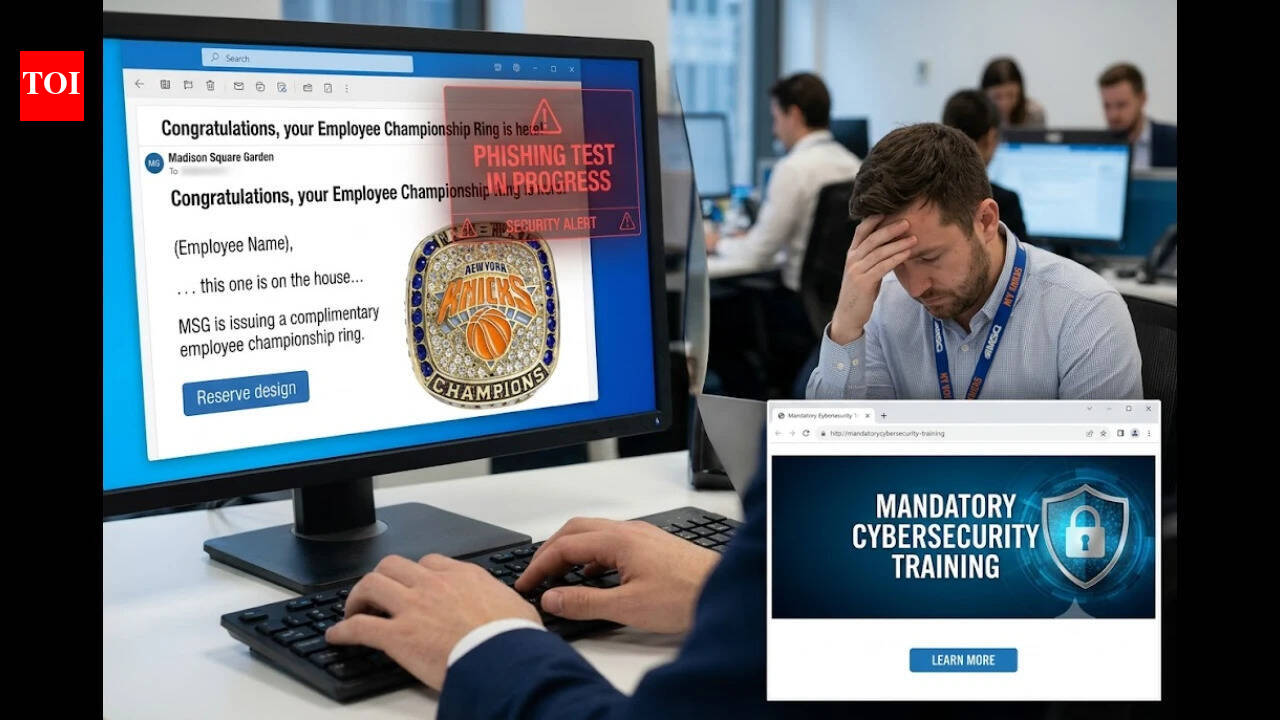
Madison Square Garden Sports mistakenly used a fake championship ring offer as a phishing test for employees. Following backlash, the company confirmed it will provide over 275 authentic rings and jewelry to staff.
The Knicks Championship Phishing Incident: A Lesson in Corporate Cybersecurity
The Intersection of Celebration and Security
Following their historic 2026 NBA championship win—the franchise's first title since 1973—the New York Knicks and parent company Madison Square Garden (MSG) Sports found themselves in a unique corporate communications dilemma. In an attempt to bolster cybersecurity awareness, MSG launched a phishing simulation that dangled the promise of free championship rings to employees. This maneuver, while intended to test internal vigilance, backfired when staff members who clicked the link were redirected to mandatory cybersecurity training.
The Rationale Behind the Test
MSG Sports justified the simulation by highlighting the reality of modern corporate threats. The company recently suffered a legitimate cyberattack involving the theft of employee credentials, prompting an urgent need to ensure staff could identify fraudulent emails. By mimicking a high-value internal communication, the security team aimed to highlight how easily employees can be manipulated by social engineering tactics that exploit workplace excitement or personal gain.
The Risks of Deceptive Simulations
While phishing simulations are a standard industry practice, security agencies have long warned against using "prize-themed" lures that can damage employee morale and erode trust. When an organization exploits a moment of collective celebration—like a long-awaited championship victory—to conduct a security test, the strategy risks appearing predatory. The negative reaction from staff indicates that while security is paramount, the methods employed must align with corporate culture to avoid resentment.
Correcting the Course
Recognizing the optics of the situation, MSG Sports publicly labeled the exercise an "unfortunate mistake." To rectify the situation and restore goodwill, the organization has committed to distributing over 275 authentic championship rings and specialized jewelry. Valued at more than $3.7 million, these items are intended for players, coaches, and staff, ensuring that the actual rewards of the 2026 title are distributed fairly rather than used as tools for security training.
Broader Implications for Corporate Policy
This incident serves as a case study for organizations balancing the need for rigorous cybersecurity protocols with the psychological reality of the workplace. As cyber threats become more sophisticated, companies are increasingly turning to simulated attacks to train their workforce. However, the MSG incident highlights the fine line between effective training and psychological manipulation, suggesting that future simulations may require more transparency or less inflammatory lures to remain effective without alienating the workforce.
Conclusion
The Knicks' championship phishing test highlights the complex challenges companies face in securing their digital infrastructure. While the intent to prevent future credential theft was grounded in legitimate security concerns, the execution demonstrated the risks of using emotional leverage against employees. Moving forward, the focus will shift to the actual distribution of the $3.7 million in championship memorabilia, serving as a tangible reminder of the team's historic success.