Site inspection held for key Goshree-Mamangalam traffic corridor in Keralam’s Kochi
Source Entity
India Latest News: Top National Headlines Today & Breaking News | The Hindu
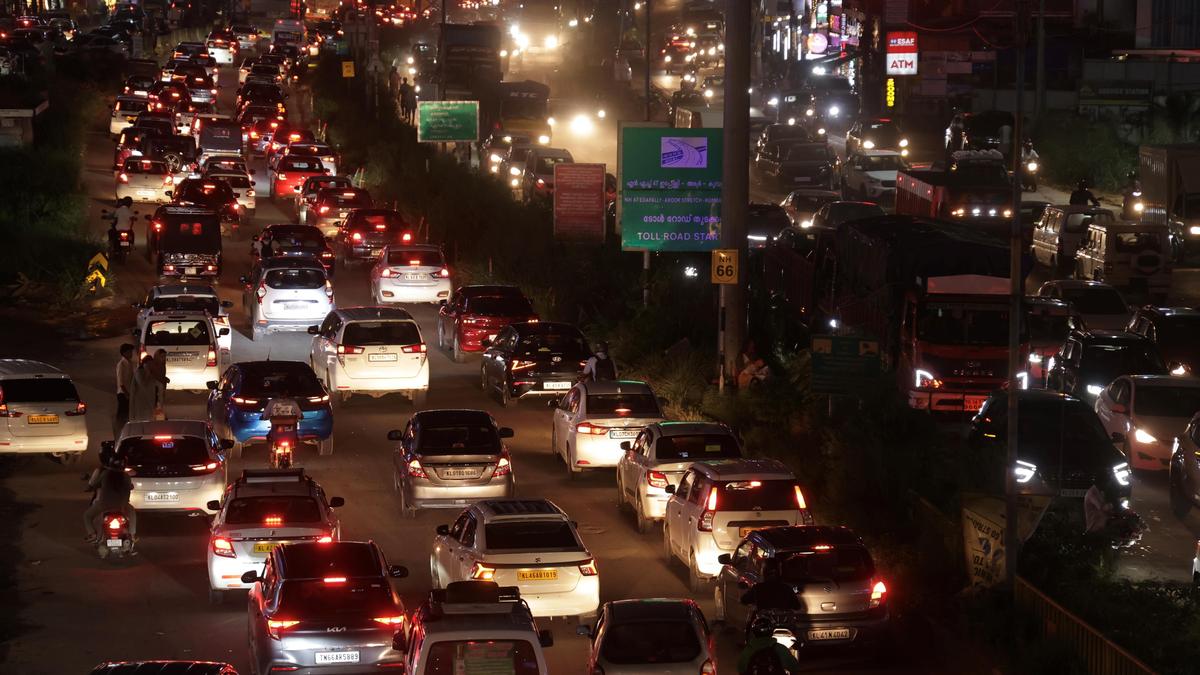
The Kerala State Human Rights Commission has ordered joint inspections between KMRL and Kochi police to alleviate metro-related traffic congestion. Simultaneously, officials are advancing the long-awaited Goshree-Mamangalam road project to improve urban connectivity and reduce city-wide bottlenecks.
Addressing Kochi's Urban Mobility Challenges
Kochi, a rapidly developing urban center in Kerala, is currently grappling with the dual pressures of large-scale infrastructure expansion and the need for efficient traffic management. The recent directives from the State Human Rights Commission (SHRC), led by Chairperson Alexander Thomas, highlight a growing concern regarding the impact of Kochi Metro Rail Limited (KMRL) construction projects on daily commuters. By mandating regular joint inspections between the District Police Chief and KMRL officials, the SHRC is seeking to institutionalize accountability in managing traffic flow at critical bottlenecks like St. Martin Junction and Palarivattom.
Institutional Oversight and Accountability
The SHRC’s intervention is significant because it moves beyond mere complaints, establishing a formal mechanism for resolution. The requirement for a bi-monthly meeting between the deputy manager of projects, the KMRL traffic consultant, and senior traffic police officials ensures that construction activities are synchronized with traffic management strategies. This collaborative approach is essential in an urban environment where construction-related disruptions often lead to significant economic and personal time loss for residents.
The Goshree-Mamangalam Corridor: A Long-Awaited Solution
Parallel to the immediate mitigation of metro-related traffic, the city is finally moving forward with the Goshree-Mamangalam road development project. This project, which has been in demand for over 30 years, represents a critical shift toward long-term urban planning. By transforming this stretch into a major traffic corridor, city planners aim to relieve the persistent pressure on existing arterial roads that have become overwhelmed by the city's growth.
Political Synergy and Financial Commitment
The success of the Goshree-Mamangalam project is bolstered by a rare alignment of political will and fiscal support. With ₹1 crore earmarked in the state budget—a result of concerted efforts by Hibi Eden MP, MLAs T.J. Vinod and Uma Thomas, and Mayor V—the project has secured the necessary momentum to transition from a long-standing demand into an actionable infrastructure reality. This financial backing is a testament to the recognition of the corridor's necessity for the city’s overall connectivity.
Broader Implications for Urban Infrastructure
These developments signify a broader trend in Kochi’s urban evolution: the transition from reactive traffic management to proactive, integrated infrastructure development. While the metro is a vital component of future public transport, its implementation phase must be balanced against the immediate needs of the population. The dual strategy of enforcing strict oversight on current construction sites while simultaneously expanding the city's road capacity demonstrates a comprehensive approach to modernizing Kochi’s transport network.
Future Outlook
Looking ahead, the success of these initiatives will depend on the sustained coordination between the police force and the civil engineering departments. If the bi-monthly meetings mandated by the SHRC become a fixture of city governance, and if the Goshree-Mamangalam project meets its developmental milestones, Kochi will likely see a significant reduction in its traffic congestion. These efforts serve as a blueprint for other Tier-2 cities in India that are currently struggling to balance the modernization of transit systems with the maintenance of daily traffic flow.
Verification Required?