'Serious risk' to India's largest nuclear plant after sensitive files leaked on dark web
Source Entity
TOI NEWS DESK
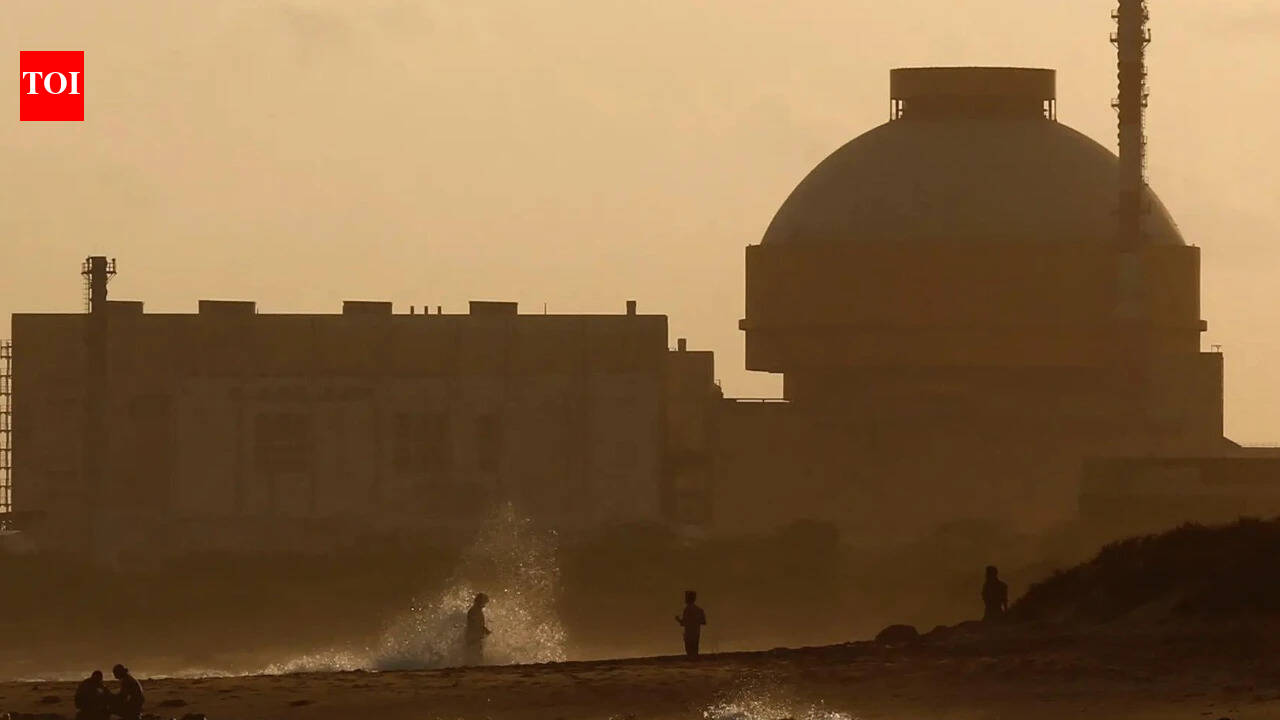
Sensitive data from the Kudankulam Nuclear Power Plant (KNPP), India's largest nuclear facility, has been leaked on the dark web, prompting warnings of serious security risks and an official investigation.
Security Crisis at Kudankulam: Analyzing the Dark Web Data Leak
India's nuclear energy infrastructure is facing a critical security challenge following reports that sensitive files belonging to the Kudankulam Nuclear Power Plant (KNPP) have been leaked on the dark web. As the largest nuclear power station in the country, KNPP is a cornerstone of India's energy strategy and a high-value asset. The emergence of internal documents in the unregulated and anonymous environment of the dark web suggests a breach that transcends simple data theft, potentially exposing the facility to sophisticated external threats.
The Strategic Importance of KNPP
To understand the gravity of this leak, one must consider the scale and nature of the Kudankulam facility. Utilizing Russian-designed VVER reactors, KNPP is designed to provide massive amounts of baseload power to Southern India. Because nuclear plants are classified as critical national infrastructure, their operational blueprints, security protocols, and employee manifests are among the most guarded secrets of the state. Any leak of "sensitive files" could potentially include technical specifications of the plant's cooling systems, emergency response plans, or network architecture, all of which are goldmines for adversarial intelligence agencies.
Implications of the Dark Web Exposure
The fact that these files appeared on the dark web is particularly alarming. Unlike surface-web leaks, dark web dumps are often curated for sale to state-sponsored hacking groups or cyber-mercenaries. This suggests that the breach was not a random act of digital vandalism but likely a targeted operation. For a nuclear facility, the risk is twofold: first, the information can be used to craft highly precise phishing attacks against plant employees (social engineering); and second, it can provide the technical roadmap necessary to attempt a cyber-physical attack on the plant's Industrial Control Systems (ICS) or SCADA networks.
Assessing the 'Serious Risk'
Experts have categorized the risk as "serious" because nuclear security relies on the principle of "defense in depth." This strategy involves multiple layers of physical and digital security. When sensitive files are leaked, one of those layers—the layer of secrecy and information asymmetry—is completely stripped away. If an adversary knows the exact placement of sensors, the timing of security patrols, or the vulnerabilities in the software controlling the reactor's safety valves, the effectiveness of the remaining physical barriers is significantly diminished.
The Investigation and Potential Breach Vectors
An official investigation is currently underway to determine the origin of the leak. Investigators are likely exploring two primary vectors: an external breach of the plant's administrative networks or an insider threat. In many critical infrastructure leaks, the "human element" is the weakest link, where an employee or contractor may have intentionally or accidentally exfiltrated data. The investigation will need to conduct a comprehensive forensic audit of all access logs to identify where the data egress occurred and whether any "backdoors" were installed during the breach.
Broader Trends in Critical Infrastructure Targeting
This event mirrors a global trend where energy grids and nuclear facilities have become primary targets for hybrid warfare. From the Stuxnet attack on Iranian centrifuges to the Colonial Pipeline ransomware attack in the US, the vulnerability of energy infrastructure is a recurring theme. The KNPP leak underscores the reality that air-gapping (disconnecting critical systems from the internet) is no longer a foolproof solution if administrative data is stored on connected networks or if physical media (USB drives) are compromised.
Conclusion and Future Outlook
The leak at Kudankulam serves as a stark wake-up call for the management of India's nuclear fleet. While the immediate focus is on damage control and investigation, the long-term necessity is a total overhaul of cybersecurity frameworks for critical assets. Moving forward, the implementation of Zero Trust Architecture (ZTA) and enhanced insider-threat monitoring will be essential to ensure that the nation's largest power source remains secure against the evolving capabilities of dark web actors.