Ladakh LG taps 90 million litres of glacial water after village head's appeal
Source Entity
NASEER GANAI
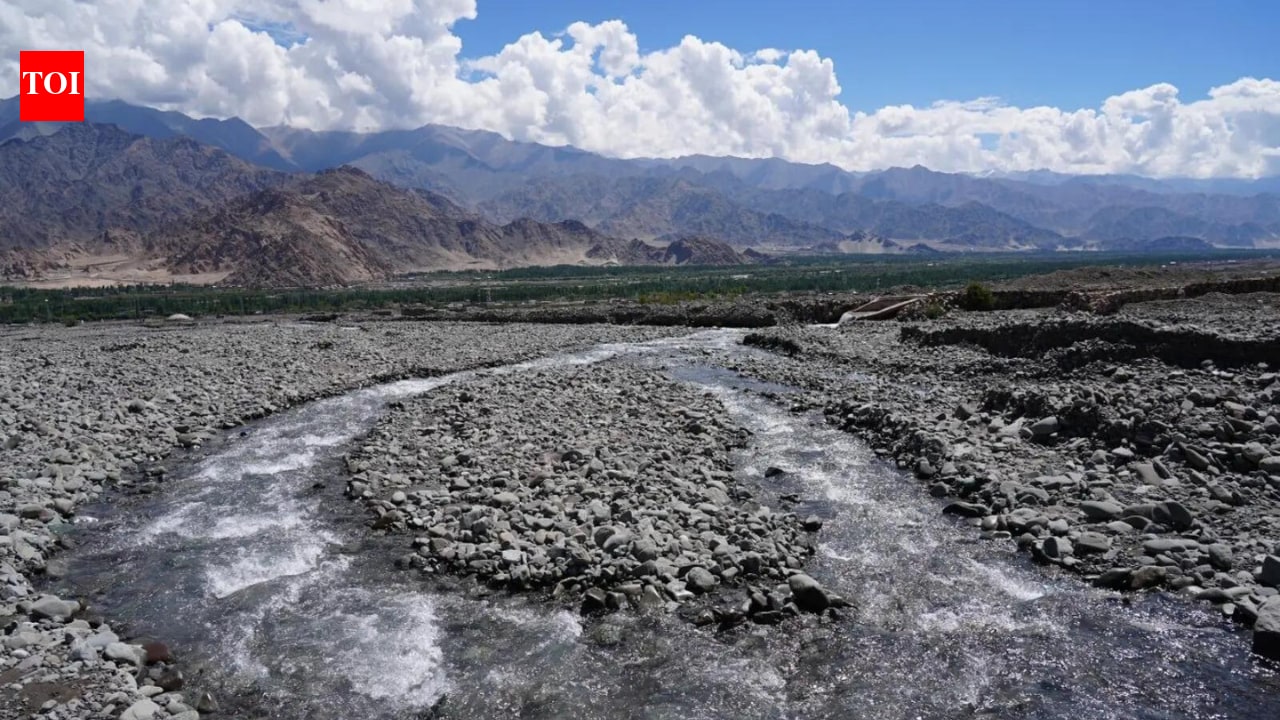
Ladakh's Lieutenant Governor V.K. Saxena has diverted 90 million litres of glacial meltwater to irrigate 1,000 acres of farmland. The initiative, sparked by a local village head's appeal, utilizes simple earthworks to redirect water from the Stok village nallah into the Igoo-Phey canal.
A Sustainable Solution for Ladakh's Water Crisis
The recent initiative spearheaded by Ladakh Lieutenant Governor V.K. Saxena marks a significant turning point for agricultural sustainability in the high-altitude desert region. By tapping into 90 million litres of glacial meltwater that previously flowed untapped into the River Indus, the administration has successfully provided a consistent water source for over 1,000 acres of parched farmland across 12 villages. This development addresses a critical vulnerability in Ladakh's geography, where water scarcity has historically dictated the limits of local cultivation.
The Power of Local Governance
This project originated from a direct appeal by a local village head, highlighting the efficacy of bottom-up governance in addressing regional environmental challenges. By acknowledging the concerns of local leadership, the LG’s office was able to identify a practical solution that bypasses complex, high-cost infrastructure. The decision to prioritize this request underscores a shift toward responsive administration in the Union Territory, ensuring that local knowledge informs larger developmental strategies.
Engineering Through Simplicity
What makes this project particularly noteworthy is its reliance on cost-effective, sustainable engineering. Rather than commissioning massive dams or energy-intensive pumping stations, the initiative utilized strategic earthworks to channel water from the Stok village nallah into the existing Igoo-Phey Irrigation Canal. This approach minimizes capital expenditure while maximizing ecological efficiency, proving that small-scale, localized interventions can have a massive impact on regional resource management.
Addressing Climate and Agricultural Vulnerability
Ladakh’s reliance on glacial meltwater makes its agricultural sector uniquely susceptible to climate change and shifting weather patterns. By capturing this runoff before it is lost to the Indus, the project provides a vital buffer against seasonal drought. This initiative not only secures the livelihoods of farmers in the 12 affected villages but also sets a precedent for how other arid regions can leverage natural topography to improve water security.
Broader Implications and Future Outlook
The successful implementation of this water-diversion strategy serves as a model for future rural development projects in high-altitude environments. As the region faces increasing pressure from population growth and environmental change, the ability to optimize existing resources—such as seasonal glacial melt—will be paramount. If this model is scaled effectively, it could transform the agricultural landscape of Ladakh, turning previously non-arable land into productive territory while fostering long-term food security for the local population.