How new tehsils, districts for Ladakh address political aspirations? | Explained
Source Entity
India Latest News: Top National Headlines Today & Breaking News | The Hindu
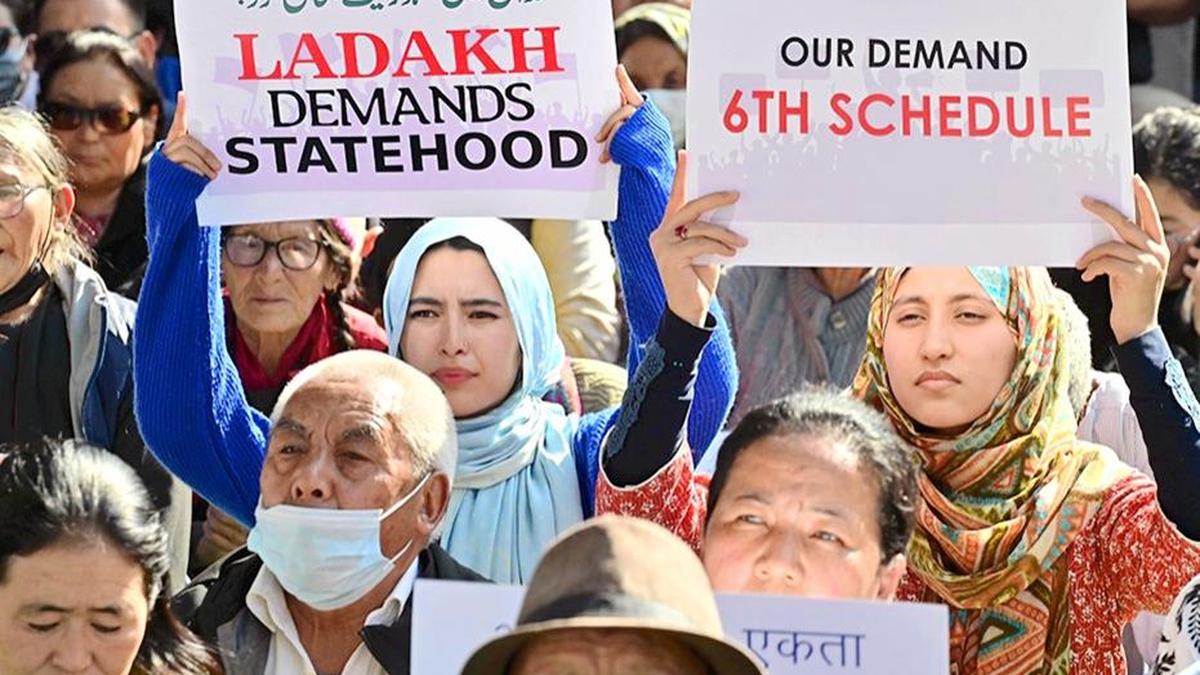
The Central Government is implementing administrative changes in Ladakh, including the creation of new districts and tehsils, to improve governance and address the region's growing political aspirations and demands for greater autonomy.
Administrative Evolution in Ladakh: Addressing Political Aspirations through Governance
The administrative landscape of Ladakh has undergone a seismic shift since its transition from a part of Jammu and Kashmir to a separate Union Territory (UT) in 2019. While the initial move was celebrated by many in Leh, it subsequently sparked a complex wave of political aspirations centered on constitutional safeguards and local autonomy. The recent rollout of new measures by the Central Government, specifically the creation of new districts and tehsils, represents a strategic attempt to bridge the gap between the UT administration and the grassroots population, ensuring that governance is not merely centralized in Leh and Kargil but is distributed across the rugged terrain.
The Role of New Districts and Tehsils
The creation of new tehsils and districts is more than a bureaucratic exercise; it is a response to the unique geographical challenges of the region. Ladakh's vast, mountainous landscape often makes accessing basic government services a grueling journey for remote villagers. By decentralizing administrative units, the government aims to bring the 'seat of power' closer to the people. This administrative layering is designed to improve the delivery of public services, expedite land records management, and enhance the efficiency of revenue collection. In a region where connectivity is precarious, these local hubs serve as critical touchpoints for the citizenry to interact with the state without traveling hundreds of kilometers.
Understanding the LAHDC Framework
Central to the governance of Ladakh are the Ladakh Autonomous Hill Development Councils (LAHDC) for Leh and Kargil. The LAHDC Act provides a framework for local self-governance, allowing these councils to manage land, agriculture, and local development. However, the current political discourse revolves around the perceived limitations of these councils under the UT administration. Many local leaders argue that while the LAHDC provides a semblance of autonomy, the ultimate decision-making power remains with the Lieutenant Governor and the Central Government. The introduction of new administrative units is seen as a way to strengthen the operational capacity of these councils, allowing them to implement development projects more granularly.
Navigating Political Aspirations and the Sixth Schedule
The administrative restructuring occurs against a backdrop of intense demands for the inclusion of Ladakh in the Sixth Schedule of the Indian Constitution. The Sixth Schedule would provide tribal areas with significant legislative, judicial, and administrative autonomy, protecting their land and cultural identity. For many Ladakhis, the creation of new tehsils and districts, while helpful, is viewed as a 'soft' measure. The core aspiration remains a constitutional guarantee that prevents external demographic shifts and ensures that the indigenous population retains control over their ancestral lands. The Centre's focus on administrative efficiency is thus an attempt to provide immediate relief and tangible progress while the larger constitutional debates continue.
Strategic Implications for a Border Region
From a national security perspective, enhancing the administrative grip on Ladakh is a strategic imperative. Given its proximity to both China and Pakistan, a well-governed and satisfied local population acts as a first line of defense. When the state is visible and responsive through local tehsils and district offices, it fosters a stronger bond of trust between the border communities and the central government. Improving infrastructure and governance in these remote pockets not only serves the local population but also ensures that the logistical needs of the military and paramilitary forces are supported by a robust civilian administrative framework.
Future Trends and Conclusions
Looking ahead, the success of these measures will depend on whether the administrative expansion is accompanied by a genuine devolution of power. If the new districts and tehsils remain purely clerical extensions of the UT administration, they may fail to quell the political unrest. However, if these units are integrated into a broader move toward genuine empowerment—perhaps through a hybrid model of the Sixth Schedule or enhanced LAHDC powers—they could stabilize the region. In summary, while the creation of new districts and tehsils addresses the immediate need for accessibility and efficiency, the long-term stability of Ladakh will require a delicate balance between central oversight and the region's deep-seated desire for political self-determination.
Verification Required?