In 2008, Czechs began flooding a coal mine built on a demolished town; by 2014, it became Lake Most, a huge pit lake
Source Entity
Latest News: Todays Latest News Headlines from India & World | Hindustan Times | Hindustan Times
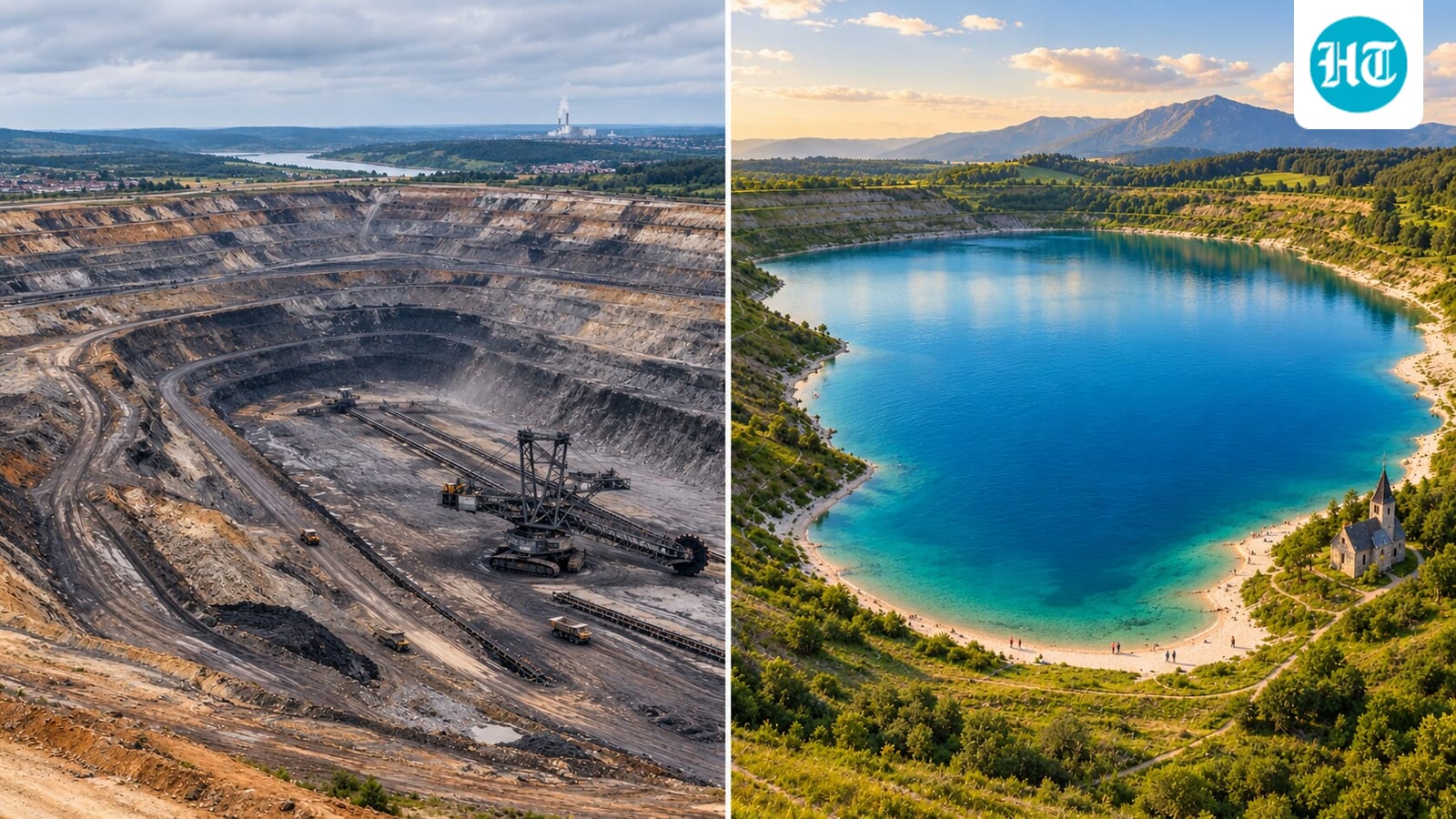
The town of Most in the Czech Republic was demolished in the 1970s for coal mining, but the site was successfully reclaimed as Lake Most by 2014. This transformation serves as a significant example of post-industrial landscape restoration.
The Transformation of Most: From Coal Pit to Reservoir
In the northern reaches of the Czech Republic, the landscape bears the scars of intensive industrialization, most notably the site of the former town of Most. During the 1970s and 1980s, the town was systematically demolished to facilitate the extraction of brown coal, or lignite, at the Ležáky mine. This era of resource extraction prioritized energy security, resulting in the displacement of an entire population and the erasure of a historic urban center.
The Industrial Legacy and Abandonment
The mining operations at Ležáky were extensive, leaving behind a massive void in the earth once extraction ceased in 1999. The destruction of the original town of Most remains a poignant example of the environmental and social costs associated with 20th-century coal mining. While the town was largely leveled, one significant vestige remains: the historic church, which was famously relocated to a new position. Its continued presence near the modern lake serves as a physical bridge between the town’s past and its current ecological reclamation.
The Engineering of Lake Most
The reclamation process, which began in 2008, was a complex undertaking. As detailed in the 2020 Springer publication Assessment and Protection of Water Resources in the Czech Republic, the conversion of the quarry into a lake was not a simple act of filling a hole with water. It required careful hydrological planning to ensure the stability and safety of the basin. The filling process was officially completed in 2014, marking the end of a multi-year project to repurpose the industrial scar.
Environmental and Social Restoration
Today, Lake Most stands as one of the largest pit lakes in the Czech Republic, representing a significant victory in environmental remediation. By transforming a hazardous, abandoned quarry into a recreational water body, the Czech authorities have provided the region with a new ecological and social asset. This shift from an extraction-based economy to one that values environmental restoration is a trend seen in post-industrial regions across Europe.
Broader Implications and Future Trends
This project highlights the growing necessity for land reclamation in the wake of the global transition away from coal. As more nations move toward renewable energy, the challenge of managing abandoned mining infrastructure becomes increasingly critical. Lake Most serves as a blueprint for how massive industrial pits can be repurposed, offering a model for biodiversity recovery and public space utilization. Future trends suggest that such 'second lives' for industrial sites will become a cornerstone of sustainable land management policy in the coming decades.
Verification Required?