WhatsApp, SMS or email: Can your landlord legally evict you through a text?
Source Entity
TOI REAL ESTATE DESK
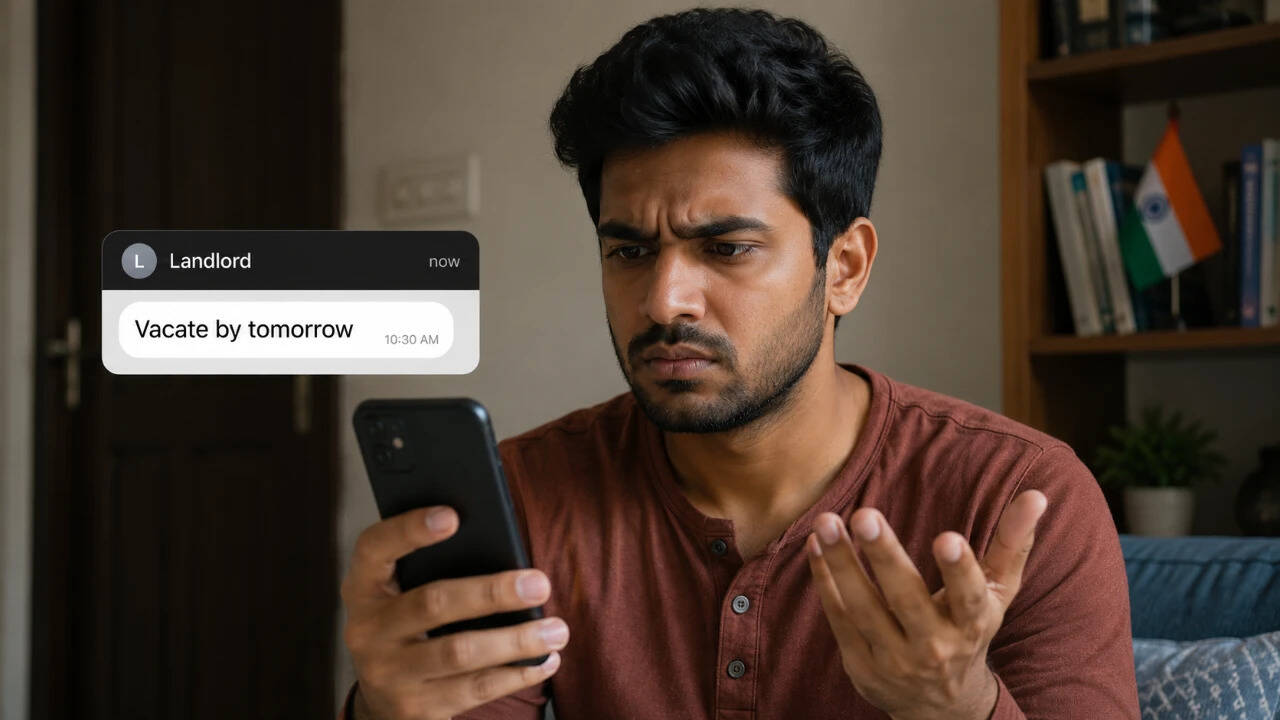
To validly terminate a lease, it's essential to use the correct legal format. Informal electronic communications like SMS or WhatsApp typically lack the legal enforceability needed. However, Indian courts could accept emails if their authenticity is established. Casual messages do not meet the legal requirement for written and signed termination notices. It's crucial for landlords to adhere to these legal protocols to prevent disputes with tenants.
The Legality of Digital Eviction Notices: Navigating Tenancy Law in the Digital Age
In an era where instant messaging has replaced traditional correspondence, the intersection of modern communication and legacy legal frameworks has created significant ambiguity in landlord-tenant relationships. The core issue revolves around whether a casual digital message—such as a WhatsApp text or an SMS—constitutes a valid legal notice for the termination of a lease agreement. Under current Indian legal standards, the answer is generally no. The law prioritizes certainty, authenticity, and a clear trail of intent, which informal messaging platforms often fail to provide in a manner that satisfies judicial scrutiny.
The Primacy of Formal Documentation
Historically, lease terminations have required a "written and signed" notice to be legally binding. This requirement is not merely a formality but a safeguard designed to protect both parties from arbitrary evictions or sudden vacancies. A formal notice typically includes specific details: the date of termination, the reason for eviction (if required by the contract), and a clear reference to the lease agreement. When a landlord opts for an SMS or WhatsApp message, they bypass these critical legal markers. Because these platforms allow for the easy deletion of messages and lack a standardized method of "signing," they typically fail to meet the evidentiary threshold required to prove that a legally binding notice was served.
The Nuanced Role of Electronic Mail
While SMS and WhatsApp are viewed as too casual, the legal status of email is more complex. Indian courts have shown an increasing willingness to accept emails as valid evidence, provided their authenticity can be established. This is largely due to the structured nature of email headers, timestamps, and the ability to trace the sender's identity through server logs. However, the admissibility of an email is not automatic. For an email to serve as a valid eviction notice, it must align with the communication clauses outlined in the original lease agreement. If the contract specifies that notices must be delivered via registered post, an email alone may still be deemed insufficient, highlighting the danger of relying solely on digital channels.
Implications for Landlords and Legal Risks
For landlords, the failure to adhere to strict legal protocols can lead to severe consequences. Attempting to evict a tenant based on an informal text message often results in prolonged litigation. If a court finds the notice invalid, the eviction process is effectively reset, meaning the landlord must start the notice period over again. Furthermore, attempting to forcibly remove a tenant without a legally recognized notice can lead to accusations of illegal trespass or harassment, potentially exposing the landlord to civil or even criminal liabilities. This underscores the critical necessity of utilizing registered post or couriers to ensure a verifiable paper trail.
Tenant Rights and the Burden of Proof
From the tenant's perspective, the requirement for formal notice acts as a shield against impulsive or malicious evictions. The burden of proof in eviction cases lies heavily on the landlord to demonstrate that the tenant was properly notified according to the law. By maintaining the standard of "written and signed" notices, the legal system ensures that tenants have adequate time to find alternative housing and are not blindsided by a digital notification that could be easily contested in court. This legal friction ensures a level of stability in the rental market, preventing the volatility that would arise if a simple text message could terminate a home or business lease.
Future Trends: Towards Digital Legalization
Looking forward, it is likely that Indian tenancy laws will evolve to better integrate electronic records, similar to the advancements seen in the Information Technology Act. We may see a shift toward the widespread adoption of e-signatures and blockchain-verified notices, which would provide the "authenticity" that current WhatsApp messages lack. However, until such digital standards are explicitly written into rental laws and lease templates, the traditional method of physical, signed documentation remains the only foolproof way to terminate a lease. The transition period will likely be marked by continued judicial debate over what constitutes a "signed" electronic document.
Summary
Ultimately, while technology has accelerated how we communicate, it has not yet replaced the legal necessity for formality in property law. Landlords who rely on WhatsApp or SMS for lease termination risk having their actions declared void by the courts. To ensure legal enforceability and avoid costly disputes, the gold standard remains a physical, written, and signed notice, with email serving as a possible supplementary tool rather than a primary legal instrument.