LG’s new OLED breakthrough can boost display lifespans
Source Entity
Jess Weatherbed
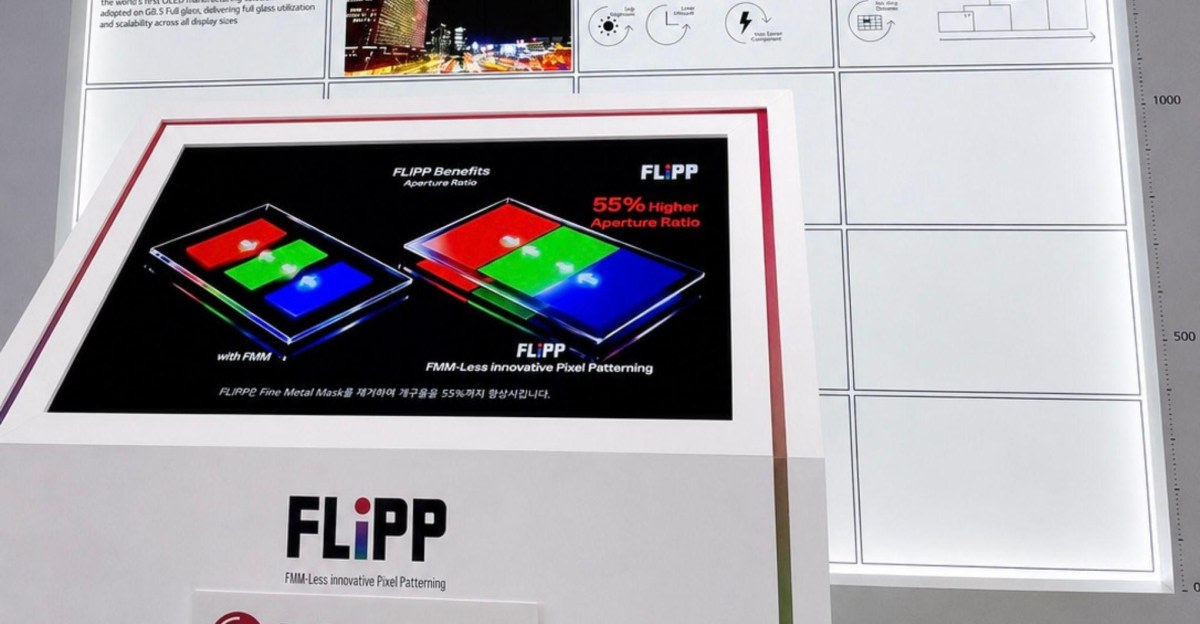
LG Display has introduced FLiPP, a new manufacturing technique that eliminates the need for fine metal masks in OLED production. This innovation promises brighter, more efficient, and scalable displays by overcoming traditional size and cost limitations.
The Evolution of OLED Manufacturing
LG Display has officially unveiled a groundbreaking manufacturing methodology known as FLiPP, or FMM-Less innovative Pixel Patterning. By moving away from traditional reliance on fine metal masks (FMM), LG aims to redefine the standard for OLED production. This technological shift represents a significant departure from the industry-standard approach that has dictated display architecture for years, potentially unlocking a new era of display capabilities.
Overcoming the FMM Bottleneck
Historically, the manufacturing of high-quality RGB OLEDs has been tethered to the use of a fine metal mask—a stencil-like plate featuring microscopic holes used to deposit light-emitting materials onto a substrate. While effective for smaller screens, this process is fraught with complications. The mask is prone to sagging and misalignment as panel sizes increase, creating significant barriers to scaling OLED technology for larger applications like televisions or large-format digital signage.
The FLiPP Advantage: Efficiency and Longevity
By eliminating the FMM process, LG’s FLiPP technology addresses the core mechanical weaknesses of current OLED production. The removal of the mask allows for more precise pixel patterning, which LG reports results in panels that are not only brighter but also significantly more power-efficient. By reducing the physical constraints of the manufacturing process, the panels can achieve longer operational lifespans, mitigating the burn-in and degradation risks that have historically plagued organic light-emitting diode technology.
Scalability and Design Freedom
Perhaps the most compelling aspect of the FLiPP announcement is the theoretical ability to produce OLED panels in almost any size. Without the structural limitations imposed by the sagging of metal masks, manufacturers gain unprecedented flexibility. This could lead to a massive expansion of OLED availability across diverse product categories, moving beyond standard smartphone and television sizes into entirely new form factors and custom display dimensions.
Broader Industry Implications
As LG positions FLiPP as a "dream next-generation OLED" patterning method, the industry is poised for a potential shift in competitive dynamics. If successfully commercialized at scale, this technology could lower production costs by streamlining the manufacturing workflow and reducing the reliance on specialized, expensive hardware. This shift would likely accelerate the adoption of premium OLED displays in more affordable market segments.
Future Trends in Display Technology
Looking ahead, the successful implementation of mask-less patterning will likely force competitors to innovate their own production methods. As LG continues to refine this technology, we can expect a new generation of displays that are thinner, more durable, and more energy-efficient. The transition to FLiPP-based OLEDs could eventually become the new baseline for the consumer electronics industry, signaling a major leap forward in how we interact with visual interfaces.