'We have a serious problem': CJP's Abhijeet Dipke reacts to LPU unrest
Source Entity
HADI KHAN
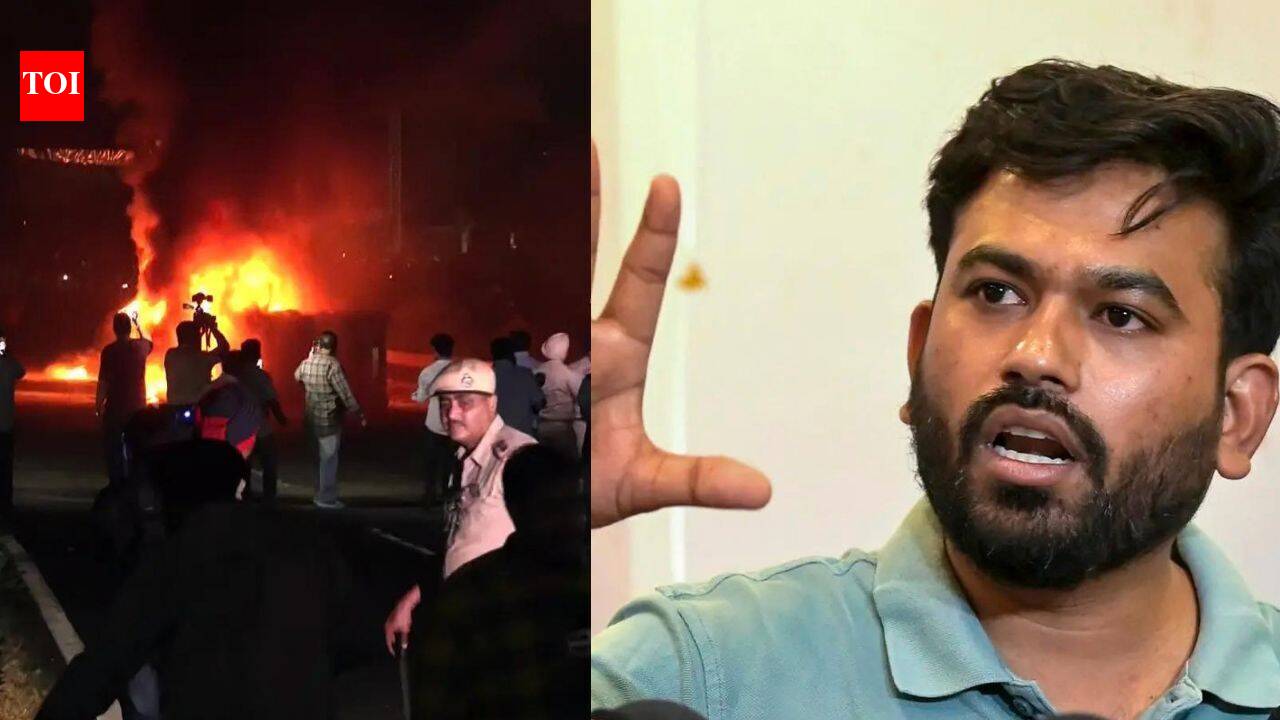
Violent protests erupted at Lovely Professional University following unverified social media rumors of an alleged rape. Authorities confirmed the claims were baseless, though students continued to express distrust, labeling official institutional responses as scripted.
Unrest at Lovely Professional University: A Breakdown of Rumor and Reaction
The Spark of Conflict
The recent unrest at Lovely Professional University (LPU) in Punjab serves as a stark example of how rapidly misinformation can escalate into physical violence in the digital age. The protests, which began near the girls’ hostel, were fueled by unverified reports circulating on social media regarding the alleged rape of a female student by an outsider. As the rumors gained traction, the situation intensified, drawing students from various campus hostels into a collective demonstration that eventually spilled over the university boundaries.
Escalation and Property Damage
As the protest gained momentum, the atmosphere turned volatile. According to reports and visual documentation, participants engaged in the destruction of campus property, including the shattering of window panes and the damaging of flower pots. The unrest reached a critical point when protesters set objects on fire and physically blocked the Jalandhar-Phagwara National Highway, severely disrupting local transportation and necessitating a heavy police deployment to restore order.
Official Stance vs. Student Perception
In the immediate aftermath, law enforcement officials, including the Kapurthala Senior Superintendent of Police (SSP) Gaurav Toora, categorically denied the occurrence of any such crime. Authorities maintained that the allegations were entirely unfounded and based on unsubstantiated rumors. Conversely, the university administration attempted to quell the unrest by releasing video statements, notably from Dr. Gulati. However, these attempts were met with skepticism by the student body, with some protesters dismissing the official communications as 'scripted' and part of a broader conspiracy to suppress the truth.
Broader Context of Campus Unrest
This incident at LPU did not occur in a vacuum. It followed closely on the heels of another protest at Chitkara University, which centered on claims regarding student suicides. This sequence of events highlights a growing trend of organized student activism in the region, where digital platforms act as catalysts for real-world mobilization. The proximity of these two events suggests an environment of heightened sensitivity and distrust between the student population and administrative bodies.
The Role of Social Media in Misinformation
The LPU incident underscores the dangerous speed at which unverified digital narratives can bypass institutional fact-checking processes. In this case, the lack of an immediate, transparent, and trusted communication channel from the university allowed rumors to dictate the campus narrative. The resulting damage to property and the economic disruption caused by blocking a national highway illustrate the high cost of information vacuums in high-density environments like university campuses.
Future Implications and Conclusion
Moving forward, educational institutions must prioritize robust crisis communication strategies that can address student concerns before they manifest as violent protests. The skepticism displayed by students toward official videos indicates that institutional credibility is currently fragile. Preventing future occurrences will require a multi-faceted approach: fostering open dialogue, implementing rapid verification systems for sensitive claims, and navigating the complex dynamics of social media influence to ensure that student grievances are addressed through constructive channels rather than destructive ones.
Multiple Citing Sources