Madras High Court to examine NGT’s construction ban on 1 km radius around Pallikaranai marshland on August 3
Source Entity
India Latest News: Top National Headlines Today & Breaking News | The Hindu
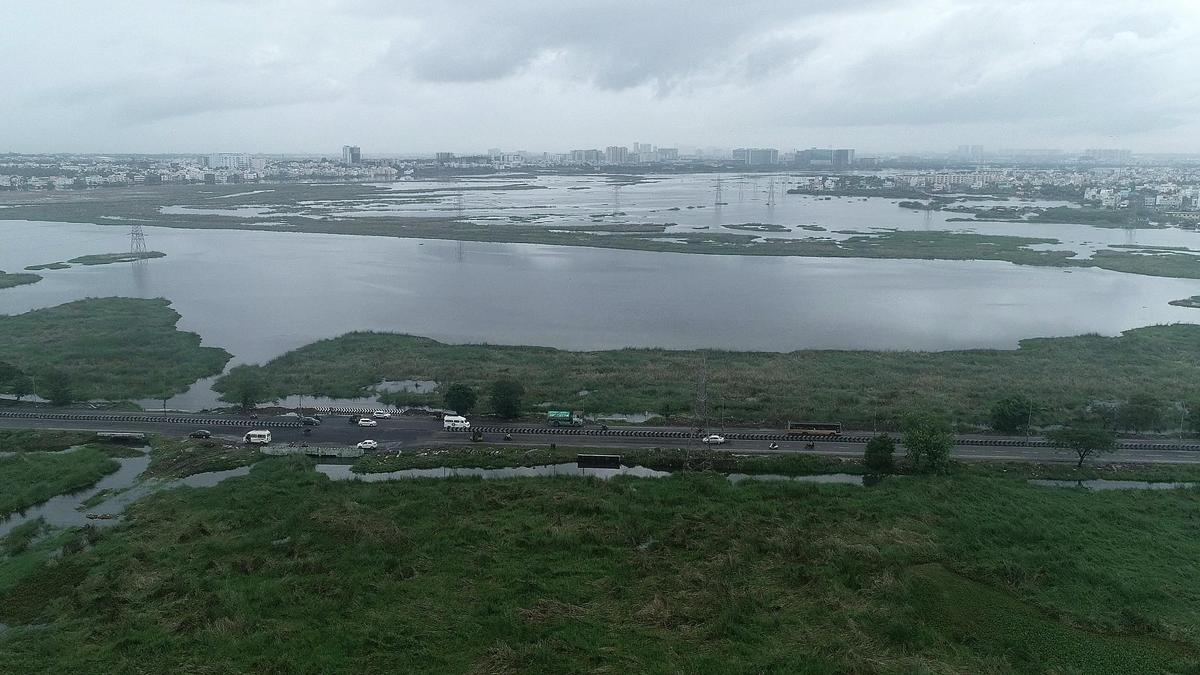
The Madras High Court has scheduled a final hearing for August 3 to examine a construction ban imposed by the National Green Tribunal (NGT) within a 1 km radius of the Pallikaranai marshland, following a legal challenge by CREDAI-Chennai.
Judicial Review of Environmental Restrictions: The Pallikaranai Marshland Dispute
In a significant intersection of environmental conservation and urban development, the Madras High Court is set to examine the validity of a construction ban imposed by the National Green Tribunal (NGT). The hearing, scheduled for August 3, will be presided over by Chief Justice Sushrut Arvind Dharmadhikari and Justice G. Arul Murugan. The case arises from a challenge filed by CREDAI-Chennai, the regional arm of the Confederation of Real Estate Developers' Associations of India, which seeks to overturn the NGT's directive prohibiting construction within a one-kilometer radius of the Pallikaranai marshland.
The Conflict: Ecology vs. Urban Expansion
At the heart of this legal battle is the Pallikaranai marshland, one of the last remaining natural wetlands in Chennai. The NGT's imposition of a 1 km buffer zone was designed as a protective measure to prevent further encroachment, reduce pollution runoff, and maintain the ecological integrity of the wetland. For environmentalists, this buffer is critical; wetlands act as natural sponges that mitigate urban flooding—a recurring crisis for Chennai—and serve as vital habitats for migratory birds and indigenous biodiversity. The ban represents a strict application of the 'precautionary principle' in environmental law, prioritizing long-term ecological stability over short-term commercial gain.
The Developer's Perspective and Economic Implications
Conversely, CREDAI-Chennai represents the interests of real estate developers who view the 1 km ban as an overly restrictive measure that causes significant financial hardship. The construction industry argues that such a broad radius may infringe upon private property rights and stifle urban growth in areas where land is already scarce and expensive. By challenging the NGT's order, CREDAI is likely arguing that the buffer zone is arbitrary or that sustainable development practices could allow for construction without compromising the marshland's health. This tension highlights a classic struggle in rapidly growing Indian metros: the friction between the 'Right to Development' and the 'Right to a Clean Environment.'
Historical Context of Chennai's Wetlands
To understand the gravity of this case, one must look at Chennai's historical relationship with its water bodies. Over the past few decades, the city has seen a massive loss of wetlands due to unplanned urbanization and illegal encroachments. The Pallikaranai marshland has faced continuous pressure from residential and industrial expansion, leading to degraded water quality and a diminished capacity to absorb monsoon rains. Past failures to protect these zones have directly contributed to the catastrophic flooding seen in recent years, making the NGT's intervention a reactive attempt to save what remains of the city's natural drainage system.
Broader Legal and Policy Implications
The decision of the Madras High Court will set a vital precedent for how buffer zones around protected wetlands are managed across Tamil Nadu and potentially other states. If the court upholds the NGT ban, it reinforces the authority of environmental tribunals to impose strict spatial restrictions on development. However, if the court modifies or lifts the ban, it may open the door for more flexible, 'managed' development zones. This case will likely hinge on whether the court views the 1 km radius as a scientifically justified necessity for the marshland's survival or an excessive restriction on land use.
Conclusion and Future Outlook
As the final hearing approaches on August 3, the outcome will signal the judiciary's current priority in the balance between ecology and economy. A ruling in favor of the NGT would signal a 'nature-first' approach, potentially leading to more stringent zoning laws in other ecologically sensitive areas. Conversely, a ruling favoring CREDAI could lead to the introduction of 'green building' mandates as a compromise. Regardless of the verdict, the case underscores the urgent need for integrated urban planning that treats wetlands not as vacant land for development, but as essential infrastructure for city resilience.
Verification Required?