Of those deleted in SIR so far, over 71% in ‘absent, shifted or others’ category
Source Entity
India Latest News: Top National Headlines Today & Breaking News | The Hindu
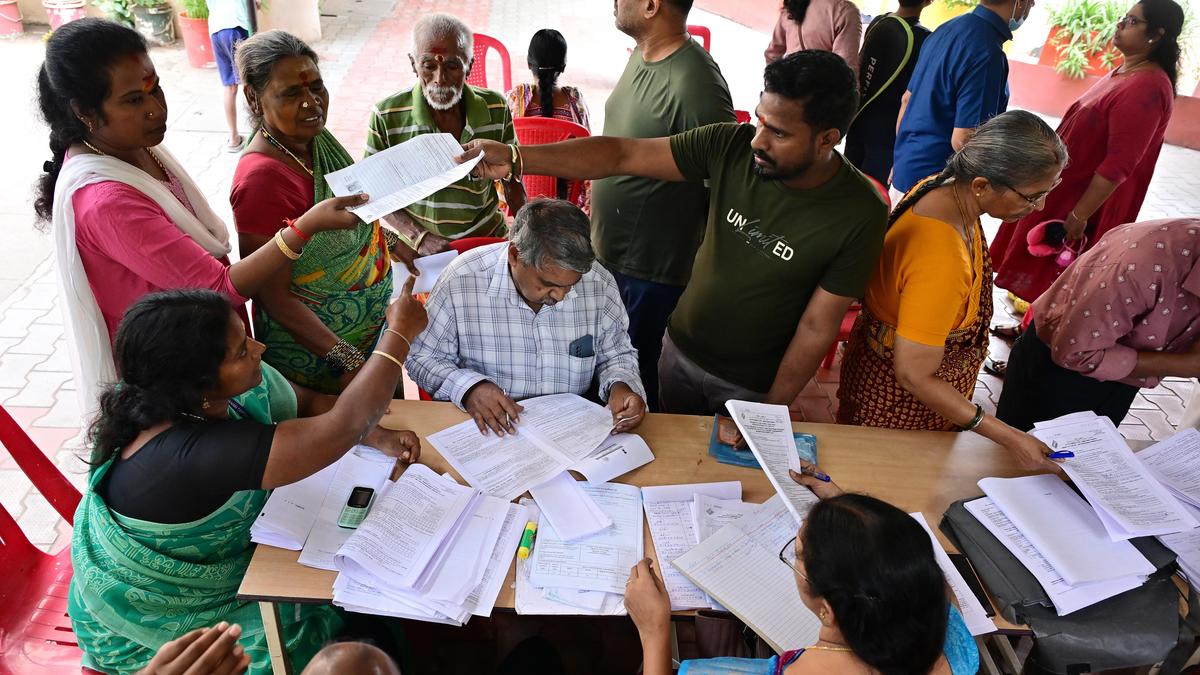
Maharashtra's Chief Electoral Officer has requested ECI software updates to allow local discretion over electoral roll anomalies. Meanwhile, systemic issues persist as political agents bypass submission caps and millions of voters face potential disenfranchisement due to 'absent, shifted' status.
Strengthening Electoral Integrity: Maharashtra’s Push for ERO Discretion
In a significant development for electoral administration, Maharashtra’s Chief Electoral Officer (CEO), S. Chockalingam, has formally requested the Election Commission of India (ECI) to modify the ECINet software. This request, submitted on September 24, 2026, seeks to empower Electoral Registration Officers (EROs) with the discretion to manage anomalies within electoral rolls directly. Currently, the centralized nature of the system limits local officers' ability to address specific discrepancies, often resulting in bureaucratic bottlenecks that hamper the accuracy of voter lists.
The Challenge of Centralization vs. Local Oversight
The push for increased ERO authority highlights an ongoing tension between centralized digital governance and the necessity for local, on-the-ground validation. While the ECI’s centralized software ensures a standardized approach, the sheer scale of Indian elections requires a nuanced touch. By allowing EROs to exercise discretion, the ECI aims to make the correction process more responsive to local realities, potentially reducing the time required to rectify errors that currently plague the automated system.
Systemic Vulnerabilities and BLA Bypass
Parallel to the push for administrative reform, data indicates significant vulnerabilities in how political parties interact with the ECI’s digital infrastructure. Despite the ECI’s Standard Operating Procedures (SOPs) capping Booth Level Agents (BLAs) at 10 application submissions per day, evidence from Delhi suggests these limits are being routinely bypassed. Analyses of Form 10 statutory reports reveal that some agents have filed far exceeding the prescribed limits through the ECINET portal, suggesting that the software lacks the necessary hard-coded constraints to enforce the Commission's own guidelines.
The 'Absent, Shifted, and Others' Category Concerns
The integrity of the Special Intensive Revision (SIR) process is further complicated by the high volume of deletions categorized as 'absent, shifted, and others.' Out of 13.3 crore names deleted nationally, approximately 9.5 crore—or 71%—fall under this ambiguous classification. This raises serious concerns regarding the potential for mass disenfranchisement. Because this category is transient by nature, there is a significant risk that millions of eligible citizens are being removed from rolls due to temporary relocation or administrative oversight, rather than permanent loss of eligibility.
Disproportionate Disposal Rates
Compounding these issues is the observed disparity in how applications are processed. Evidence indicates that Form 7 objections (aimed at removing names) are being disposed of at a faster rate than Form 6 inclusion applications. This discrepancy, even when inclusion applications are higher in volume, suggests an imbalance in the administrative priority given to purification versus enrollment. Such trends, if left unaddressed, could skew the electoral roll in favor of exclusion rather than inclusion.
Future Implications for Indian Democracy
The intersection of these issues—software limitations, BLA overreach, and the high volume of 'absent/shifted' deletions—presents a critical challenge for the ECI. Moving forward, the Commission must balance the efficiency of digital systems with the necessity for human oversight and rigorous enforcement of procedural caps. Without systemic adjustments to the ECINet portal and a more transparent review of the 'absent' category, the accuracy of India’s electoral rolls remains a point of contention that could impact the fairness of future electoral cycles.
Multiple Citing Sources
Verification Required?