'Govt doesn’t care about your life': Mahua Moitra urges Wangchuk to call off hunger strike
Source Entity
TOI NEWS DESK
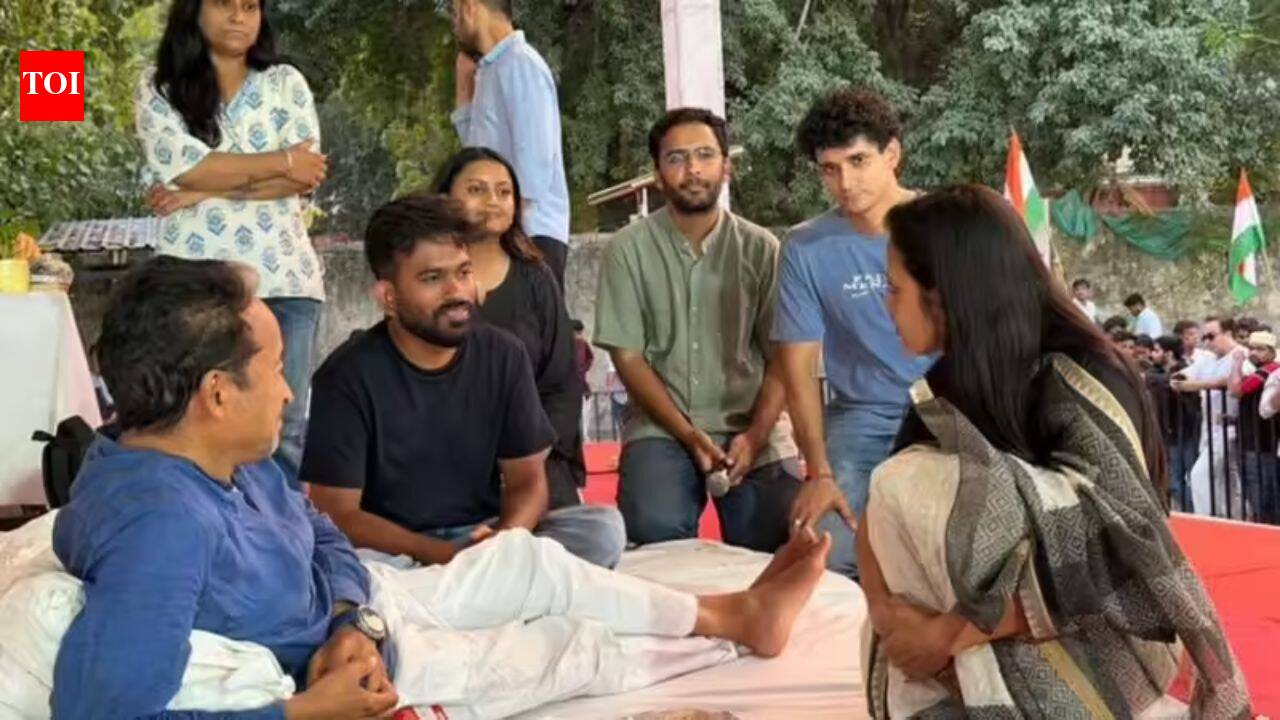
Trinamool MP Mahua Moitra urged Sonam Wangchuk to end his hunger strike. Wangchuk's fast against examination irregularities reached sixteen days. Eminent citizens also appealed for the protesters to end their fast. They expressed concern over the protesters' worsening health conditions. Activists question the government's lack of dialogue with protesters.
Political Tension and the Plea for Preservation: Analyzing Sonam Wangchuk's Hunger Strike
The current political climate in India has been further strained by the prolonged hunger strike of activist Sonam Wangchuk. Having reached the sixteen-day mark, Wangchuk's fast—directed against systemic examination irregularities—has transitioned from a localized protest to a national point of contention. The intervention of Trinamool Congress (TMC) MP Mahua Moitra, who urged Wangchuk to call off his strike by stating that the "Govt doesn’t care about your life," underscores a deep-seated cynicism regarding the current administration's willingness to engage with grassroots dissent. This event highlights the intersection of educational reform, civil liberties, and the precarious nature of political activism in the modern era.
The Catalyst: Examination Irregularities and Institutional Trust
At the heart of this protest is the issue of examination irregularities. In a country where competitive exams are the primary gateway to social mobility and professional success for millions of youths, any perceived breach in the integrity of these tests is viewed as a systemic failure. Wangchuk's fast is not merely a protest against a few errors but a demand for transparency and accountability within the bodies governing these assessments. When academic merit is compromised by irregularities, it erodes public trust in state institutions, leading to widespread anxiety among the student population and fueling the desperation that drives activists to extreme measures like hunger strikes.
The Political Dimension: Mahua Moitra's Intervention
Mahua Moitra's appeal to Wangchuk is strategically significant. By framing the government as indifferent to the protester's life, Moitra is not only expressing concern for Wangchuk's health but is also leveling a critique against the government's perceived apathy. This rhetoric serves to highlight a gap in the democratic process where dialogue is replaced by silence. The involvement of a Member of Parliament from the opposition brings a layer of political visibility to the movement, suggesting that the grievances regarding examination irregularities are shared across different political spectrums, thereby amplifying the pressure on the ruling administration to respond.
The Human Cost and the Role of Eminent Citizens
As the fast entered its third week, the physical toll on Sonam Wangchuk became a primary concern for both activists and eminent citizens. The appeal from these public figures to end the fast reflects a critical tension in activism: the balance between the urgency of the cause and the preservation of the advocate. A hunger strike is a powerful symbolic tool, but its efficacy diminishes if the protester's health reaches a point of critical failure before any political concession is made. The collective concern expressed by citizens indicates that while the cause is just, the risk of permanent health damage or death has become an unacceptable price for a government that refuses to come to the table.
Analysis of Government Silence and Dialogue Deficits
One of the most striking aspects of this event is the reported lack of dialogue between the government and the protesters. In democratic governance, the hunger strike is traditionally a mechanism to force a negotiation. However, the current situation suggests a shift in state strategy, where ignoring the protest is used as a means to neutralize its momentum. Activists have pointedly questioned why the administration has remained silent despite the high profile of the individual fasting. This lack of engagement suggests a rigid stance that may alienate not only the protesters but also the broader demographic of students and parents affected by examination irregularities.
Future Implications and Predicted Trends
Looking forward, this event is likely to catalyze a broader movement for educational reform in India. The synergy between high-profile political figures like Mahua Moitra and grassroots activists like Sonam Wangchuk suggests a growing coalition of dissent. If the government continues to avoid dialogue, we may see an increase in decentralized protests and legal challenges against examination boards. Furthermore, the reliance on hunger strikes as a primary tool of protest indicates a perceived failure of traditional petitioning and lobbying, suggesting that future activism in the region may lean more heavily toward high-stakes personal sacrifice to capture public attention.
Conclusion
Sonam Wangchuk's 16-day fast serves as a stark reminder of the volatility surrounding educational integrity in India. The pleas from Mahua Moitra and other citizens to end the strike reflect a desperate hope that the activist's life is more valuable than a gesture of protest against an indifferent state. Ultimately, the resolution of this crisis will depend on whether the government chooses to maintain its silence or acknowledges the systemic irregularities that sparked the fast, potentially paving the way for necessary institutional reforms.