President Droupadi Murmu's former Aide-de-Camp Major Rishabh Sambyal reveals how they train to protect the President
Source Entity
Latest News: Todays Latest News Headlines from India & World | Hindustan Times | Hindustan Times
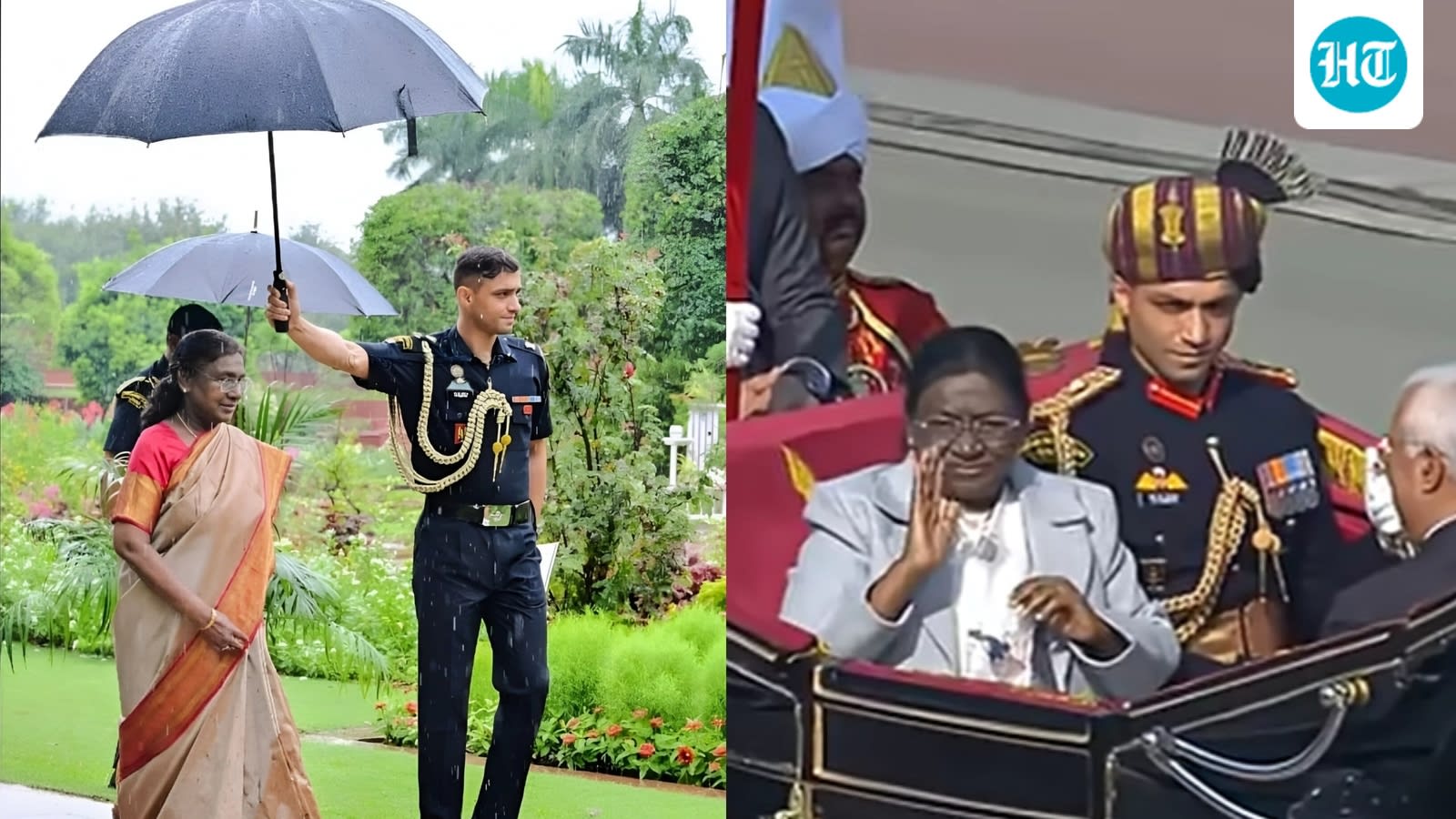
Former Aide-de-Camp Major Rishabh Sambyal has provided rare insights into the rigorous training and security protocols required to protect the President of India. His account highlights the extreme physical and mental conditioning necessary for this elite role.
The Elite Guardians: Unveiling the Security Architecture of the President of India
Rigorous Preparation and Specialized Training
The role of an Aide-de-Camp (ADC) to the President of India is one of the most prestigious yet demanding positions within the Indian Armed Forces. Recently, Major Rishabh Sambyal, who served as ADC to President Droupadi Murmu before opting for premature retirement after 12 years of service, offered a rare glimpse into this clandestine world. In an interview with Raj Shamani, Sambyal detailed the grueling physical and mental conditioning that ADCs undergo to maintain peak performance. This training is not merely about physical fitness; it involves extreme endurance tests, including carrying heavy loads and enduring prolonged deprivation of basic needs, designed to sharpen observational skills and situational awareness to an elite standard.
The Science of 'Sanitisation'
At the heart of presidential security is the concept of a 'sanitized zone.' Major Sambyal explained that for any movement involving the President, a 1-kilometer radius around her must be completely secured. This process is exhaustive, requiring the total removal of any potential threats, including arms, metallic objects, or any materials deemed dangerous. This level of meticulousness underscores the high-stakes environment in which ADCs operate, where the margin for error is non-existent. The sanitization protocol is a testament to the layered security architecture that defines the protection of India's Head of State.
The Mental Demands of the ADC Role
Beyond the physical requirements, the psychological profile of an ADC is critical. Sambyal emphasized that the training focuses heavily on enhancing alertness, ensuring that an officer can identify anomalies in crowded or complex environments instantly. This mental fortitude is cultivated through specific observational tests that force officers to process information rapidly under duress. The transition from a standard military role to an ADC position requires a shift in mindset, where the officer becomes an extension of the President's own awareness.
Transitioning from Service to Civilian Life
Major Sambyal’s recent premature retirement has drawn attention not only to the security details he managed but also to the personal sacrifice inherent in such service. After 12 years in the Army, his decision to step away marks a significant pivot. His willingness to discuss these experiences publicly provides the Indian citizenry with a deeper understanding of the human element behind the high-profile security details that often go unnoticed in official state functions.
Broader Implications for National Security
The revelations provided by Sambyal highlight a broader trend toward transparency regarding the logistical complexities of protecting high-value targets in India. As security threats evolve in the modern era, the integration of both physical security protocols, like the 1-kilometer sanitization rule, and the psychological conditioning of personnel remains paramount. This insight into the ADC role suggests that the future of presidential protection will continue to rely heavily on the elite training of officers who serve as the first line of defense for the nation's highest office.
Verification Required?