Make Every Data Center a Power Hub
Source Entity
Yahoo Finance
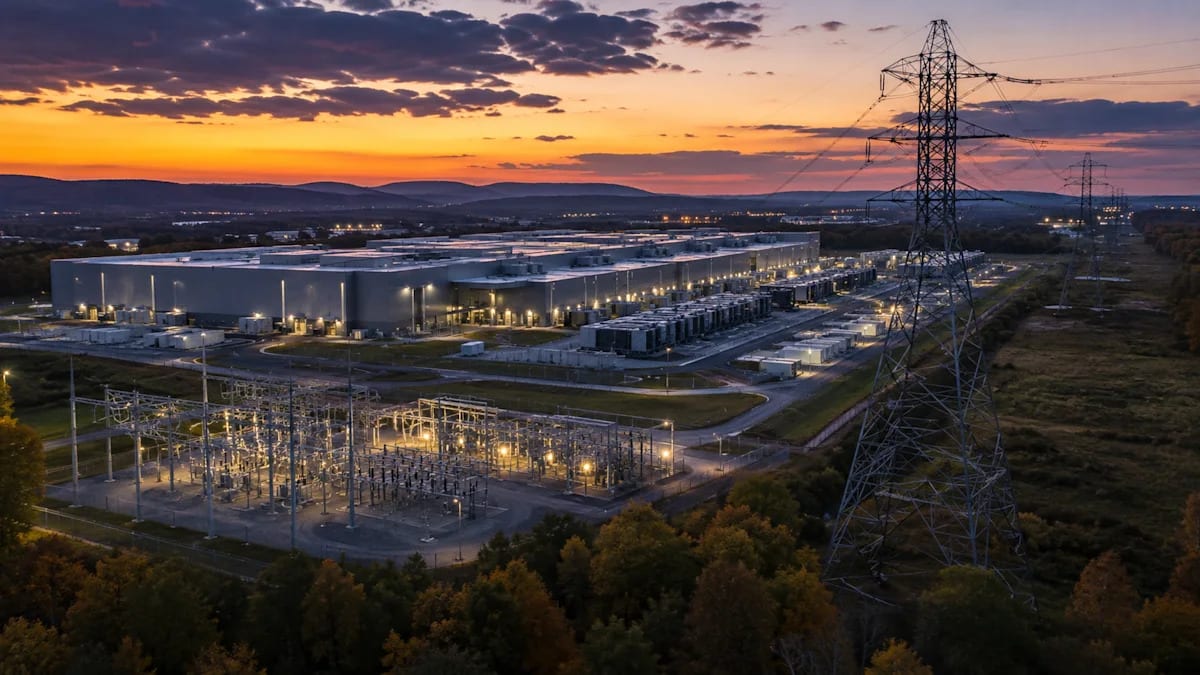
As data center demand surges to projected levels of 66 GW by 2027, experts argue for a shift toward integrated energy campuses. By evolving into power hubs, these facilities can provide critical grid resilience rather than remaining mere energy consumers.
The Data Center Energy Paradox
The rapid proliferation of artificial intelligence and cloud computing has placed the American power grid at a critical juncture. Current discourse often frames the rise of data centers as a zero-sum game between maintaining technological dominance and ensuring affordable, reliable electricity for the general public. However, this binary perspective ignores the potential for hyperscale campuses to transition from passive, high-demand loads into active participants in the energy ecosystem.
Scaling Infrastructure and Grid Demand
According to data from the Lawrence Berkeley National Laboratory, the trajectory of electricity consumption by data centers is steep, with projections indicating they could account for 11.8% of total U.S. electricity usage by 2030. This is compounded by aggressive growth forecasts from Goldman Sachs, which estimates that demand will more than double from 31 GW in 2025 to 66 GW by 2027. Such rapid scaling necessitates a rethink of how these facilities interact with the utility infrastructure.
Rural Development and Local Impact
The physical expansion of these facilities is increasingly decentralizing, with an April 2026 Pew Research Center analysis revealing that there are over 3,000 operating data centers in the U.S. and another 1,500 in development. Significantly, 67% of these planned facilities are located in rural communities. This shift brings economic development to non-urban areas but also places immense pressure on regional grid capacities that may not be equipped to handle hyperscale load requirements.
Redefining the Hyperscale Model
The path forward requires a paradigm shift: treating data centers as integrated energy projects. Rather than acting as simple end-users, these campuses should be designed to incorporate on-site generation, energy storage solutions, and advanced load flexibility. By integrating these features, developers can provide the grid with much-needed resilience and balancing services, effectively turning a potential burden into a functional asset.
The Regulatory Imperative
To achieve this integration, the existing legal and regulatory frameworks must evolve. Current policies often fail to incentivize developers to build beyond their own immediate power requirements. A new regulatory model is needed—one that rewards project developers for implementing technologies that solve grid congestion and reliability problems. Without such incentives, the disconnect between technological growth and energy infrastructure will likely widen.
Future Outlook
As we look toward 2030, the ability of the U.S. to harmonize its digital infrastructure with its energy security will be a defining factor in its economic competitiveness. By leveraging the scale of data centers to bolster the grid, policymakers can ensure that the transition to an AI-driven economy does not compromise the stability of the nation's power supply. The integration of generation and flexibility into the data center model is not merely a technical optimization; it is a strategic necessity for the future of American infrastructure.