White House construction may have disrupted Trump helicopter’s radio during close call with Envoy jet: Report
Source Entity
Latest News: Todays Latest News Headlines from India & World | Hindustan Times | Hindustan Times
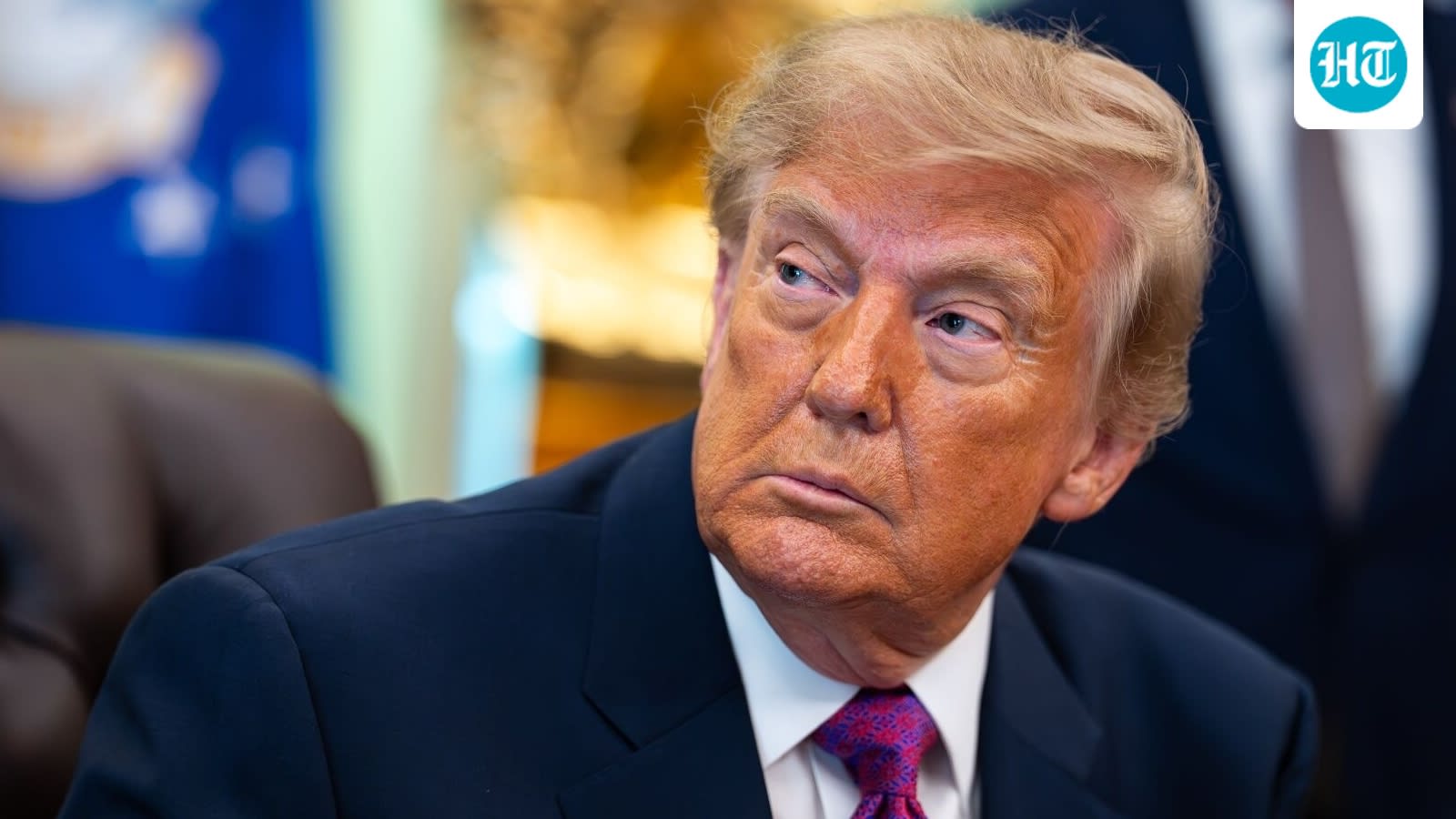
A preliminary NTSB report indicates that White House construction interfered with Marine One's radio communications on August 4. This failure caused a close-proximity incident between the presidential helicopter and an Envoy Air jet near Reagan National Airport.
The Intersection of Infrastructure and Aviation Safety
On August 4, a significant aviation safety incident occurred near Reagan National Airport involving Marine One, the helicopter transporting then-President Donald Trump, and an Envoy Air passenger jet. According to a preliminary report released by the National Transportation Safety Board (NTSB), the incident was primarily triggered by a communication breakdown between the presidential flight crew and air traffic control. The investigation suggests that ongoing construction activities at the White House complex may have physically or electromagnetically disrupted radio signals, preventing the tower from receiving the mandatory three-minute departure warning from the presidential aircraft.
The Mechanics of the Communication Failure
The core of the issue lies in the reliance on clear, uninterrupted radio frequencies for coordination in one of the most heavily regulated and congested airspaces in the United States. Because air traffic controllers did not receive the critical departure alert from Marine One, they proceeded to clear the Envoy Air passenger jet for takeoff. This procedural disconnect highlights the vulnerability of complex flight operations when environmental variables—such as large-scale construction projects—interfere with the technological infrastructure intended to keep aircraft separated.
Assessing the Proximity and Risk
The NTSB report quantifies the severity of this close call, noting that the two aircraft came within approximately 0.8 miles horizontally and 700 feet vertically of each other. While these figures represent a significant breach of standard separation protocols, officials have maintained that the former President was never in direct danger. However, the incident serves as a stark reminder of the potential for human error and technological failure, even when operating under the highest security protocols and specialized air traffic management.
Broader Implications for Presidential Air Travel
This incident raises broader questions regarding the integration of presidential flight operations within civilian air traffic corridors. The Washington, D.C. airspace is uniquely sensitive, characterized by strict flight restrictions and a high density of commercial and military traffic. When infrastructure projects at the White House—a hub of constant activity—begin to impede the operational capabilities of the executive branch's transportation fleet, it underscores the need for more robust, redundant communication systems that are impervious to local site interference.
Future Trends and Safety Protocols
Looking ahead, this event is likely to prompt a review of how flight communication systems are shielded from interference caused by urban development and construction. As cities grow and infrastructure projects become more complex, the aviation industry must ensure that essential safety protocols are not compromised by physical environmental changes. The NTSB's findings will likely lead to updated procedures for pre-flight coordination, ensuring that even if primary communication channels are obstructed by physical barriers, secondary fail-safes are immediately triggered to maintain a safe distance between all aircraft in the vicinity.
Verification Required?