Expert talk: ‘Stay true to your values, even when no one is watching’, says former Indian Police Service officer Meeran Chadha Borwankar
Source Entity
Manas Srivastava
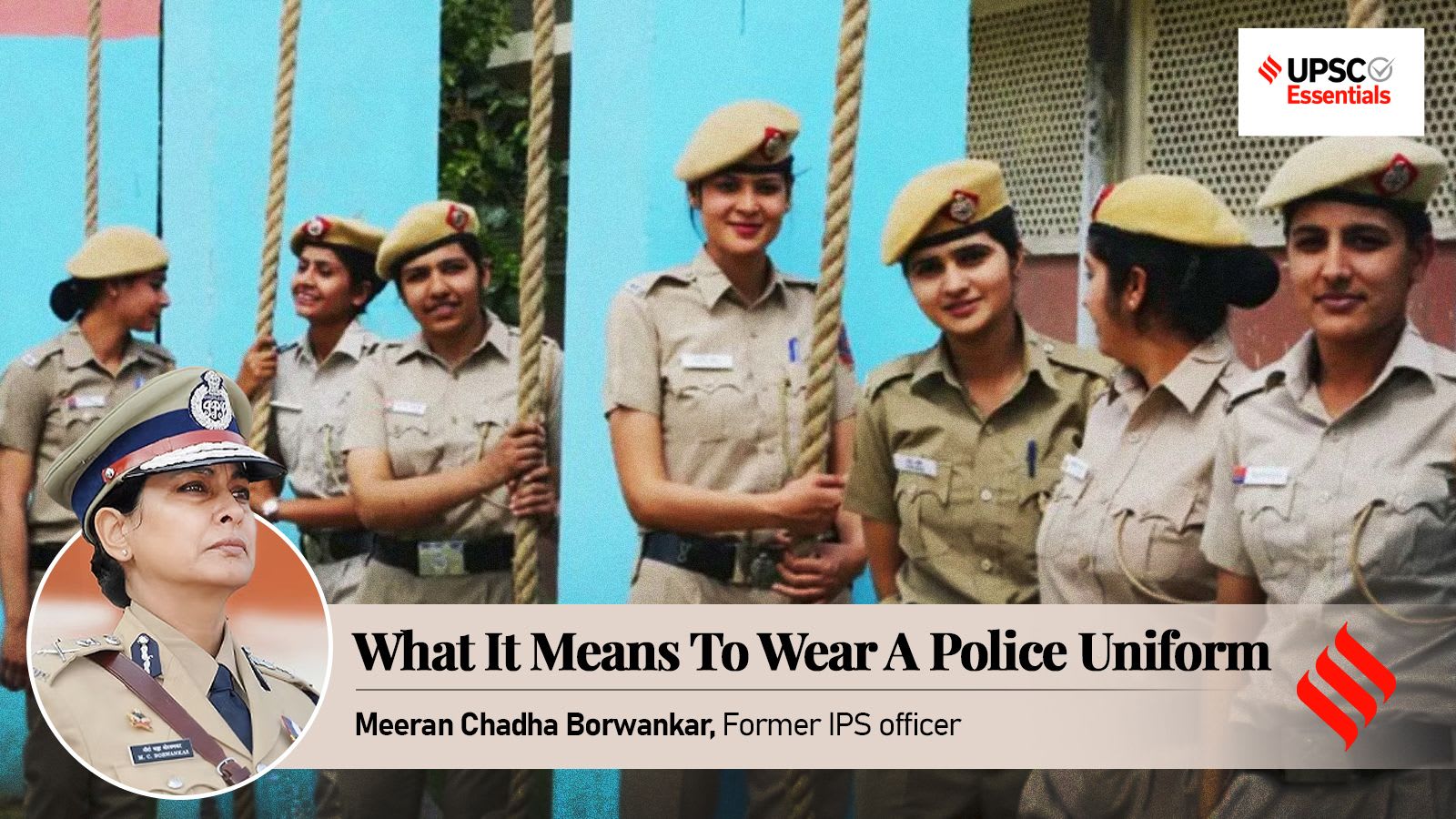
Former IPS officer Meeran Chadha Borwankar reflects on her nearly four-decade career, emphasizing the importance of integrity in public service. Her insights serve as a guiding light for UPSC aspirants navigating the ethical complexities of the police force.
The Ethical Imperative of Public Service
As UPSC Essentials celebrates its third anniversary, the discourse surrounding the Indian Civil Services has shifted from mere examination success to the profound responsibilities that follow. The recent interview with former Indian Police Service (IPS) officer Meeran Chadha Borwankar provides a critical lens through which we can view the evolution of public service in India. Borwankar’s call to 'stay true to your values, even when no one is watching' serves as a poignant reminder that the true test of an officer lies not in the rigorous selection process, but in the daily exercise of authority and the maintenance of a humane approach while navigating complex bureaucratic and social landscapes.
A Trailblazing Legacy
Meeran Chadha Borwankar’s career is a testament to resilience and structural change within India's law enforcement hierarchy. As the sole woman officer in the 1981 IPS batch at the National Police Academy in Hyderabad, she occupied a space that was historically and structurally masculine. Her subsequent achievements—becoming the first woman district police chief and the first woman police commissioner in Maharashtra—were not merely personal milestones but markers of a shifting institutional culture. Her experiences provide a blueprint for contemporary aspirants who seek to bridge the gap between traditional power structures and the modern requirement for inclusive, empathetic policing.
Beyond the Uniform: The Burden of Authority
The essence of Borwankar’s message lies in the dichotomy between the power inherent in the uniform and the moral restraint required to use it effectively. Public service, particularly in the police force, involves high-stakes decision-making that often occurs outside the public eye. By emphasizing integrity when 'no one is watching,' Borwankar addresses the perennial challenge of administrative accountability. For those entering the services today, this advice is foundational: the uniform is a symbol of public trust, and the preservation of that trust requires a constant, internal ethical compass that is independent of external oversight or political pressure.
Historical Context and Institutional Evolution
Spanning nearly four decades, Borwankar’s career offers a unique historical perspective on the transformation of policing in Maharashtra. Having handled some of the most high-profile and challenging cases in the state, her tenure reflects the increasing complexity of law enforcement in an era of rapid urbanization and social change. By reflecting on her journey, she provides aspirants with a bridge between the theoretical lessons learned in preparation for the UPSC exams and the messy, often unpredictable reality of field duty where law, ethics, and human rights intersect.
The Future of Public Service
As the UPSC Essentials initiative continues to evolve, the focus on the human element of governance remains its most significant contribution. The inclusion of veteran perspectives like Borwankar's ensures that the next generation of civil servants is not only technically proficient but also grounded in the values of empathy and transparency. Future trends in Indian governance will likely demand even greater accountability, and the ability to balance the rigid requirements of the law with the evolving needs of a democratic citizenry will remain the defining characteristic of a successful officer.
Conclusion
In summary, Meeran Chadha Borwankar’s reflections offer far more than career advice; they provide a moral framework for the future of Indian public service. By highlighting the necessity of integrity and humanity, she reinforces the idea that the ultimate success of an officer is measured by their ability to remain steadfast in their values. As the UPSC ecosystem continues to shape the leaders of tomorrow, such insights ensure that the focus remains firmly on the transformative power of ethical leadership in the public domain.