Mekedatu Dam row: Stalin seeks united TN stand, asks CM Vijay to call all-party meeting
Source Entity
YASHASVI VASISTHA
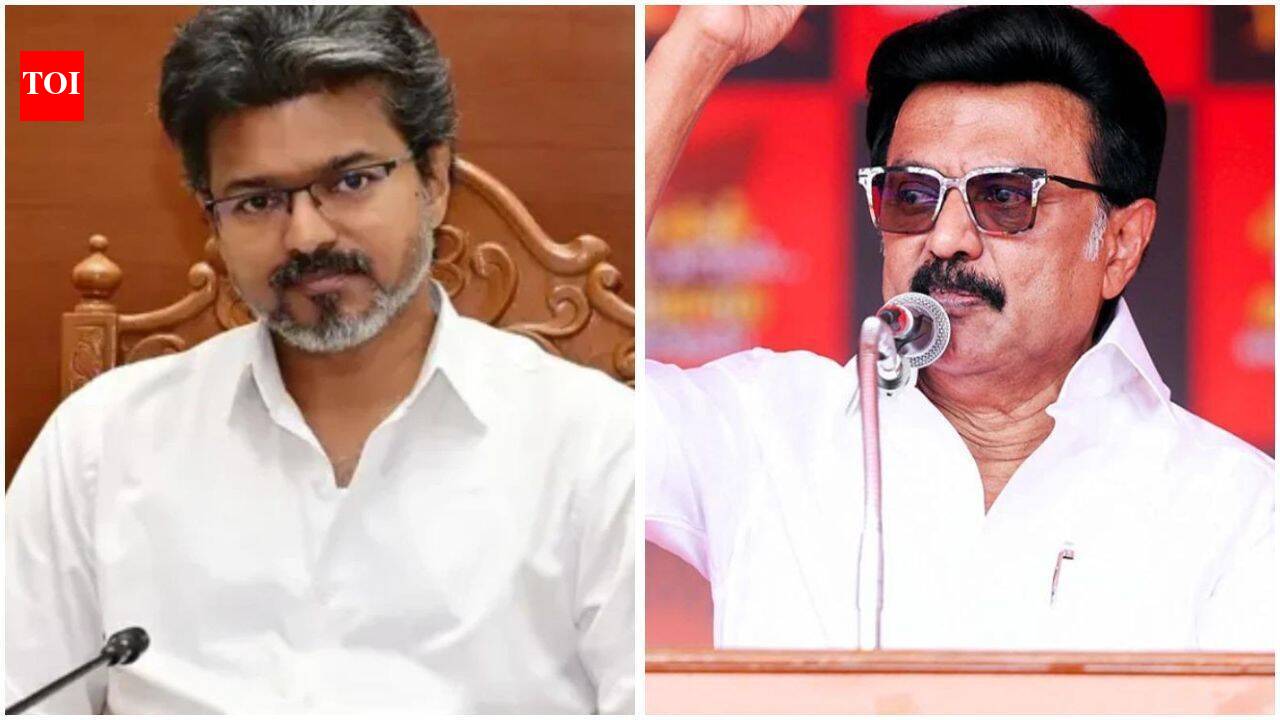
A political rift has emerged within the Congress party as Tamil Nadu leaders challenge Karnataka CM D.K. Shivakumar's push for the Mekedatu dam. The dispute highlights long-standing tensions over Cauvery river water rights, prompting calls for a unified political response in Tamil Nadu.
The Mekedatu Impasse: A Fractured Consensus
The ongoing dispute regarding the Mekedatu balancing reservoir on the Cauvery river has evolved into a complex intra-party conflict within the Congress, pitting Tamil Nadu state leadership against Karnataka’s Chief Minister, D.K. Shivakumar. At the heart of the matter is the proposed dam, which Karnataka views as a vital infrastructure project to address local water needs, while Tamil Nadu views it as a direct threat to its water security and a violation of established judicial mandates.
The Intra-Party Clash
Tamil Nadu Congress president Manickam Tagore has openly criticized D.K. Shivakumar, labeling his stance as "stubborn" and accusing him of disregarding both the Supreme Court’s rulings and the Cauvery Water Disputes Tribunal’s final award. The friction intensified following Shivakumar’s public remarks in the presence of Prime Minister Narendra Modi, where he asserted that nothing could halt the construction of the dam. For the Tamil Nadu wing of the Congress, this rhetoric is viewed as a betrayal of the state's interests, creating an uncomfortable political dynamic within a national party trying to balance regional mandates.
Legal and Historical Context
Water sharing in the Cauvery basin has historically been one of India’s most sensitive interstate issues. The legal framework, defined by the Cauvery Water Disputes Tribunal, is designed to ensure equitable distribution among basin states. Tamil Nadu’s objection to the Mekedatu project is rooted in the fear that the reservoir will provide Karnataka with the ability to unilaterally regulate water flow, thereby undermining the downstream state's agricultural stability. Shivakumar, conversely, maintains that the project is a fundamental right of his state, arguing that it serves as a necessary balancing reservoir.
Escalation to State-Level Politics
In Tamil Nadu, the issue has transcended internal party squabbles, with opposition leader M.K. Stalin urging the state government, led by Chief Minister Joseph Vijay, to convene an all-party meeting. This push for a united front signifies the gravity of the crisis, as Tamil Nadu political leaders seek to solidify a consensus that transcends party lines to protect the state's riparian rights. The call for a joint meeting with the Prime Minister reflects the belief that the central government must play a decisive role in mediating this impasse.
Future Implications and Trends
As Karnataka remains firm on its "my state, my right" stance, the conflict is likely to remain a flashpoint in southern Indian politics. The potential for a prolonged legal battle is high, as both states leverage judicial interpretations to bolster their positions. Moving forward, the federal government faces the difficult challenge of balancing the developmental aspirations of Karnataka with the historical water entitlements of Tamil Nadu. This dispute underscores the broader challenge of managing shared natural resources in an era of increasing climate-related water scarcity, where political rhetoric often complicates technical and legal resolutions.
Multiple Citing Sources