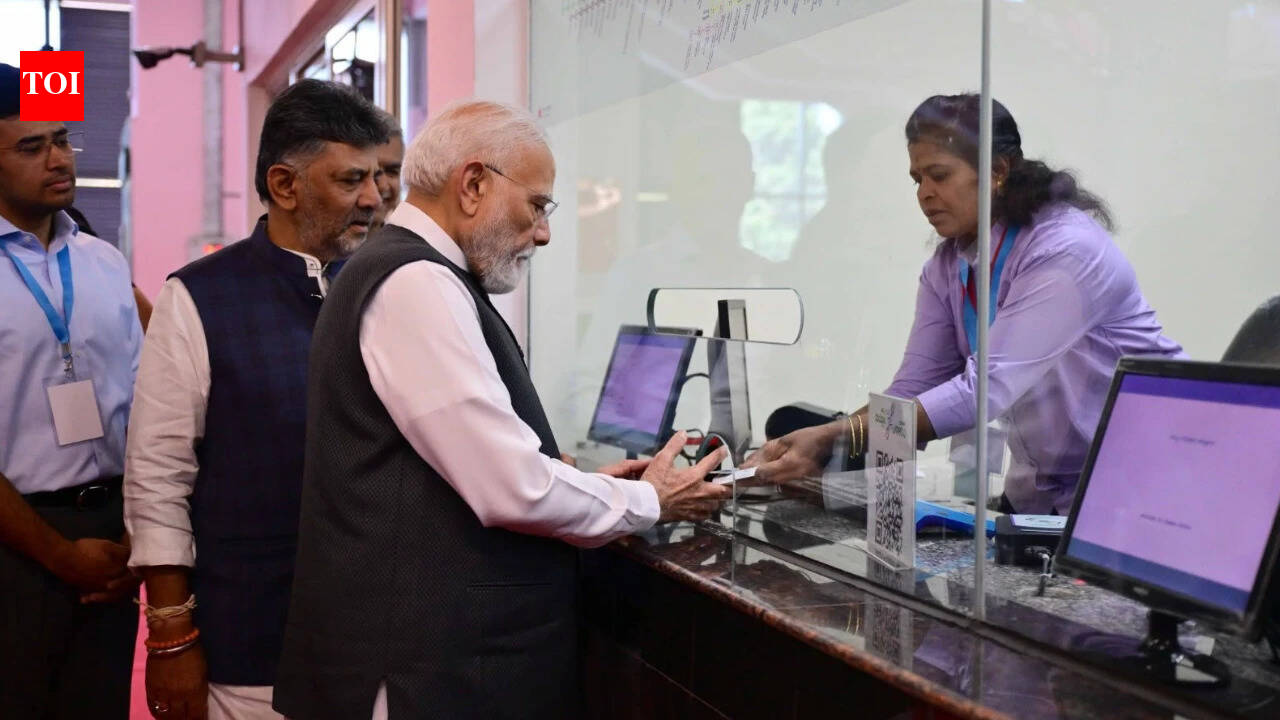
'Modi swiped his card for me, I didn't have money': K'taka CM DKS narrates metro ride story
Source Entity
AASTHA JHA
Karnataka CM DK Shivakumar and Tamil Nadu Congress chief Manickam Tagore are locked in a public dispute over the proposed Mekedatu dam project. The conflict highlights internal party tensions and ongoing legal complexities regarding water sharing rights on the Cauvery river.
The Mekedatu Impasse: A Deep Dive into the Cauvery Dispute
Internal Party Friction and Regional Assertions
The current political tension between Karnataka Chief Minister DK Shivakumar and Tamil Nadu Congress President Manickam Tagore represents a rare and public manifestation of internal party discord. While both leaders belong to the same national organization, their regional imperatives have placed them on opposite sides of the long-standing Cauvery water dispute. Shivakumar’s assertion of "my state, my right" underscores the political pressure he faces in Karnataka to secure water resources, while Tagore’s firm opposition reflects the intense sentiment in Tamil Nadu regarding the potential impact of the Mekedatu dam on their downstream water access.
The Mekedatu Project: Context and Controversy
At the heart of the conflict is the proposed balancing reservoir at Mekedatu. Karnataka views this infrastructure project as a vital necessity for the state's irrigation and drinking water needs, particularly for the expanding population of Bengaluru. Conversely, Tamil Nadu argues that such a structure would violate the final award of the Cauvery Water Disputes Tribunal and the subsequent rulings of the Supreme Court. The project has become a lightning rod for regional identity politics, with leaders on both sides framing their positions as a defense of their respective state's constitutional rights.
The Role of National Politics
The friction was notably exacerbated when Shivakumar raised the demand for central government approval for the dam in the presence of Prime Minister Narendra Modi during a visit to Mysuru. Manickam Tagore labeled this "deeply condemnable," suggesting that such rhetoric during a high-profile visit complicates the party's narrative. This interaction highlights how regional water disputes can inadvertently bleed into national political optics, forcing leaders to balance local demands with the broader organizational goals of their parties.
Navigating Legal and Judicial Constraints
Both parties are operating within the shadow of the Supreme Court and the Cauvery Water Disputes Tribunal. While Shivakumar maintains that Karnataka will respect legal mandates, his insistence that "no one could stop" the construction suggests a strategy of political posturing intended to appease his local base. The legal reality is that the project requires significant federal and environmental clearances, which remain elusive precisely because of the ongoing inter-state legal battles that have defined the Cauvery river basin for decades.
Future Trends and Resolution Pathways
As infrastructure needs grow in both Karnataka and Tamil Nadu, the pressure on water resources will only intensify. Future trends suggest that this conflict will likely remain a fixture of regional politics unless a mediated, long-term water-sharing agreement is reached that transcends current political cycles. Shivakumar’s call for dialogue with Tamil Nadu officials indicates a potential, albeit narrow, path toward de-escalation, provided that both states can move beyond the current cycle of public accusations and move toward technical cooperation.
Conclusion: The Delicate Balance of Federalism
The Mekedatu row serves as a poignant reminder of the complexities of Indian federalism, where state interests often clash over shared natural resources. The public spat between Shivakumar and Tagore is not merely a personality clash, but a symptom of the structural challenges in managing the Cauvery river system. Moving forward, the resolution of this issue will require a delicate balance between Karnataka’s development aspirations and Tamil Nadu’s legal protections, likely necessitating continued intervention from the central government and the judiciary.
Multiple Citing Sources