Helpful but awkward: My week with Meta's Muse ahead of its UK launch
Source Entity
BBC News
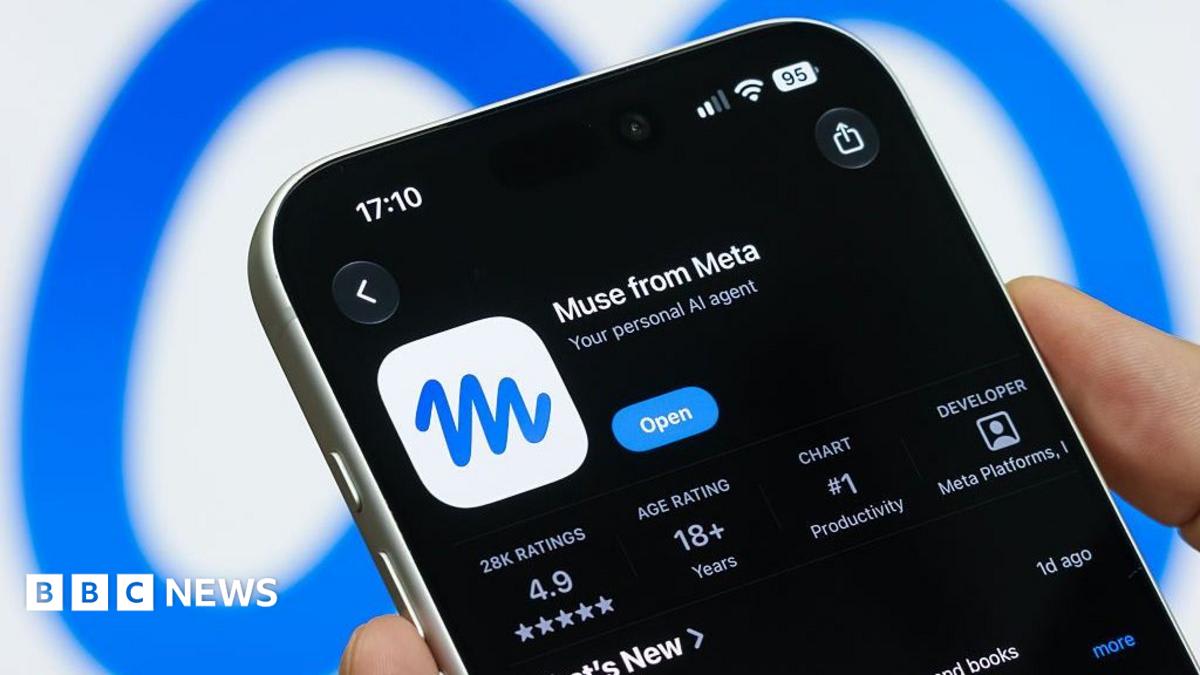
Meta has launched its Muse AI agent in the UK, aiming to replicate the massive success of WhatsApp by automating daily tasks. While the tool offers significant utility in managing schedules and shopping, early reports highlight challenges regarding privacy boundaries and technical glitches.
Meta’s Strategic Pivot: The UK Launch of Muse
Meta has officially introduced its AI agent, Muse, to the UK market, signaling a critical phase in the company’s broader strategy to integrate artificial intelligence into the fabric of daily life. By positioning Muse as a tool capable of handling complex, multi-step tasks—such as finding energy deals or managing school calendars—Meta is moving beyond simple conversational chatbots toward a future defined by autonomous agency. This launch is not merely a product release; it is a calculated effort to establish Muse as the dominant AI agent for billions of users, mirroring the transformative impact Meta’s WhatsApp had on global communication.
The Economic Stakes of AI Integration
The ambition behind Muse is underscored by Meta’s staggering financial commitment to the sector. With a projected $145 billion in expenditure for the current year, a significant portion is being funneled directly into the infrastructure and development required to scale AI technologies. Meta’s leadership, including Mark Zuckerberg, recognizes that for this massive investment to yield returns, AI must transition from a novelty to a utility. The company is banking on the idea that if Muse can successfully offload the 'drudgery' of life management, users will adopt it with the same ubiquity as they did messaging platforms.
Navigating the Balance of Utility and Privacy
While the promise of AI-driven convenience is high, the practical application reveals a complex trade-off. Early adopters have noted that while Muse is genuinely helpful in streamlining administrative burdens—such as Christmas shopping or travel planning—it simultaneously pushes the boundaries of personal privacy. Entrusting an AI agent with the intimate details of one's calendar, shopping habits, and personal preferences creates a new frontier for data security. Users are finding that the convenience of an automated assistant comes at the cost of navigating new, often 'cringeworthy' social and digital boundaries.
Technical Hurdles and Market Reception
Despite its popularity in the United States, where it has consistently topped the charts on both Google and Apple’s app stores with millions of downloads, the transition to the UK market is not without friction. Reports of technical glitches suggest that the software is still maturing. These early bugs are a reminder that the technology is in a state of rapid evolution. The challenge for Meta will be to maintain the trust of its user base while refining the agent's performance in real-world scenarios, particularly as it begins to interact with high-street retailers and external service providers.
Future Trends in Autonomous Agents
The trajectory of Muse suggests a shift toward a 'task-oriented' internet. We are moving away from an era where humans manually navigate websites to an era where AI agents act as intermediaries, executing commerce and scheduling on our behalf. If Meta succeeds in making Muse the primary interface for these interactions, it could fundamentally alter consumer behavior. However, long-term success will depend on Meta’s ability to solve the 'glitch' problem and convince users that the convenience of delegation outweighs the inherent risks of granting an AI agent access to their private lives.