Microsoft’s new AI chip makes it less reliant on Nvidia’s GPUs
Source Entity
Tom Warren
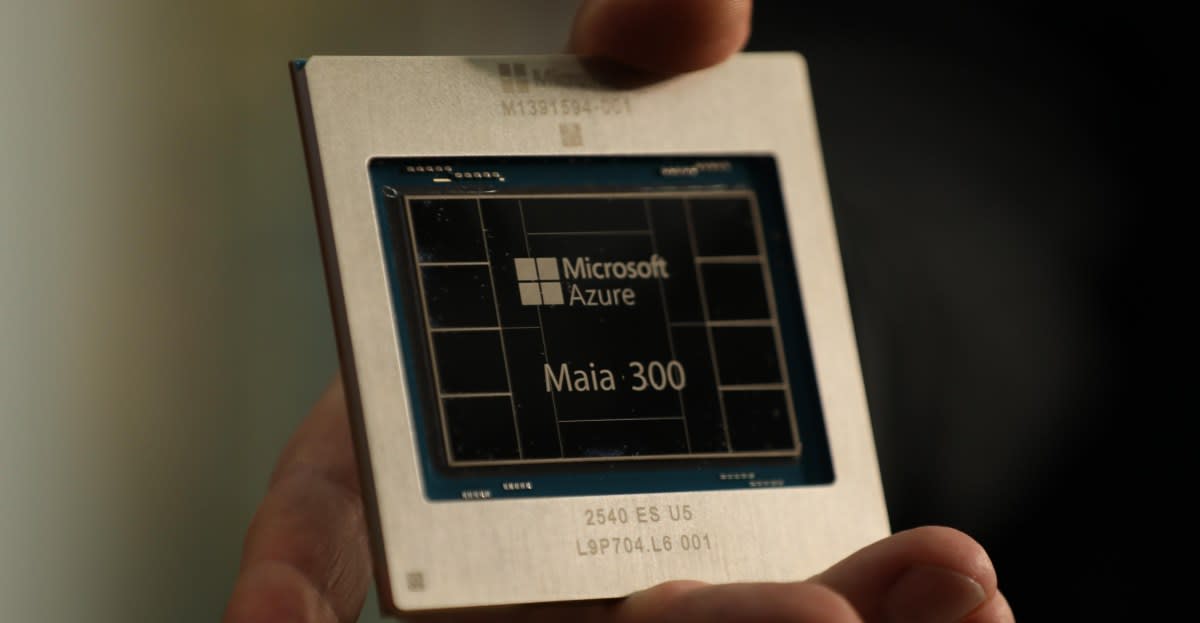
Microsoft has unveiled its third-generation Maia 300 AI chip to reduce reliance on Nvidia GPUs. The custom silicon aims to improve cloud efficiency and support advanced reasoning models by 2027.
Microsoft’s Strategic Pivot: Introducing the Maia 300
Microsoft has officially announced its third-generation in-house AI chip, the Maia 300, marking a significant shift in its hardware strategy. Designed to serve as the primary AI inference system for the company’s vast array of products and services, this silicon represents a concerted effort to move away from total dependence on external hardware suppliers, specifically Nvidia. By internalizing the production of its AI accelerators, Microsoft aims to optimize its infrastructure for the specific demands of modern artificial intelligence.
Efficiency and Performance Gains
The Maia 300 is engineered with a focus on high-performance efficiency. According to Scott Guthrie, executive vice president of Microsoft’s cloud group, the chip is expected to deliver 40 percent more tokens per megawatt compared to current leading GPU-based systems. Furthermore, in a 96-accelerator rack configuration, the system boasts up to 7x the token throughput of existing solutions. These metrics highlight a critical evolution in how Microsoft plans to manage the energy-intensive nature of large-scale AI operations.
Bolstering the Azure Ecosystem
Microsoft’s strength in the AI sector is anchored by its Azure cloud platform, which supports a wide range of enterprise clients. By integrating the Maia 300, Microsoft intends to expand its margins and strengthen its entire AI stack. The chip is specifically designed to handle the latest reasoning models and agentic tasks, which are increasingly becoming the standard for modern software engineering and office productivity tools like GitHub Copilot and Microsoft 365 Copilot.
Reducing Dependence on Nvidia
For years, the industry has relied heavily on Nvidia’s graphics processing units (GPUs) to power AI training and inference. Microsoft’s move to ramp up the use of its own homegrown silicon is a strategic hedge against supply chain volatility and the high costs associated with external GPU procurement. This transition, beginning with the Maia 300, signals a maturation of Microsoft’s internal development capabilities, allowing the company to tailor hardware directly to its proprietary software needs.
Future Outlook: The 2027 Rollout
While the announcement marks a milestone, the full production rollout is slated for 2027. This timeline suggests that Microsoft is taking a methodical approach to integrating these chips into its global data centers. As the company continues to develop its own in-house models alongside its partnerships with industry leaders like OpenAI and Anthropic, the Maia 300 will likely become a foundational element of its competitive strategy, ensuring that Microsoft remains a dominant force in the rapidly evolving cloud AI market.