Deal with EU not dependent on tuition fees agreement, Miliband says
Source Entity
BBC News
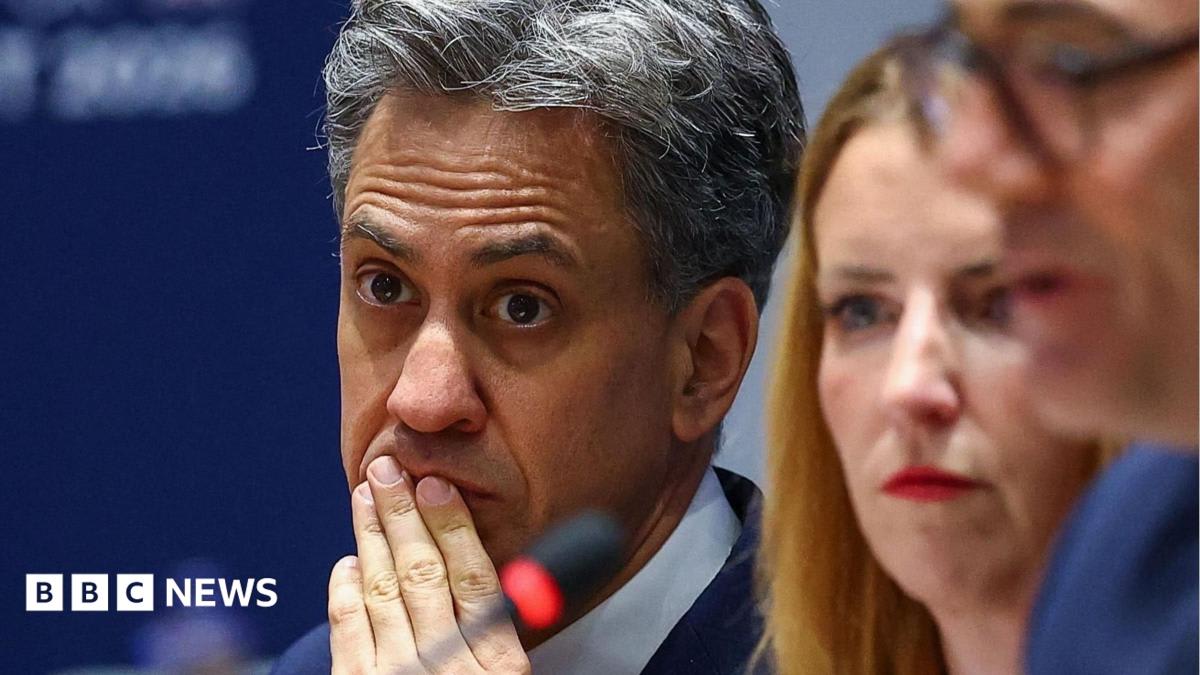
Foreign Secretary Ed Miliband has confirmed that a new UK-EU trade and mobility deal will proceed independently of ongoing negotiations regarding tuition fees for EU students. While the agreement eases food export checks and establishes a youth mobility scheme, the issue of student fees remains a pending point of discussion.
The Decoupling of Trade and Education Policy
Foreign Secretary Ed Miliband has officially clarified that the recently brokered deal between the United Kingdom and the European Union is not contingent upon the resolution of tuition fee disputes. This statement serves to decouple the broader regulatory and trade framework from the specific, contentious issue of how much EU students pay to study at British universities. By establishing this separation, the UK government is signaling a desire to prioritize immediate economic stability over the more granular, and often politically sensitive, debates surrounding international education funding.
The Mechanics of the New EU-UK Framework
The agreement reached in Brussels represents a significant recalibration of the post-Brexit relationship. By agreeing to align with specific EU regulations starting in 2028, the UK has secured the elimination of the majority of checks on British food exports, a move expected to alleviate supply chain frictions that have persisted since the UK's departure from the bloc. Alongside this trade relief, the deal formalizes a new youth mobility scheme, which aims to restore some of the cross-border opportunities lost during the transition, reflecting a strategic pivot toward closer cooperation with European neighbors.
The Tuition Fees Impasse
Despite the success of the broader deal, the question of tuition fees remains a notable point of friction. Brussels had previously suggested that the bloc might withhold the implementation of the wider agreement until the UK offered concessions on fees for EU students. This linkage created a potential bottleneck, as the UK government faces internal pressure regarding the financial sustainability of its higher education sector. While European Commission President Ursula von der Leyen and Prime Minister Andy Burnham have expressed public confidence that a solution will eventually be found, the lack of a concrete agreement on this front highlights the ongoing complexity of the UK-EU negotiation process.
Strategic Implications for Future Relations
The decision to move forward with the trade deal while leaving the tuition issue as a separate workstream suggests a pragmatic approach to diplomacy. By isolating the student fee debate, both parties avoid stalling the significant economic benefits promised by the removal of food export barriers. This strategy allows the UK and the EU to demonstrate to their respective constituents that they are capable of achieving tangible policy victories despite persistent disagreements on niche, high-value issues.
Looking Ahead: The Path to 2028
The road toward 2028, when the UK is set to begin following specific EU regulations, will likely be marked by continuous negotiations. The success of the current agreement will depend on the government's ability to maintain the momentum of this diplomatic thaw while navigating the domestic political landscape. As the UK and EU continue to deliberate on tuition fees, the focus will shift toward whether these individual components of the relationship can eventually coalesce into a more stable and predictable long-term partnership.