Atmanirbhar Bharat can’t be built by underpaying workers
Source Entity
The Indian Express
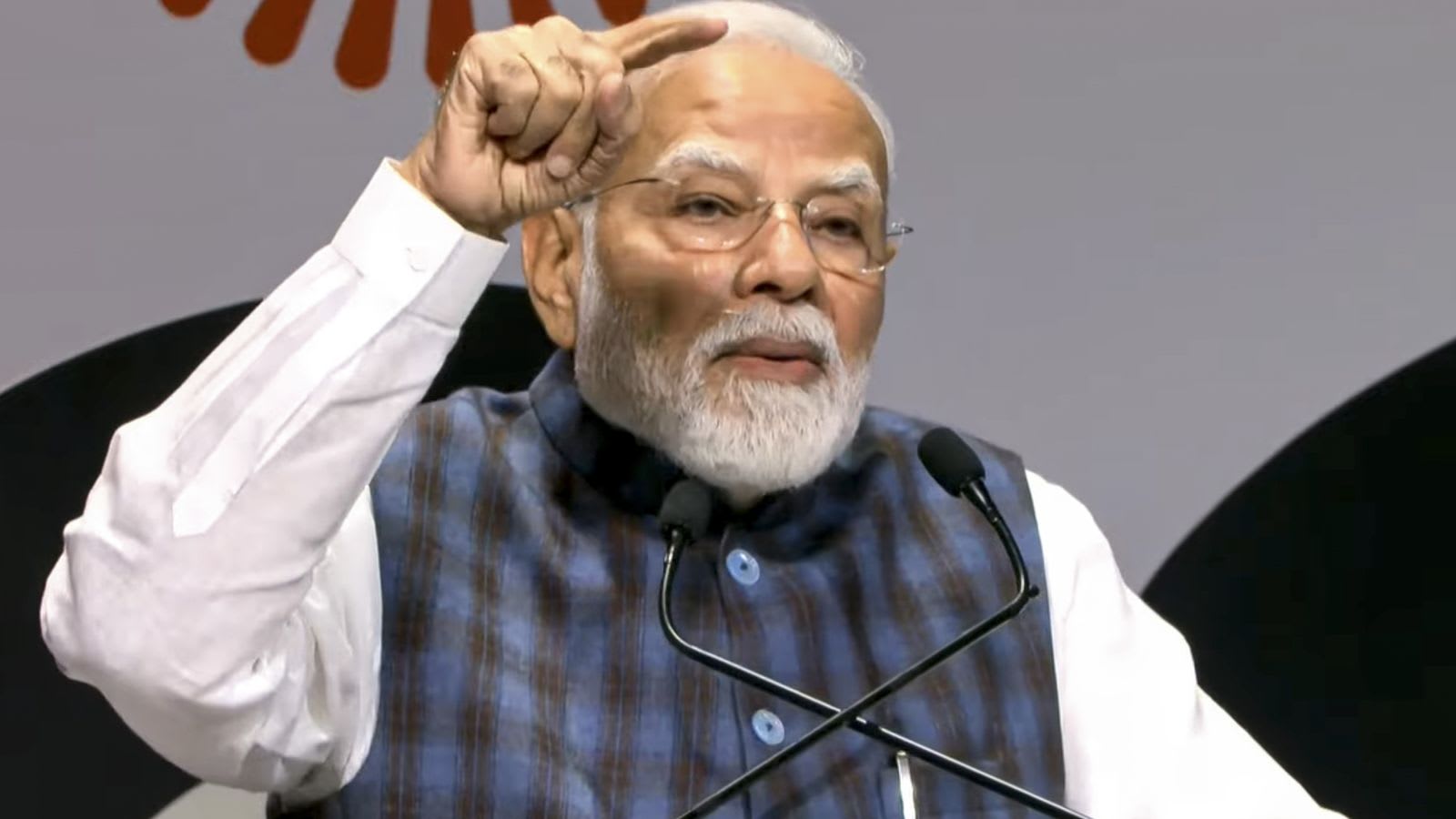
Prime Minister Narendra Modi has challenged India Inc to pass on the benefits of corporate and income tax cuts to their employees. He specifically questioned whether industries have increased hiring or salary packages following the government's fiscal relief measures.
PM Modi Challenges India Inc on Wealth Distribution
At the recent Federation of Indian Chambers of Commerce and Industry (FICCI) centenary convention, Prime Minister Narendra Modi delivered a direct message to the nation’s corporate leaders. Emphasizing a paradigm shift in economic management, the Prime Minister highlighted that over the last 12-13 years, approximately 50 crore people in India have successfully risen above the poverty line. This milestone serves as the backdrop for his broader demand that the corporate sector must now play a more proactive role in equitable economic growth.
Fiscal Policy and Corporate Responsibility
The Prime Minister specifically addressed the government’s efforts to incentivize economic activity through tax reforms. He noted that the corporate tax rate, which stood at 30% in 2014, has been reduced to 22% under his administration. Furthermore, he highlighted the implementation of a zero-income tax regime for earnings up to ₹12 lakh. These measures were designed to provide significant fiscal breathing room for both the corporate sector and the middle class, with the expectation that such liquidity would be reinvested into the workforce.
The 'Hire and Hike' Challenge
In a candid moment during the convention, PM Modi pivoted to a critical question regarding the tangible impact of these tax cuts on the common worker. He challenged industry leaders, asking, "I have waived income tax on the ₹12 lakh bracket, but did you increase salaries or the number of employees?" This interrogation underscores the government’s concern that tax relief provided to businesses might not be adequately trickling down to the employees in the form of higher wages or increased job creation.
Moving Beyond 'Passive' Partnership
Addressing the crowd, the Prime Minister critiqued the tendency of some in the industry to rely solely on government intervention, citing the sentiment of "Modi ji aap karo hum dekh lenge" (Modi ji, you do it, we will see). He urged India Inc to adopt a more collaborative and "open" approach to reform. The Prime Minister’s call is for a shift from a purely transactional relationship between the state and industry to one where the private sector takes active responsibility for the welfare of the workforce as a measure of national progress.
Future Trends in Corporate Governance
This interaction signals a potential shift in the government's approach to industrial policy. By publicly holding the corporate sector accountable for the utilization of tax benefits, the administration is signaling that future fiscal incentives may be tied to more stringent performance metrics regarding employment data and wage growth. The focus is clearly on ensuring that economic expansion is inclusive and that the benefits of national prosperity are distributed among the workforce, rather than being concentrated within corporate balance sheets.
Conclusion
Ultimately, the Prime Minister’s address at the FICCI centenary reflects a desire to align corporate growth with the broader socio-economic goals of the nation. By demanding transparency and social responsibility from India Inc, the government is attempting to ensure that the reduction of tax burdens translates into a stronger, more prosperous middle class and a robust job market, cementing the gains made in poverty alleviation over the last decade.
Multiple Citing Sources