Model Routing Is Simple. Until It Isn’t.
Source Entity
Hugging Face - Blog
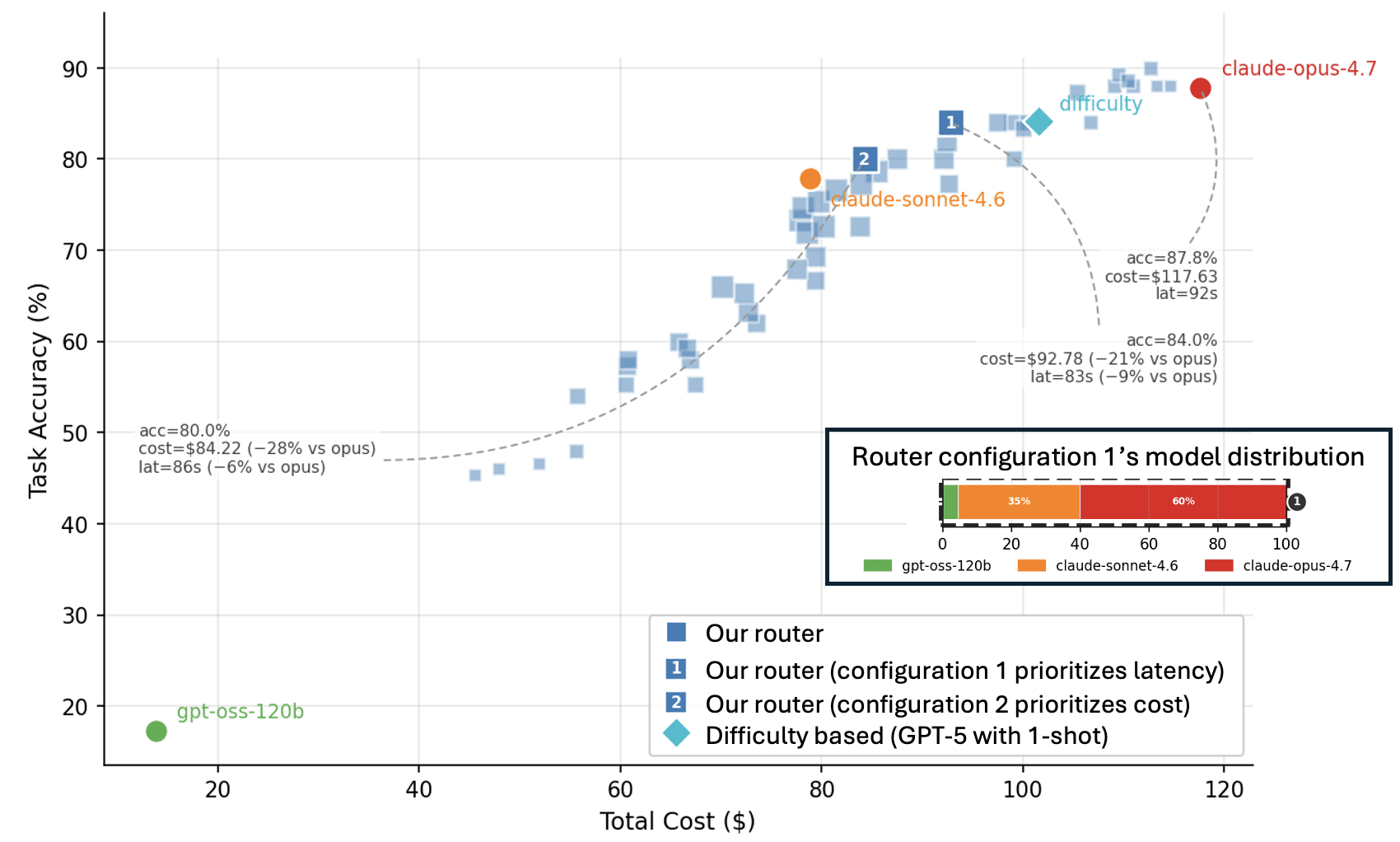
As enterprise AI adoption scales, simple model routing strategies often fail to account for complex systems optimization requirements. Effective implementation requires managing variables beyond base token costs, such as latency, specialized model capabilities, and fluctuating provider pricing.
The Illusion of Simplicity in AI Model Routing
Building a router into an AI agent architecture is frequently marketed as a straightforward optimization strategy. The premise is intuitive: by directing simple queries to cost-effective models and reserving high-performance, expensive models for complex reasoning or specialized tasks, organizations can achieve a balance between operational efficiency and output quality. This approach often involves using a classifier or heuristic to dictate the flow of traffic, with the expectation that costs will decrease while performance remains stable. However, as organizations move beyond prototypes, this simplistic view often collapses under the weight of real-world operational demands.
Moving Beyond Classification to Systems Optimization
In practical application, what initially appears to be a model-selection problem—essentially a classification task—rapidly evolves into a complex systems optimization challenge. The assumption that a static heuristic can effectively manage traffic is flawed because it ignores the dynamic nature of LLM performance and deployment. When building agentic systems, developers must grapple with the reality that routing is not merely about picking the 'right' model for a specific prompt type, but about managing a shifting ecosystem of variables that affect both latency and reliability.
The Hidden Complexity of Cost Structures
One of the most persistent misconceptions in the field is that cost is strictly defined by the vendor's price per million tokens. As demonstrated by recent industry experiences, such as the comparison between models like GPT-4.1 and Claude Sonnet 4.6, price structures are rarely linear or predictable. Relying on baseline pricing leads to significant discrepancies in actual operational expenditure. Factors such as tokenization differences, caching mechanisms, and model-specific overheads mean that a model assumed to be cheaper may, in practice, result in higher overall costs depending on the specific workload and request volume.
The Multidimensional Nature of Routing
Effective routing requires balancing three critical dimensions that often conflict: cost, performance, and specialized capability. While a router might successfully send coding tasks to a model like Claude and multimodal tasks to Gemini, the underlying infrastructure must account for the latency introduced by the routing layer itself. If the overhead of the routing decision exceeds the time saved by selecting a smaller model, the efficiency gains are negated. Furthermore, as models are updated frequently, the 'best' model for a specific task today may be superseded tomorrow, necessitating a highly adaptive routing framework.
Future Trends in Agentic Infrastructure
Looking forward, the industry is shifting away from static, heuristic-based routers toward dynamic, feedback-driven systems. Future routing architectures will likely integrate real-time performance monitoring and automated cost-analysis loops to adjust decision-making parameters on the fly. As enterprise requirements become more stringent, the focus will move from simple cost reduction to holistic performance management, where routing is treated as a core component of the software development lifecycle rather than a secondary configuration task.
Conclusion
While model routing remains a powerful tool for scaling AI applications, it is not a 'set it and forget it' solution. Organizations must recognize that the complexity of modern LLM ecosystems requires a robust, data-driven approach to routing. By acknowledging that cost and performance metrics are fluid, developers can build more resilient agentic systems that truly deliver on the promise of optimized, high-performance artificial intelligence.