'No double standards on terror': PM Modi's message at SCO in presence of Pak PM
Source Entity
TRISHA MAHAJAN
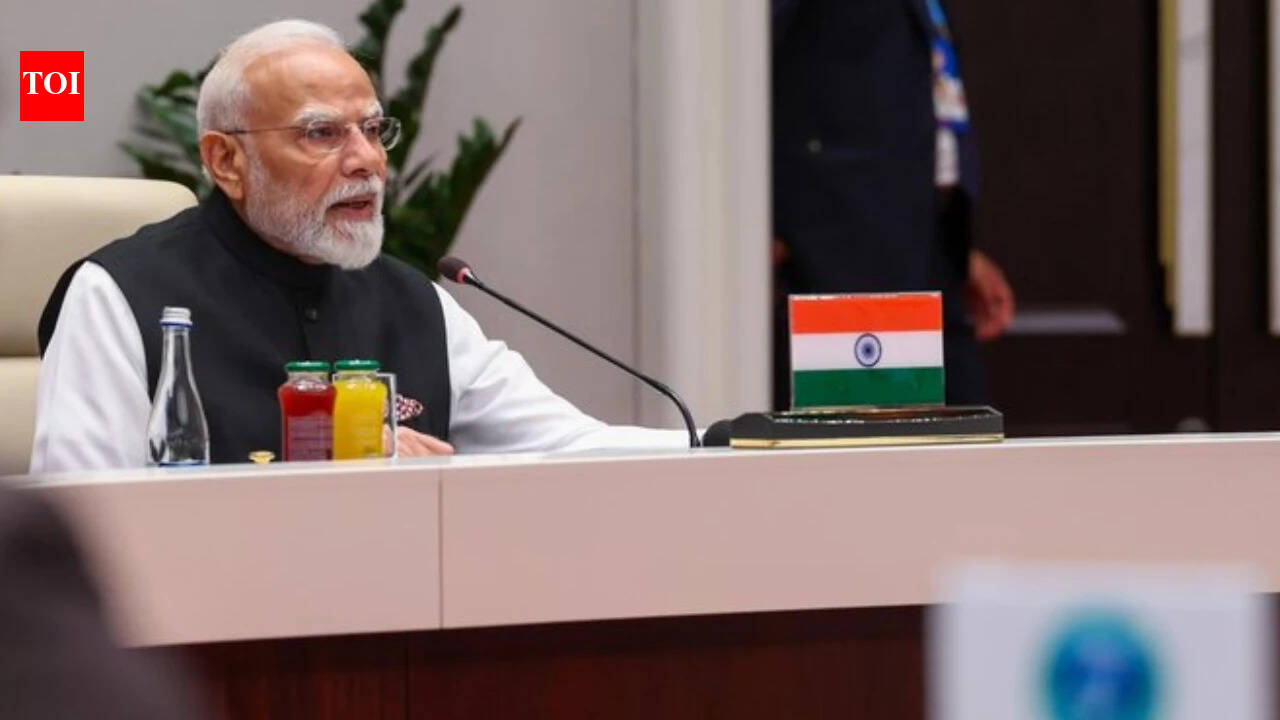
Prime Minister Modi engaged with Iranian President Pezeshkian and Russian President Putin at the SCO Summit to advocate for peace and regional stability. These discussions emphasized the necessity of ending ongoing conflicts in West Asia and Ukraine while strengthening economic and maritime connectivity.
India’s Diplomatic Push for Global Stability at the SCO Summit
At the recent Shanghai Cooperation Organisation (SCO) summit in Bishkek, Prime Minister Narendra Modi utilized the platform to reiterate India’s commitment to conflict resolution and economic regionalism. By engaging directly with both the Iranian President Masoud Pezeshkian and Russian President Vladimir Putin, India has positioned itself as a critical interlocutor capable of navigating complex geopolitical tensions while maintaining a focus on development.
Strengthening Ties with Iran and the Chabahar Pivot
The meeting between PM Modi and President Pezeshkian underscores the strategic importance of the Chabahar port. As both nations seek to fortify trade connections, the project serves as a cornerstone for regional connectivity, bypassing traditional land-based bottlenecks. By emphasizing the necessity of maritime freedom and the protection of civilian infrastructure, India is advocating for a rules-based order that allows for secure commerce, even amidst the backdrop of potential external sanctions.
The Call to End the Russia-Ukraine Conflict
PM Modi’s dialogue with President Putin marks a continuation of India’s consistent stance on the war in Ukraine. Having previously asserted that "this is not the era of war" in 2022 and noting that peace cannot be achieved through violence in 2024, Modi’s latest appeal to shift from an "endless war" to the "end of war" reflects a deepening sense of urgency. India’s position remains that solutions to international conflicts must be found through dialogue rather than on the battlefield.
Connectivity as a Catalyst for Growth
A significant takeaway from the summit was the focus on modernizing trade and logistical connectivity. India views the modernization of these networks not merely as an economic necessity, but as a stabilizing force. By advocating for improved infrastructure, PM Modi aims to link the markets of Central and West Asia, fostering interdependency that could serve as a deterrent to future regional instability.
Geopolitical Implications and Future Trends
India’s dual approach—urging peace in conflict zones while aggressively pursuing trade connectivity—signals a shift toward a more proactive middle-power diplomacy. Future trends suggest that India will continue to leverage its neutrality to mediate in global crises. As the SCO evolves, India’s influence will likely hinge on its ability to balance its relationships with disparate regional powers while ensuring that its own economic interests, particularly regarding maritime security, are prioritized.
Conclusion
In conclusion, the Bishkek summit highlighted India’s role as a voice of reason in an increasingly fragmented global landscape. By emphasizing human security—specifically the safety of seafarers and civilians—and promoting economic integration, PM Modi has reinforced India's stature as a reliable partner in the pursuit of both peace and regional prosperity.
Multiple Citing Sources