States must drive next phase of reforms, says Montek Singh Ahluwalia
Source Entity
India Latest News: Top National Headlines Today & Breaking News | The Hindu
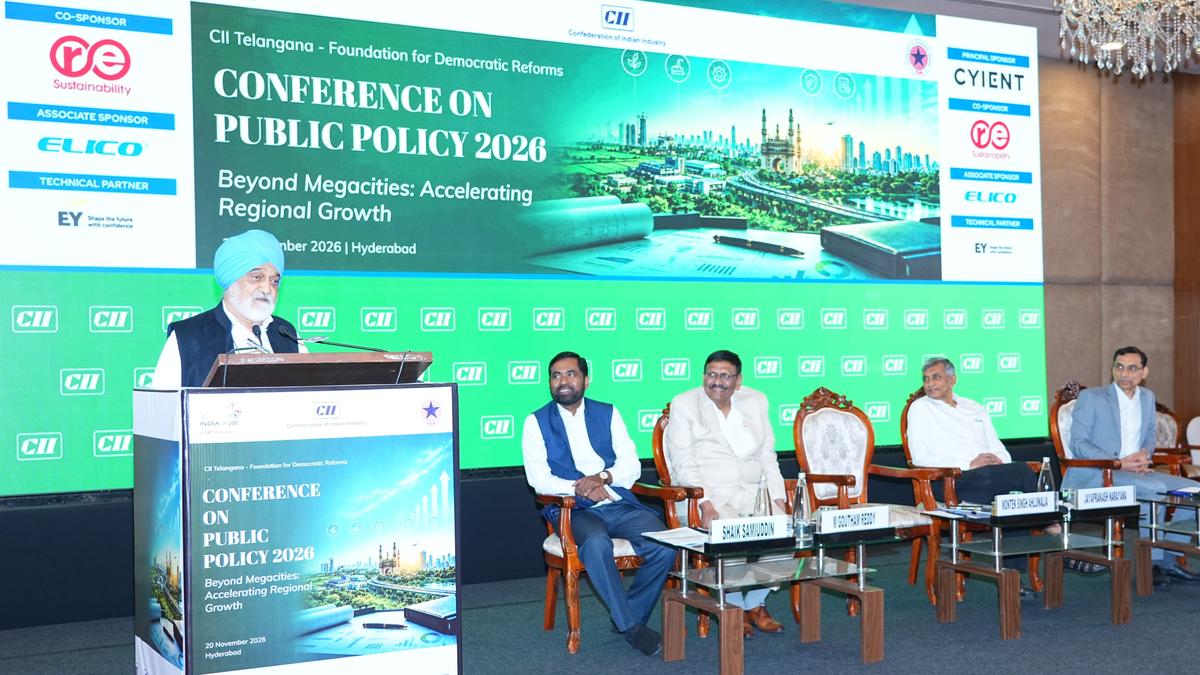
Former Planning Commission Deputy Chairman Montek Singh Ahluwalia emphasizes that India's path to a developed economy by 2047 requires state-led reforms. He highlights the need for advanced states to accelerate growth by addressing structural challenges in land, power, and urban infrastructure.
The Decentralization of India’s Economic Growth Strategy
Former Planning Commission Deputy Chairman Montek Singh Ahluwalia has articulated a pivotal shift in India’s economic trajectory, asserting that the next phase of national development must be spearheaded by State-level initiatives rather than centralized policy alone. Speaking at the 'Conference on Public Policy 2026' organized by CII Telangana, Ahluwalia emphasized that the goal of achieving 'Viksit Bharat'—a developed India—by 2047 is contingent upon the institutional capabilities and region-specific strategies implemented by individual states.
The Role of Advanced States in National Development
Ahluwalia identifies a specific cohort of states—Gujarat, Maharashtra, Tamil Nadu, Andhra Pradesh, and Telangana—as the engines of this transformation. The core argument is that for India to achieve a high-income average, these industrially advanced states must outpace the national growth rate significantly. By reaching 'Viksit' status well before the 2047 deadline, these states serve as the necessary catalysts to pull the national average upward, creating a ripple effect of prosperity that can eventually encompass the entire country.
Critical Bottlenecks to Reform
To unlock this potential, the discourse highlights several systemic hurdles that have historically impeded rapid industrialization. Ahluwalia specifically points to challenges in land acquisition, which remains a complex and often litigious process for infrastructure projects. Furthermore, the power sector continues to struggle with efficiency, and water security has emerged as a critical constraint for sustaining long-term industrial and urban growth. Addressing these 'supply-side' bottlenecks is essential for states to remain competitive in a globalized economy.
Institutional Capacity and Urban Infrastructure
Beyond simple policy shifts, the analysis stresses the importance of institutional capabilities. Developing robust urban infrastructure is not merely a matter of construction but of governance and city planning, which requires empowered local bodies and streamlined administrative processes. The transition from a central-planning mindset to one of competitive federalism allows states to tailor their development strategies to their unique geographical and demographic strengths, effectively turning regional advantages into national assets.
Future Trends and Strategic Outlook
Looking ahead, the strategy for India’s economic future hinges on the ability of state governments to foster an environment conducive to private investment. If states can successfully navigate the complexities of land, power, and urban planning, they will likely see increased capital inflows and job creation. This shift represents a move toward a more mature federal structure where regional leaders take ownership of their economic destiny, ultimately determining the success of India's long-term developmental ambitions.
Verification Required?