'Why the axe is always on Sanju?': Ex-chief selector blasts Gambhir-led management
Source Entity
TOI SPORTS DESK
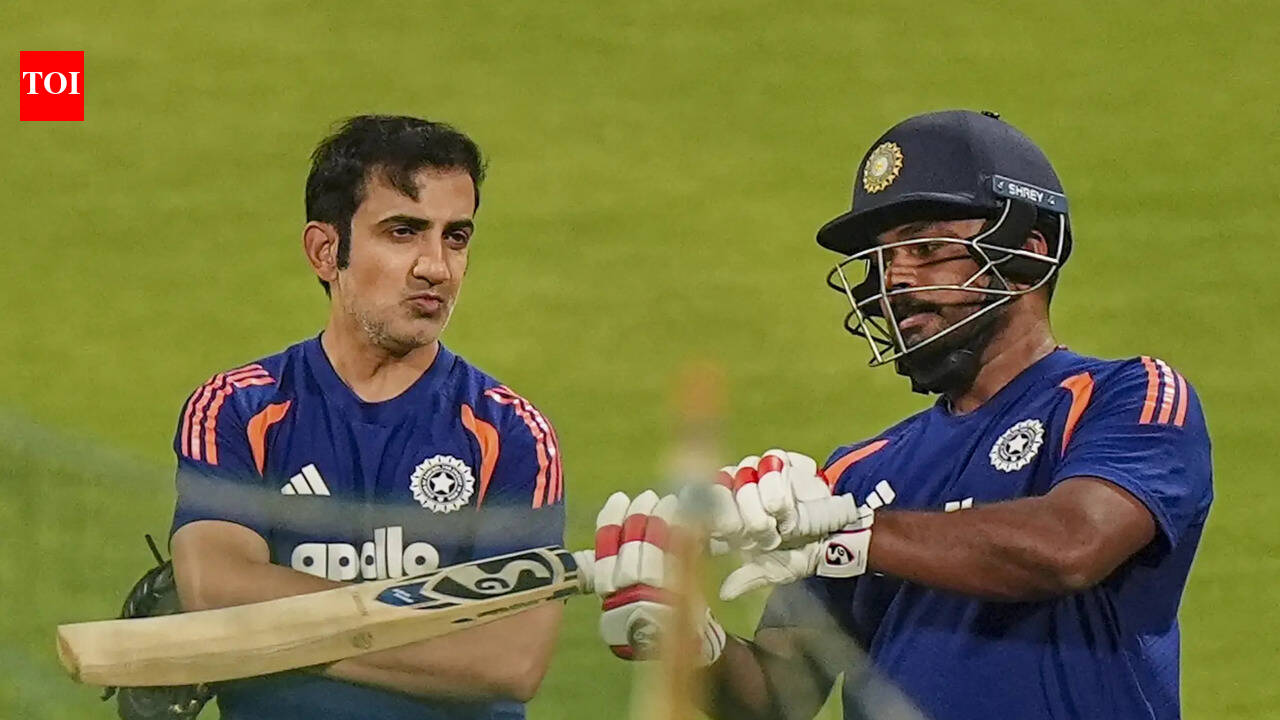
MSK Prasad advised patience regarding coach Gautam Gambhir's early tenure. He noted key players Hardik Pandya and Jasprit Bumrah were absent during recent losses. Prasad stated assessing Gambhir requires a full-strength team for future matches. He also criticized the decision to drop Sanju Samson after a few low scores. The former selector also expressed concern over Vaibhav Sooryavanshi's gradual introduction.
Analysis of Selection Friction: MSK Prasad vs. Gambhir-led Management
The recent critique by former chief selector MSK Prasad regarding the current management under head coach Gautam Gambhir highlights a recurring tension within Indian cricket: the balance between ruthless performance standards and the patience required for player development. Prasad's comments emerge at a critical juncture where the team is navigating a transition in leadership and strategy. By urging patience, Prasad acknowledges that any new coaching regime requires a gestation period to instill its philosophy, especially when the team is missing cornerstone players who define the tactical structure of the side.
The 'Sanju Samson' Dilemma and Selection Volatility
One of the most poignant points in Prasad's analysis is the question, "Why the axe is always on Sanju?" This refers to Sanju Samson, a player whose career has been characterized by sporadic opportunities and sudden exits from the squad. Prasad's criticism suggests that the current management is repeating a historical pattern of treating Samson as a disposable asset rather than a long-term investment. Dropping a player after only a few low scores indicates a low threshold for failure that can stifle a player's confidence and prevent them from finding a consistent rhythm in international cricket.
Impact of Missing Key Personnel
Prasad strategically contextualizes the team's recent losses by pointing to the absence of Hardik Pandya and Jasprit Bumrah. In modern limited-overs cricket, these two players provide a tactical equilibrium—Bumrah through his unmatched death-bowling precision and Pandya through his finishing capabilities and bowling utility. Without them, the team's structural integrity is compromised, making it unfair to judge Gautam Gambhir's coaching efficacy based on results achieved with a depleted squad. This suggests that the current losses may be a result of personnel gaps rather than a failure of coaching strategy.
The Paradox of Youth Integration
Interestingly, Prasad contrasts the 'quick axe' given to Samson with the 'gradual introduction' of young prospects like Vaibhav Sooryavanshi. This creates a perceived paradox in the management's approach: while established but inconsistent players are discarded quickly, newcomers are being eased in with extreme caution. From an analytical perspective, this suggests a lack of a unified blueprint for talent management. If the management is unwilling to gamble on the consistency of an experienced player like Samson, the slow-burn approach for newcomers may not provide the immediate impact required to reverse a losing streak.
Broader Implications and Future Outlook
This public critique by a former selector underscores the immense pressure on Gautam Gambhir to deliver immediate results. The transition from a player-centric approach to a coach-driven system often involves friction, particularly when selection decisions are questioned publicly. Moving forward, the Gambhir-led management will likely face increased scrutiny regarding their 'churn rate' of players. To stabilize the team, there must be a shift toward providing players a guaranteed run of games, regardless of a few failures, to ensure that the team's core is settled before the next major tournament.
Summary
In essence, MSK Prasad's intervention serves as a cautionary tale about the dangers of impulsive selection. While he supports the overarching transition to Gambhir's leadership, he warns that the habit of marginalizing talented players like Sanju Samson, coupled with an overly cautious approach to youth, could undermine the team's long-term stability. The path forward requires a synergy between tactical rigidity and empathetic player management.