Fishing community in Nagapattinam village bars its youth from drinking alcohol
Source Entity
India Latest News: Top National Headlines Today & Breaking News | The Hindu
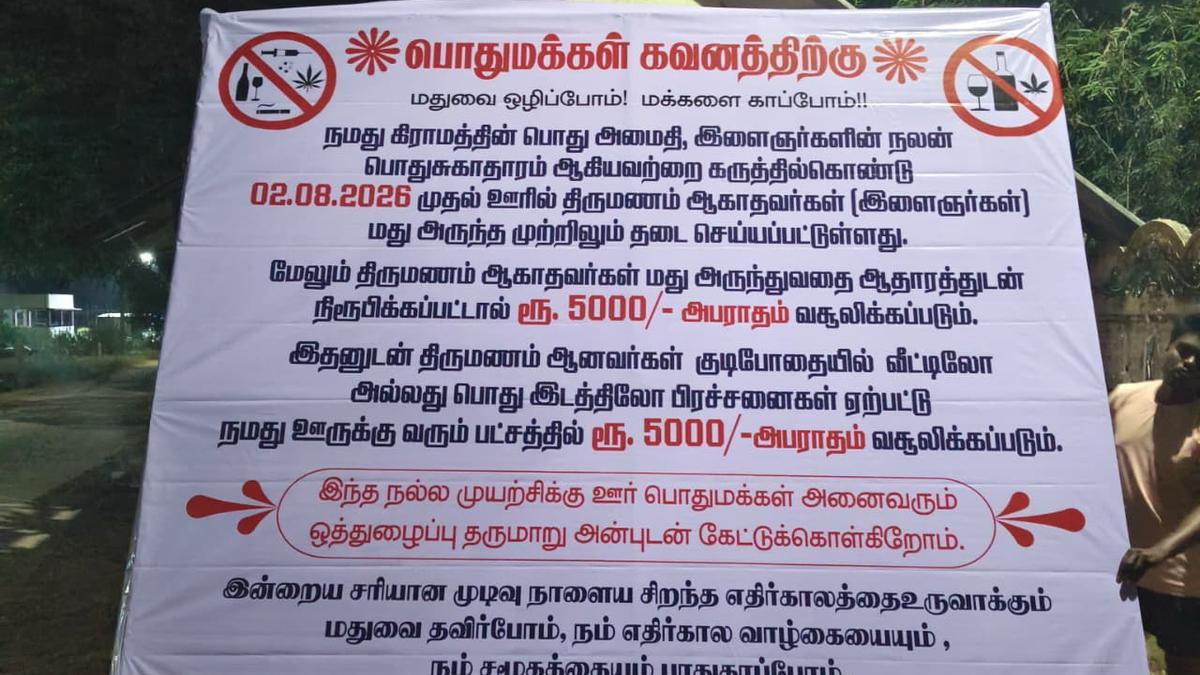
The fishing community of Vizhunthamavadi village in Nagapattinam has implemented a strict ban on alcohol consumption for unmarried youth to curb alcoholism. Violators face a fine of ₹5,000, with additional penalties for married individuals causing public disturbances while intoxicated.
Community-Led Reform in Vizhunthamavadi
The fishing community of Vizhunthamavadi village, located in the Nagapattinam district of Tamil Nadu, has taken a decisive step toward social reform by implementing a stringent ban on alcohol consumption among its unmarried youth. This grassroots initiative, led by the local fishermen panchayatdars, reflects a growing concern within the community regarding the long-term impact of alcoholism on the younger generation. By formalizing this prohibition, the village leadership is attempting to preserve social order and protect the future of its youth.
The Mechanics of the Ban and Penalties
The village has established a clear regulatory framework to enforce this new policy. Any unmarried youth found consuming alcohol will be subject to a fine of ₹5,000. This financial penalty serves as a significant deterrent in a rural setting, emphasizing the community's commitment to curbing substance abuse. The notice board displayed in the hamlet acts as a public declaration of these new social norms, ensuring that all residents are aware of the consequences of non-compliance.
Addressing Public Disturbance
Beyond targeting unmarried youth, the panchayatdars have also addressed the behavior of married men. The decree stipulates that any married person who consumes alcohol and subsequently causes a public ruckus or creates domestic disturbances will also be liable for a fine of ₹5,000. This dual-pronged approach acknowledges that while the primary goal is prevention among the youth, maintaining public peace and safety for all residents remains a top priority for the village council.
Socio-Economic Context of Nagapattinam
Fishing communities in coastal regions like Nagapattinam often operate under tight-knit social structures where traditional panchayats hold considerable influence over community conduct. The decision to regulate alcohol consumption is a form of self-governance that predates and operates alongside formal state law. By taking this action, the community is attempting to mitigate the economic and social stressors that often accompany alcoholism, which can lead to reduced productivity and familial instability.
Broader Implications and Future Trends
This move by the Vizhunthamavadi community serves as a case study for localized social engineering in India. Similar rural initiatives often emerge when communities feel that external systemic interventions are insufficient. If successful, this model of community-imposed fines and behavioral regulation could influence neighboring villages to adopt similar measures, potentially leading to a broader regional trend of self-regulated sobriety and improved community welfare.
Conclusion
The actions taken by the Vizhunthamavadi fishing community represent a proactive effort to address the challenges of alcoholism at the local level. By imposing financial penalties and establishing clear behavioral expectations, the village is asserting its autonomy in maintaining societal health. The effectiveness of this policy will depend on the consistency of its enforcement and the continued support of the residents, marking a significant milestone in the village's ongoing efforts to ensure the well-being of its members.
Verification Required?