Generate questions at last minute to prevent paper leaks: Nilekani
Source Entity
TNN
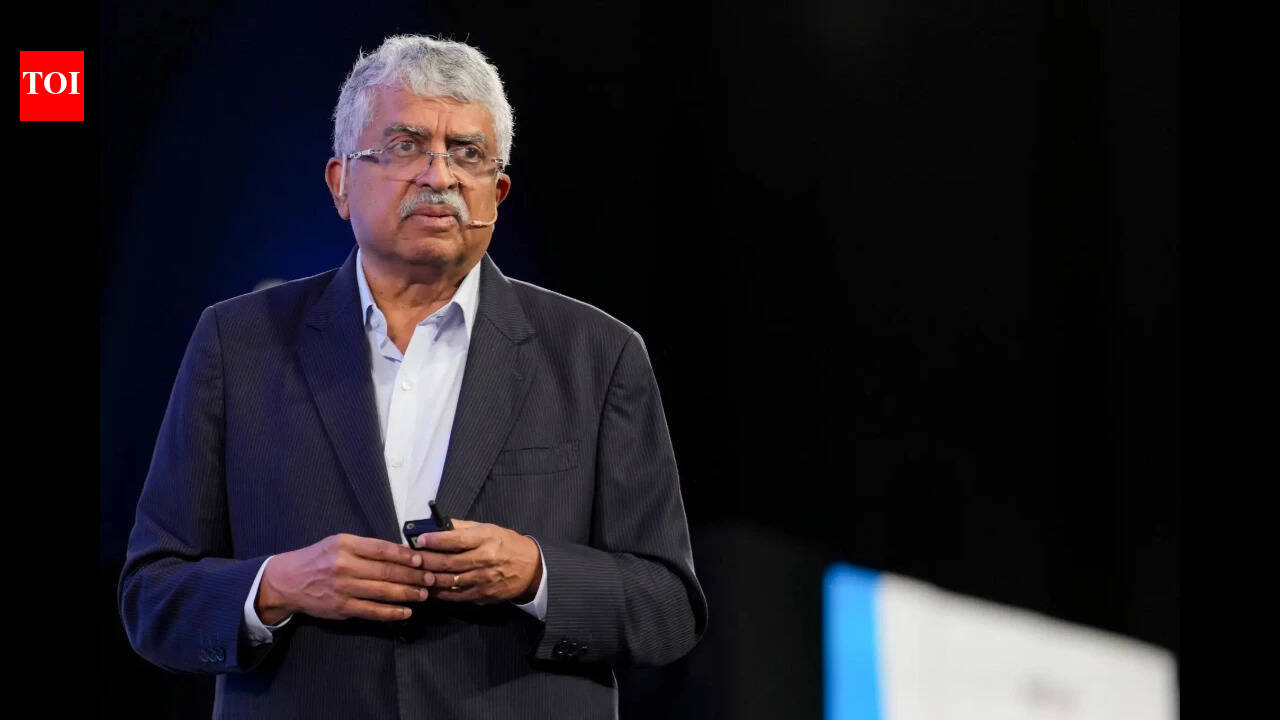
Nandan Nilekani proposes last-minute question generation to curb exam paper leaks while emphasizing India's potential to lead in AI-driven job creation for small businesses. He advocates for a systemic shift in both examination security and how the workforce adapts to the AI revolution.
Rethinking Examination Security and AI Integration
Nandan Nilekani, Chairman and Co-founder of Infosys, recently addressed critical national challenges during the Bloomberg New Economy Forum 2026. His insights, spanning from administrative reform to the future of the Indian workforce, highlight the intersection of technology and public policy. As the head of the High-Powered Task Force on examination reforms, Nilekani has provided a technical blueprint to combat the persistent issue of exam paper leaks that has plagued the Indian educational landscape.
Curbing Paper Leaks Through Algorithmic Randomization
To address the systemic failure of exam security, Nilekani proposes a radical departure from the traditional model of a single, static question paper. By creating a massive, randomized bank of questions and utilizing technology to generate the final paper only at the last minute, the government can effectively neutralize the economic incentive for leaks. This strategy transforms the examination process from a centralized, vulnerable target into a dynamic, secure system where pre-emptive theft becomes impossible.
India’s Role in Global AI Diffusion
Beyond administrative reform, Nilekani projects that India is uniquely positioned to lead the world in the mass diffusion of Artificial Intelligence. Rejecting the "disaster marketing" narrative often associated with AI, he emphasizes that the technology should be viewed as an accessible tool for empowerment. He argues that rather than being contained, AI should be scaled to reach the masses, ensuring that its utility is felt across every stratum of society.
The Future of Work and Small Businesses
Nilekani highlights that the primary engine for future job creation will be small businesses. As AI enhances productivity, particularly in coding and client requirement analysis, small enterprises—typically composed of 3-5 individuals—will gain the capacity to compete at larger scales. By leveraging AI to handle complex tasks, these micro-entities will become the focal point of India’s economic growth, shifting the employment paradigm away from traditional corporate giants.
Socio-Economic Implications and Synthesis
This two-pronged approach—securing national infrastructure like exams through technology and empowering small businesses through AI—reflects a broader vision for a digital-first India. By focusing on the practical application of AI, Nilekani suggests that the workforce will evolve to prioritize client-centric problem-solving over rote technical execution. Ultimately, his recommendations serve as a roadmap for integrating high-level technological solutions into the fabric of everyday governance and commercial activity, ensuring that India remains at the forefront of the global digital transition.