European spacecraft finds chaotic scene after asteroid deflection experiment
Source Entity
Stephen Clark
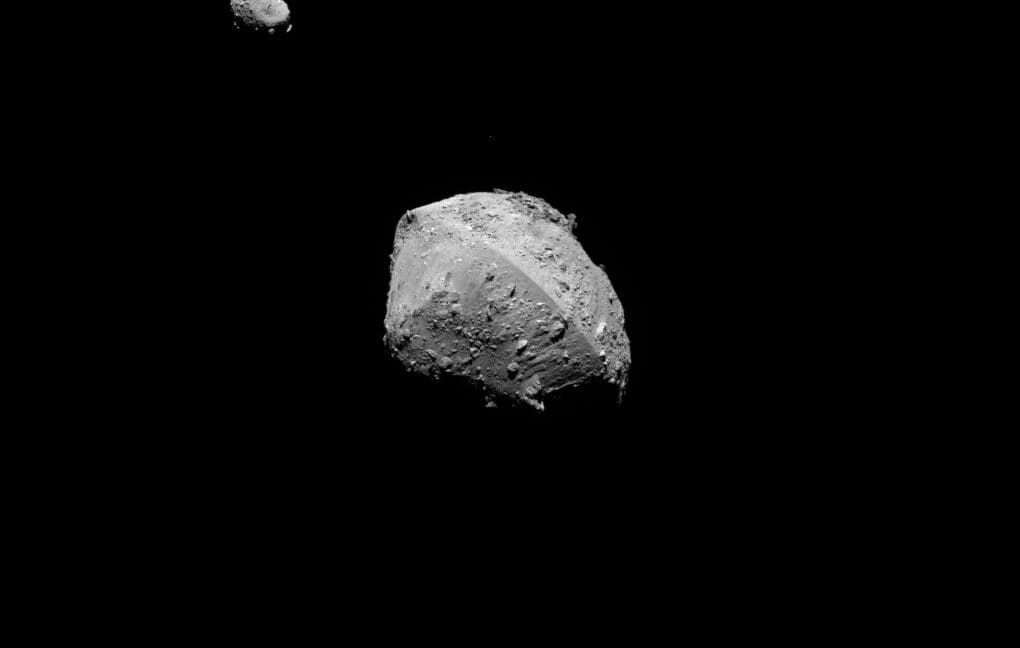
NASA's 2022 DART mission successfully altered the orbit of the asteroid Dimorphos, leaving a stadium-sized crater. The ESA's Hera spacecraft is now onsite to analyze the debris and long-term impact of this planetary defense test.
The Aftermath of Planetary Defense: Analyzing the DART Impact
In September 2022, NASA executed a historic milestone in planetary defense by deliberately crashing the DART (Double Asteroid Redirection Test) spacecraft into the asteroid Dimorphos. Traveling at over 13,700 mph, the probe released 10 billion joules of energy, a kinetic impact that successfully shortened the asteroid’s orbit around its companion, Didymos, by approximately 33 minutes. This result far exceeded initial expectations, proving that humanity possesses the technological capability to alter the trajectory of a near-Earth object.
A Chaotic Landscape Revealed
Recent data from the European Space Agency’s (ESA) Hera spacecraft, which arrived at the site in late 2026, has provided the first close-up visual evidence of the collision's aftermath. Images taken from a distance of 29 kilometers reveal a dramatic, stadium-sized crater on the surface of Dimorphos. Scientists have described the scene as a "chaotic" environment, characterizing the impact as akin to a disaster movie, confirming that the kinetic energy release caused significant geological disruption to the asteroid.
The Role of the Hera Mission
While the initial DART mission proved the efficacy of the kinetic impactor strategy, the Hera mission is essential for understanding the nuances of the event. By conducting a detailed survey of the crater and the surrounding debris field, Hera allows researchers to move beyond orbit measurements to understand the structural composition of the asteroid. This "forensic" investigation into the crash site is vital for refining future planetary defense strategies.
Implications for Planetary Defense
Although Dimorphos posed no threat to Earth, the success of this experiment provides a blueprint for future mitigation efforts should a hazardous object be detected. The fact that the orbit was altered 25 times more than the most conservative estimates suggests that kinetic impactors are a highly effective tool in our defensive arsenal, provided the object's composition is understood.
Future Trends in Space Exploration
This collaboration between NASA and the ESA underscores a shift toward international cooperation in space security. As we continue to study the aftermath of the DART mission, the data will likely influence how space agencies design future interception missions. The ability to accurately predict how an asteroid will respond to an impact is now a reality, marking a new era where humanity transitions from passive observers of cosmic threats to active participants in planetary protection.