A rough guide for going back to the Moon
Source Entity
Hacker News
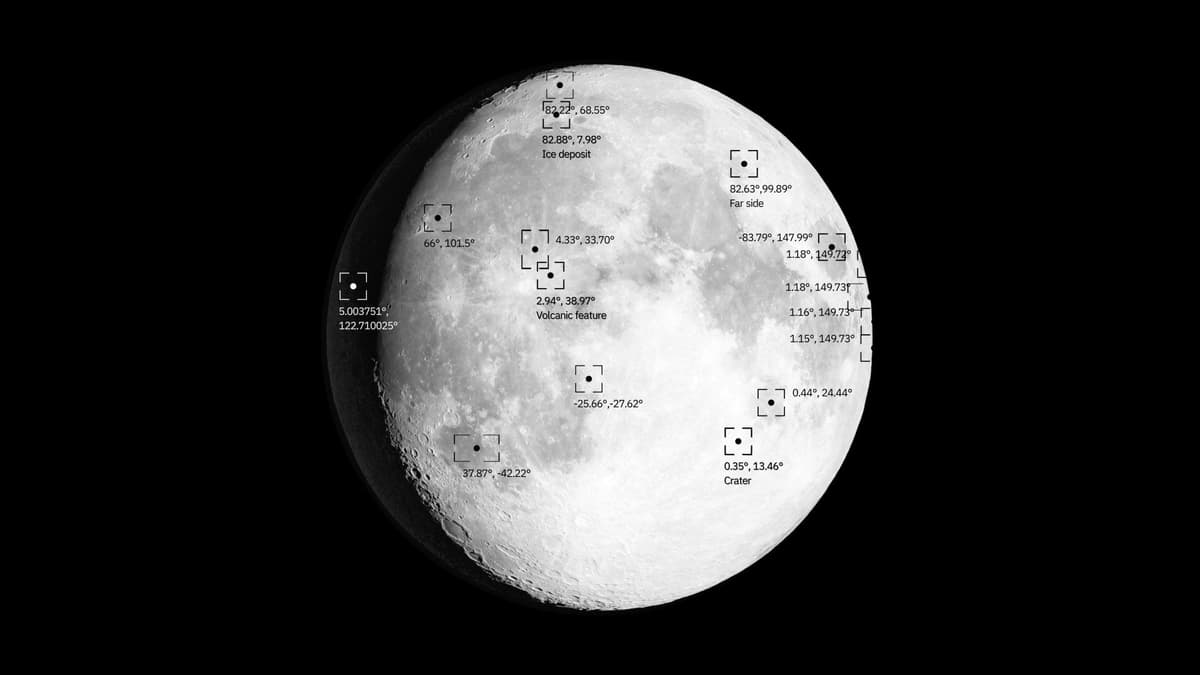
NASA and IBM have released an open-source AI lunar foundation model to map the Moon's surface. This initiative aims to support the Artemis program's goal of establishing a sustainable human presence and preparing for future Mars missions.
Bridging the Gap: The NASA-IBM Lunar Foundation Model
NASA’s transition from the historic Apollo missions—which focused on the feasibility of lunar travel—to the Artemis program marks a paradigm shift toward long-term habitation. While Apollo was a proof-of-concept for reaching the Moon, Artemis is designed to test the viability of living and working in deep space. Central to this ambitious goal is the creation of a permanent lunar base, which serves a dual purpose: conducting scientific research and serving as a critical staging ground for future crewed missions to Mars.
The Necessity of Precision Mapping
Exploration on Earth relies heavily on geospatial data, but lunar exploration presents unique challenges due to the Moon's rugged and alien topography. To navigate this effectively, NASA has partnered with IBM to develop the NASA-IBM Lunar Foundation Model. By open-sourcing this data, the agencies are providing researchers and engineers with the most comprehensive map of the lunar surface ever created, consolidating decades of historical data from both US and Japanese space missions.
Advancing AI in Extraterrestrial Environments
This initiative stands out because it is the first AI model to integrate observations captured across a wide range of modalities. By harmonizing disparate datasets into a single, cohesive foundation model, NASA and IBM are enabling more accurate identification of lunar features, potential landing zones, and resource deposits. This technological leap is essential for the logistical planning required to sustain human life in such a hostile, vacuum-dominated environment.
Strategic Implications for Artemis
The Artemis program is not merely about returning to the Moon; it is about establishing a sustainable infrastructure. The ability to map the surface with high precision allows mission planners to mitigate risks associated with lunar terrain, such as craters, steep slopes, or areas with extreme shadows. As NASA looks toward Mars, the lessons learned from building and maintaining a base on the Moon will be foundational to success in more distant planetary exploration.
A Collaborative Future for Space Exploration
By choosing to open-source this model, NASA and IBM are fostering a global collaborative environment. This democratizes access to lunar data, allowing academic institutions, international space agencies, and private sector innovators to contribute to the mission architecture. This collaborative spirit is vital as the international community prepares for the complexities of multi-planetary logistics and the long-term presence of humans beyond Earth's orbit.
Conclusion: Paving the Way to Mars
The integration of AI into lunar mapping represents a pivotal step in the evolution of space exploration. As the NASA-IBM Lunar Foundation Model continues to evolve, it will serve as the digital backbone for the Artemis program. By combining historical mission intelligence with modern machine learning, humanity is better equipped than ever to transition from temporary visitors to long-term residents of the Moon, ultimately securing the path toward future Mars exploration.