How an artist gave shape to a space shuttle's new towering exhibit
Source Entity
Robert Pearlman
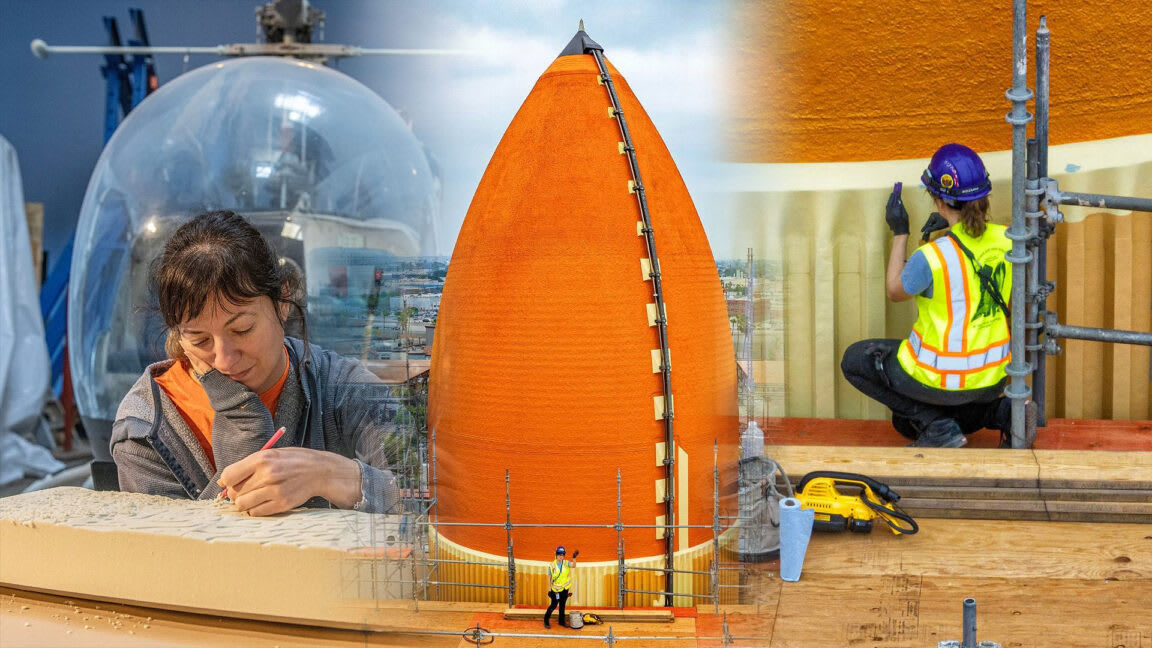
Artist Natalie Rosen played a critical role in the California Science Center's new space shuttle Endeavour exhibit. Her artistic expertise ensured the shuttle's 'stack' accurately reflects its authentic historical launch appearance.
The Artistic Engineering of Endeavour
The unveiling of the space shuttle Endeavour at the new Samuel Oschin Air and Space Center in Los Angeles marks a significant milestone in aerospace preservation. While the public often focuses on the engineering prowess of NASA technicians, the recent installation highlights a unique intersection between fine art and technical exhibition. Natalie Rosen, an artist with no prior background in aerospace, became an essential figure in recreating the visual integrity of the shuttle’s massive launch configuration.
Bridging the Gap Between Art and Aerospace
Typically, the restoration of spacecraft is viewed through a purely mechanical lens, focusing on structural integrity and historical accuracy of hardware. However, Rosen’s involvement underscores the necessity of aesthetic precision in museum curation. By treating the Endeavour ‘stack’—the shuttle, its external tank, and solid rocket boosters—as a canvas, Rosen ensured that the finished exhibit would resonate with the visual memory of the public who watched these vehicles launch into orbit.
The Challenge of the 'Stack'
Creating a fully authentic display of a space shuttle in its launch position is an architectural and artistic feat of immense proportions. As Rosen noted, this project stands as the largest art endeavor she has ever undertaken. The complexity lies not just in assembling the hardware, but in ensuring that the final presentation conveys the raw power and scale of a real launch. Without her artistic intervention, the exhibit would likely lack the visceral impact required to educate and inspire visitors effectively.
Institutional Evolution and Public Engagement
The opening of the Samuel Oschin Air and Space Center on November 13 represents a shift in how museums approach large-scale technological artifacts. By bringing in unconventional specialists like Rosen, the California Science Center is diversifying its methodology. This interdisciplinary approach suggests that the future of museum curation will rely less on singular expertise and more on collaborative efforts that bridge the gap between technical preservation and immersive storytelling.
Historical Legacy and Future Trends
Endeavour’s new home serves as a permanent monument to the Space Shuttle era, which redefined human access to low Earth orbit for three decades. By meticulously recreating the launch stack, the museum provides a tangible link to history that static, horizontal displays cannot achieve. The success of this project indicates a trend toward 'experiential' history, where the goal is not merely to display an object, but to recreate the context of its operation through careful art direction.
Conclusion
Natalie Rosen’s contribution to the Endeavour exhibit serves as a testament to the fact that scientific history requires more than just machines—it requires the vision to present them truthfully. As the Samuel Oschin Air and Space Center welcomes the public, the shuttle now stands as a towering example of human ingenuity, preserved through a blend of technical mastery and artistic vision that ensures its legacy will continue to captivate future generations.