Nepal floods sweep 5 elephants into a UP river. Here’s how they were rescued
Source Entity
The Indian Express
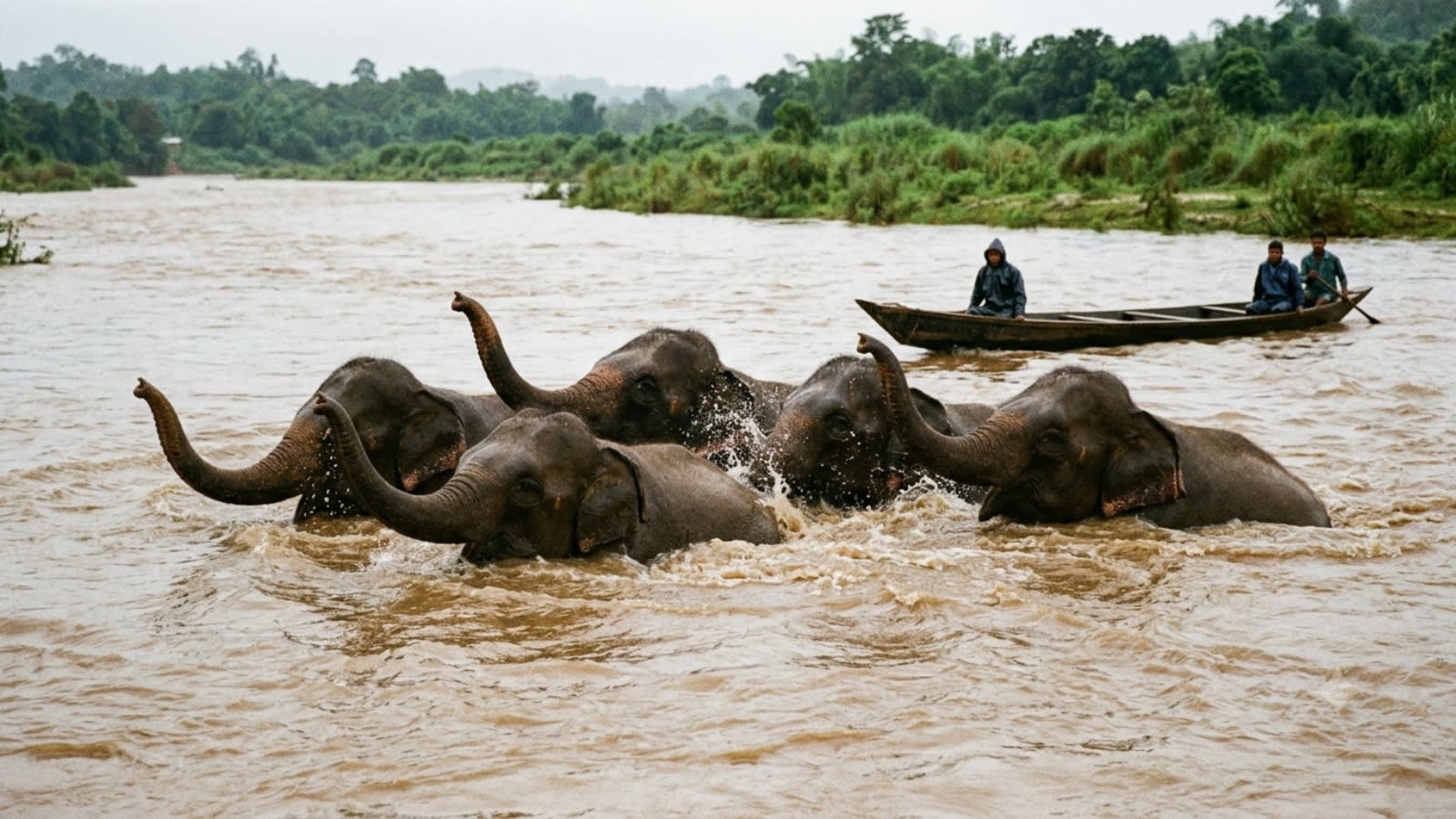
A herd of elephants swept from Nepal by flash floods into Uttar Pradesh was successfully rescued by Forest Department officials. The operation followed viral footage showing the animals struggling against powerful currents near the Kailashpuri barrage.
The Dramatic Rescue of Elephants Swept by Nepal Flash Floods
A Perilous Journey Across Borders
The recent flash flooding along the Nepal-Tibet border has triggered a series of environmental crises, the most striking of which involves the displacement of wildlife. A herd of elephants, numbering between four and five, was caught in the deluge and swept downstream across the international border into the Bahraich district of Uttar Pradesh, India. The animals were eventually spotted near the Kailashpuri barrage, a critical infrastructure point where their struggle against the surging currents was captured on video by onlookers.
The Role of Rapid Response Teams
Upon receiving word of the animals' plight, Forest Department officials in Uttar Pradesh initiated an urgent rescue operation. The logistical challenges of such an endeavor are immense, as rescuing large megafauna from turbulent, flood-swollen rivers requires not only specialized equipment but also the ability to guide the animals to safety without inducing further panic. The successful intervention highlights the critical importance of cross-border communication and localized wildlife management protocols in the face of climate-induced disasters.
Environmental Context and Climate Impact
This incident serves as a grim indicator of the increasing frequency and intensity of flash floods in the Himalayan region. As extreme weather events become more common, the habitats of migratory and resident wildlife are increasingly compromised. When rivers overflow their banks, they do not respect human-drawn political boundaries, often forcing wildlife into populated areas or industrial zones, which complicates conservation efforts and increases the risk of human-wildlife conflict.
Infrastructure and Wildlife Safety
The Kailashpuri barrage area, where the elephants were discovered, acts as a bottleneck during high-water events. Such structures, while vital for irrigation and flood control, can create dangerous entrapment zones for wildlife during the monsoon season. The successful rescue of these elephants underscores the need for better surveillance and early warning systems that can alert authorities to the movement of wildlife during extreme weather events, allowing for preemptive measures before the animals reach hazardous infrastructure.
Future Implications for Conservation
Moving forward, regional authorities in both Nepal and India must enhance their collaborative efforts to manage transboundary ecological corridors. The survival of these elephants is a testament to the dedication of local rescue teams, but it also points toward a broader systemic need for integrated disaster management plans that account for the safety of non-human populations. By formalizing communication channels between wildlife departments on both sides of the border, the impact of future climate-driven displacements can be significantly mitigated.
Conclusion
The rescue of these elephants is a rare success story amidst the devastation caused by the recent flash floods. While the immediate threat to the herd has been neutralized, the event remains a stark reminder of the vulnerability of wildlife to the changing hydrological patterns in the Himalayan foothills. Continued vigilance, investment in wildlife rescue infrastructure, and regional cooperation remain the best safeguards for preserving biodiversity in an era of environmental uncertainty.