Choosing an AI model: one prompt, 11 models, different results
Source Entity
Hacker News
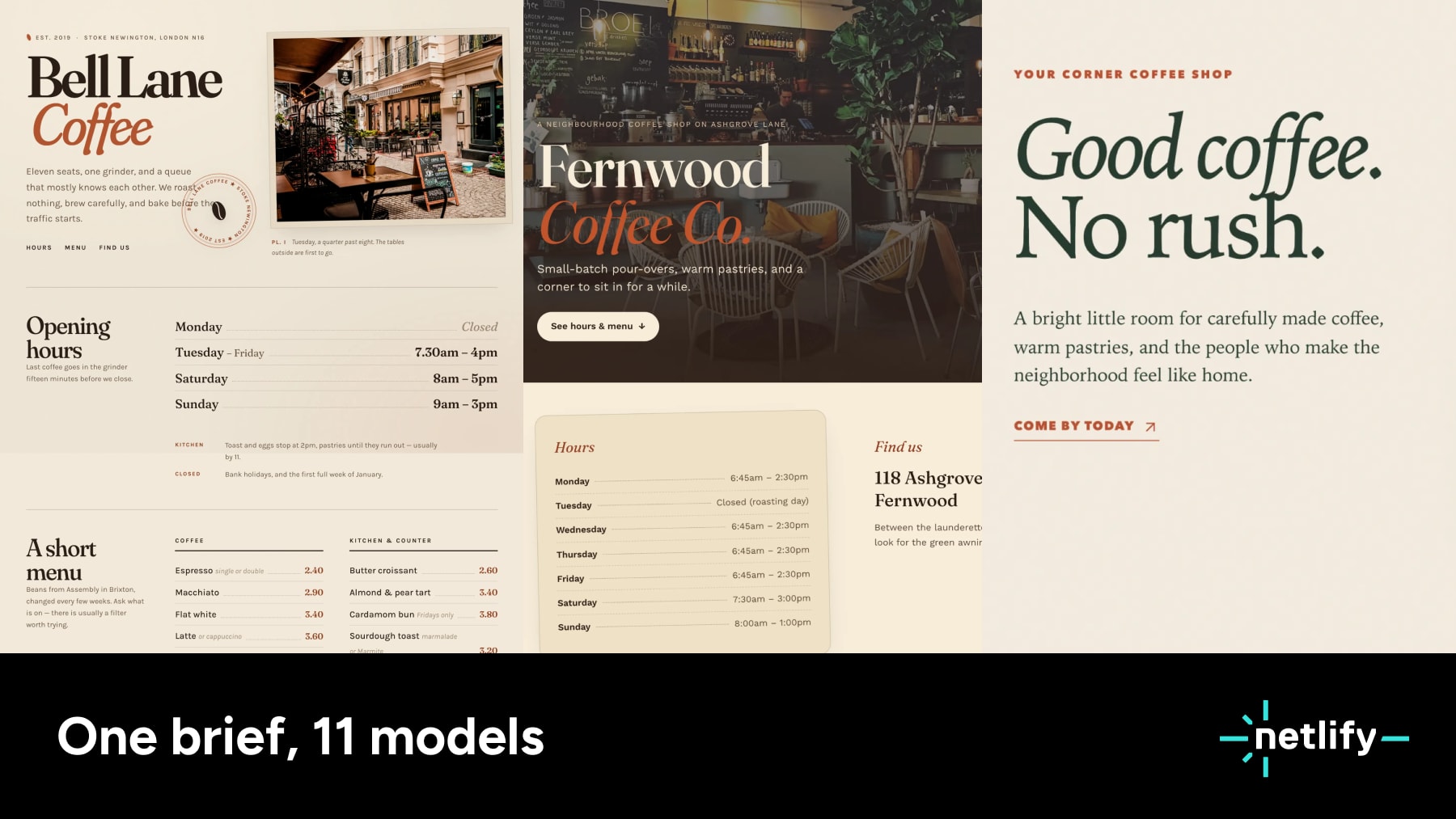
Netlify has partnered with OpenRouter to integrate a wider variety of AI models into its platform. This update allows users to access diverse models via the AI Gateway and expands the coding agent capabilities with new options like Kimi K3, GLM 5.2, and DeepSeek V4.
Expanding the AI Frontier: Netlify and OpenRouter Partnership
Netlify has officially announced a strategic partnership with OpenRouter, marking a significant shift in how developers interact with artificial intelligence within their workflow. By integrating OpenRouter’s vast ecosystem into its AI Gateway, Netlify is effectively removing the barriers to entry for developers who require specific, fine-tuned models for their web applications. This move acknowledges that there is no 'one-size-fits-all' solution in the current AI landscape, where task-specific performance and budgetary constraints often dictate the choice of technology.
Democratizing Model Selection
The primary advantage of the AI Gateway integration is the newfound flexibility for developers. By providing access to any model supported by OpenRouter, Netlify ensures that users can swap between different AI backends without undergoing a massive architectural overhaul. This is particularly crucial for businesses that need to balance the cost of inference against the performance requirements of their specific end-user features. It transforms the AI implementation process from a rigid dependency on a single vendor to a dynamic, modular selection process.
Advancements in Agent Runners
Beyond the infrastructure layer, Netlify has significantly upgraded its 'Agent Runners' functionality. Unlike simplified chatbots, Agent Runners are designed to execute full coding tasks, allowing developers to build projects from the ground up or iterate on existing codebases directly within the Netlify environment. By incorporating recent frontier models such as Kimi K3, GLM 5.2, and DeepSeek V4, Netlify is providing its users with the most powerful tools available for automated development and debugging.
The Shift Toward Specialized AI
The inclusion of specialized models like Kimi K3 and DeepSeek V4 reflects a broader industry trend where developers are moving away from monolithic general-purpose models in favor of those optimized for specific programming languages or architectural patterns. Because these models are now available to everyone using the Agent Runner interface, the barrier to high-level coding assistance has been substantially lowered, enabling faster prototyping and more efficient iteration cycles.
Future Implications for Web Development
This integration signals a future where the 'coding agent' becomes a standard component of the web development lifecycle. As these models continue to evolve, the ability to switch between them seamlessly ensures that developers remain at the cutting edge of AI capabilities without being locked into a specific provider's ecosystem. Netlify's focus on maintaining a 'full coding agent' experience rather than a pared-down version suggests a commitment to high-fidelity development tools that can handle complex, real-world coding challenges.
Conclusion
In summary, the collaboration between Netlify and OpenRouter represents a vital step forward in accessible AI development. By combining the infrastructure flexibility of an AI Gateway with the high-performance capabilities of frontier models in Agent Runners, Netlify is empowering developers to build better, more cost-effective web applications. As the landscape of LLMs continues to fragment into specialized niches, this flexible approach will likely become the gold standard for integrated development environments.